
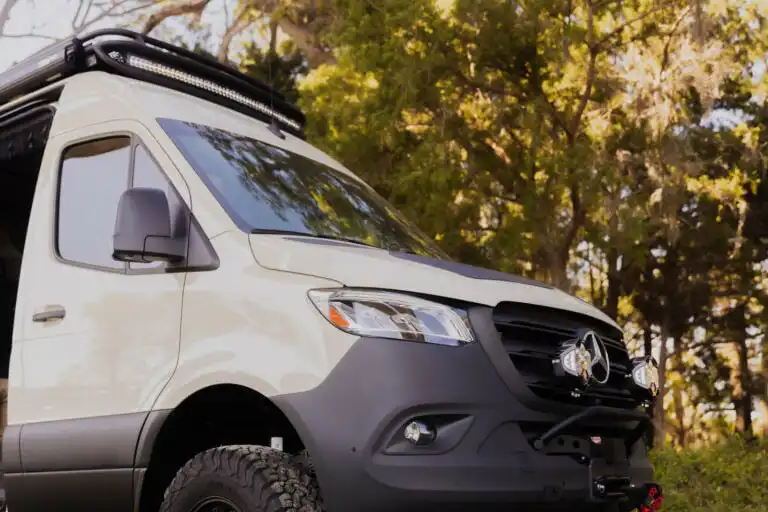
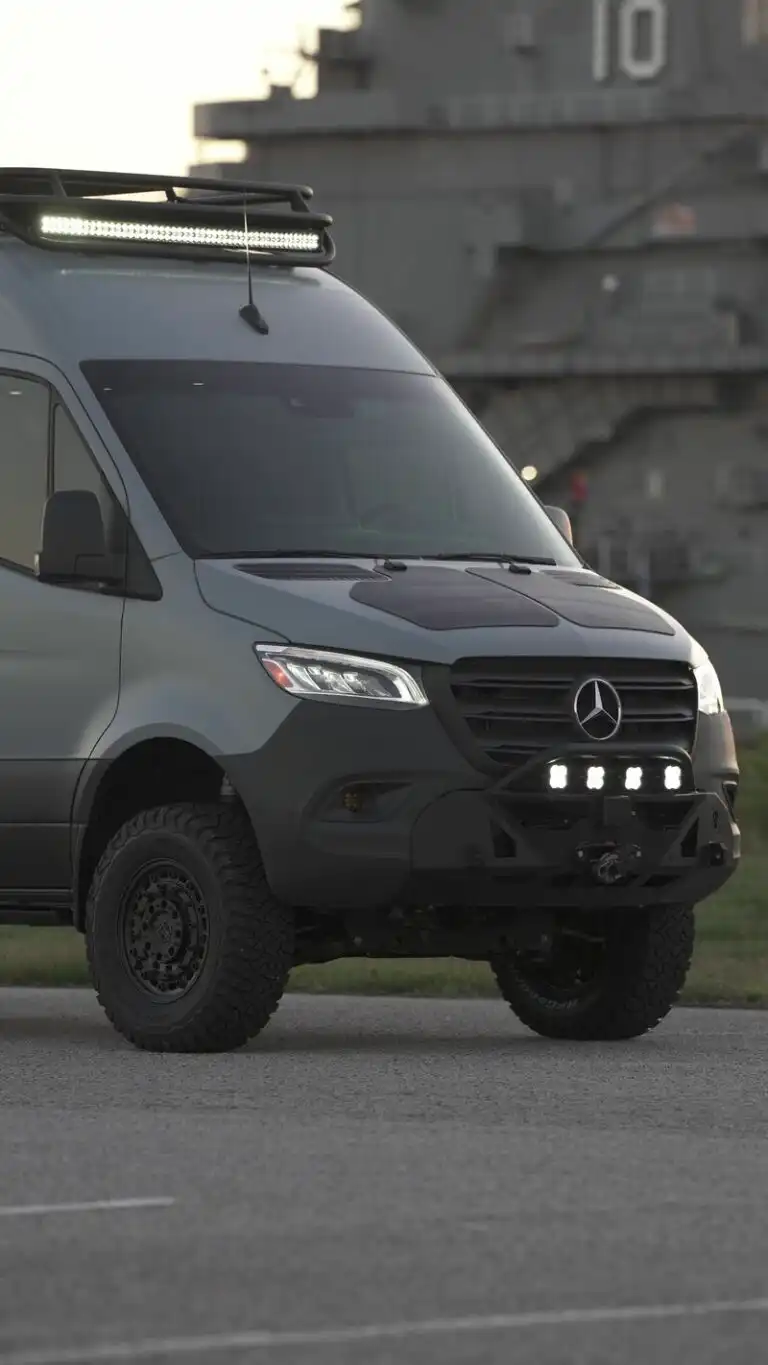
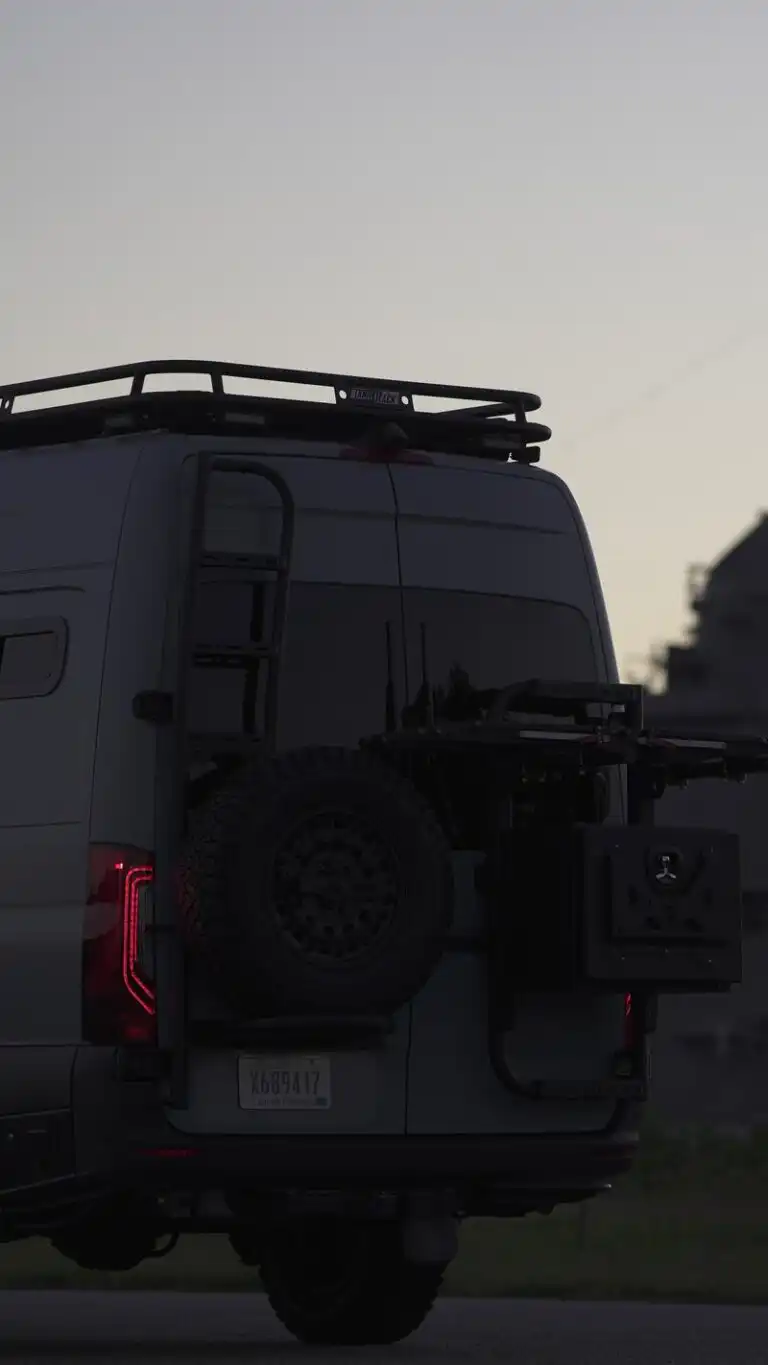
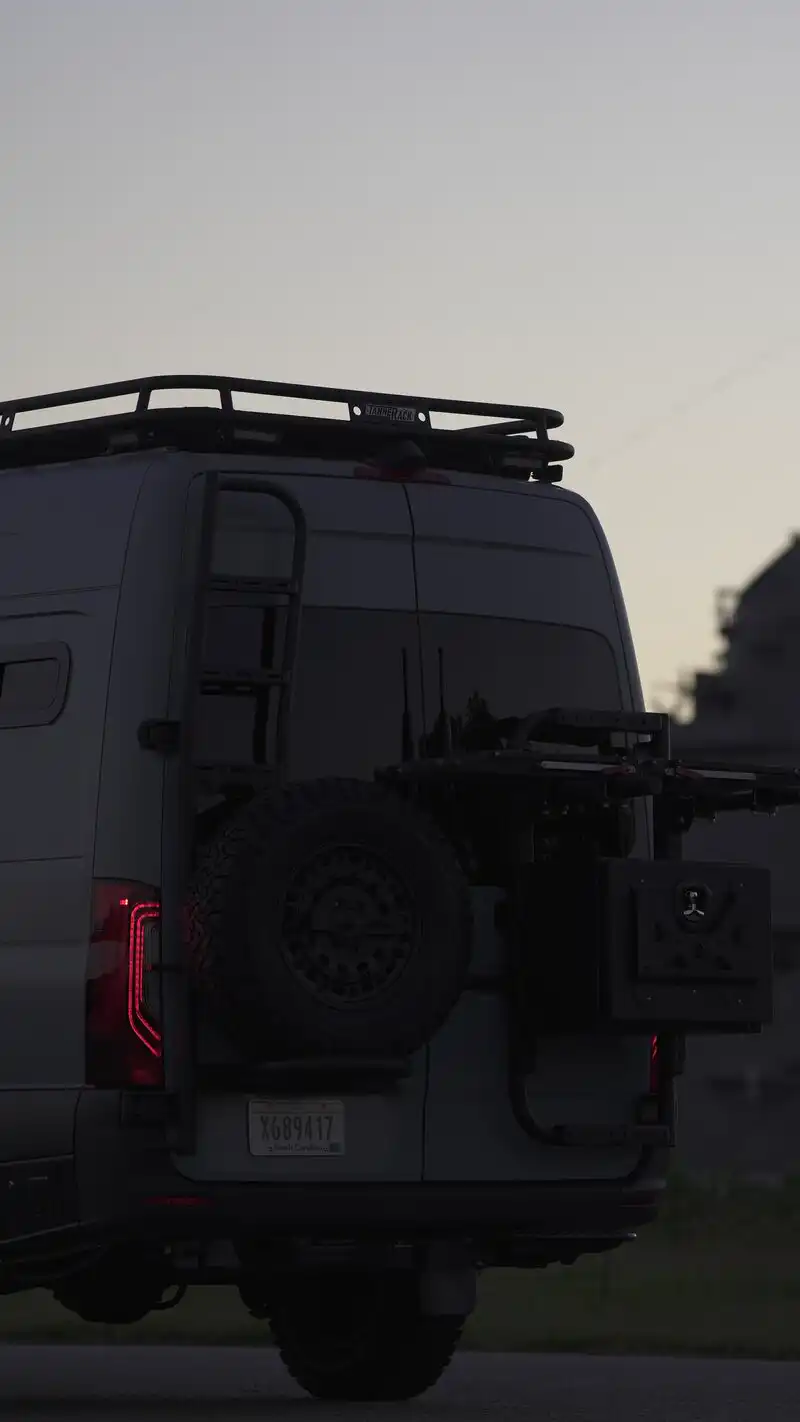
There is a category of van upgrade that never makes the hero shot but earns its keep every single trip. The rear ladder you use to check the solar panels. The tire carrier that gets a full-size spare off the interior floor and onto the back door where it belongs. The rack that finally gives you somewhere to put the gear that will not fit inside. Owl Vans builds this category of hardware specifically for Sprinters, and it is some of the most-installed exterior equipment on our overland builds for a simple reason: it solves real problems that show up the moment you leave pavement.
This guide walks through the Owl Vans components we integrate into Patrol Vans builds, what each one does in practice, and why exterior accessory choices deserve the same planning as the interior. If you are outfitting a Sprinter for genuine overland travel, this is the unglamorous hardware that quietly makes the whole thing work.
Why Owl Vans, and why Sprinter-specific matters
Plenty of companies make racks and carriers. What sets Owl Vans apart for our purposes is that their gear is engineered specifically for the Sprinter platform — the exact door geometry, the factory mounting points, the load paths of that particular van. Generic bolt-on accessories often fight the vehicle: they need spacers, they stress hinges they were not designed for, or they rattle because the fit is approximate. Sprinter-specific hardware bolts to what the van already offers and behaves like it belongs there.
That fit is not a cosmetic nicety. A tire carrier hangs meaningful weight off a rear door that swings and slams on rough roads thousands of times over a van’s life. A ladder and roof rack carry loads that shift under braking and washboard. Hardware engineered for the platform distributes those loads the way the vehicle can handle, which is the difference between an upgrade that lasts and one that loosens, cracks, or wears out the door it is bolted to.
The core Owl Vans components in an overland build
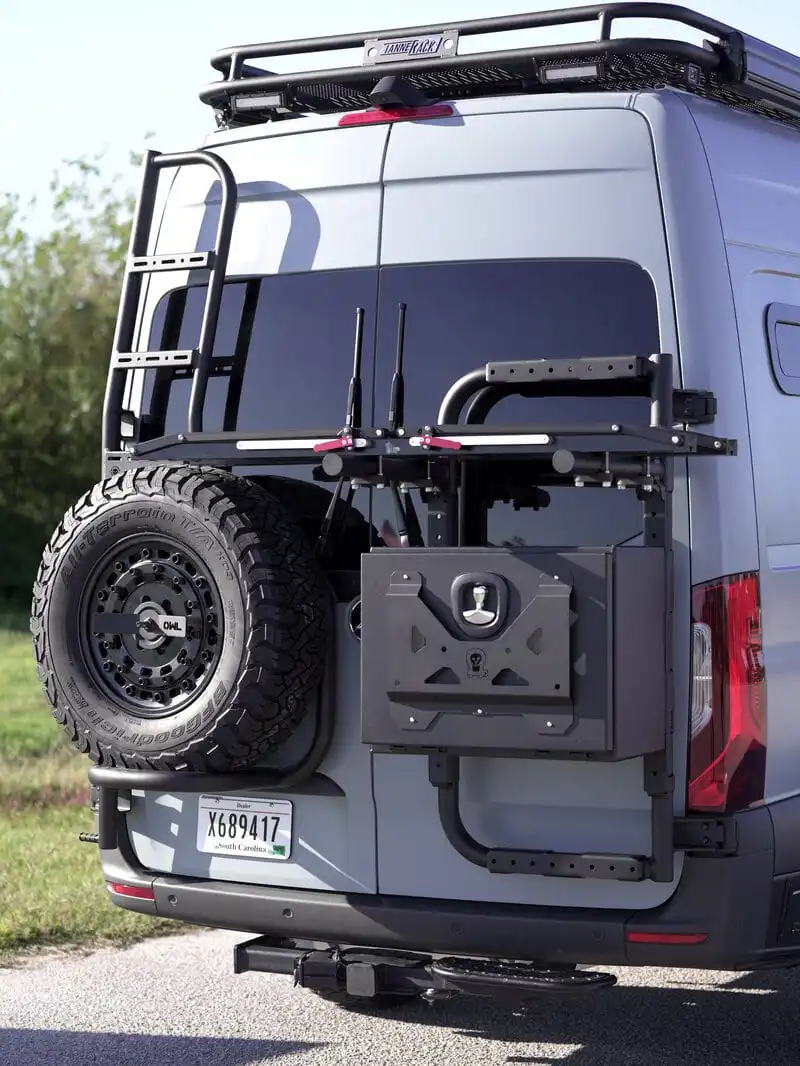
A few Owl Vans pieces show up again and again on our overland-oriented Sprinters. The B2 rear door rack system is often the anchor — a modular platform on the rear doors that carries spares, fuel or water containers, and gear that you want accessible without opening the interior. The tire and gear carriers move a full-size spare and bulky equipment outside, freeing interior space and lowering the center of gravity of the stuff you carry.
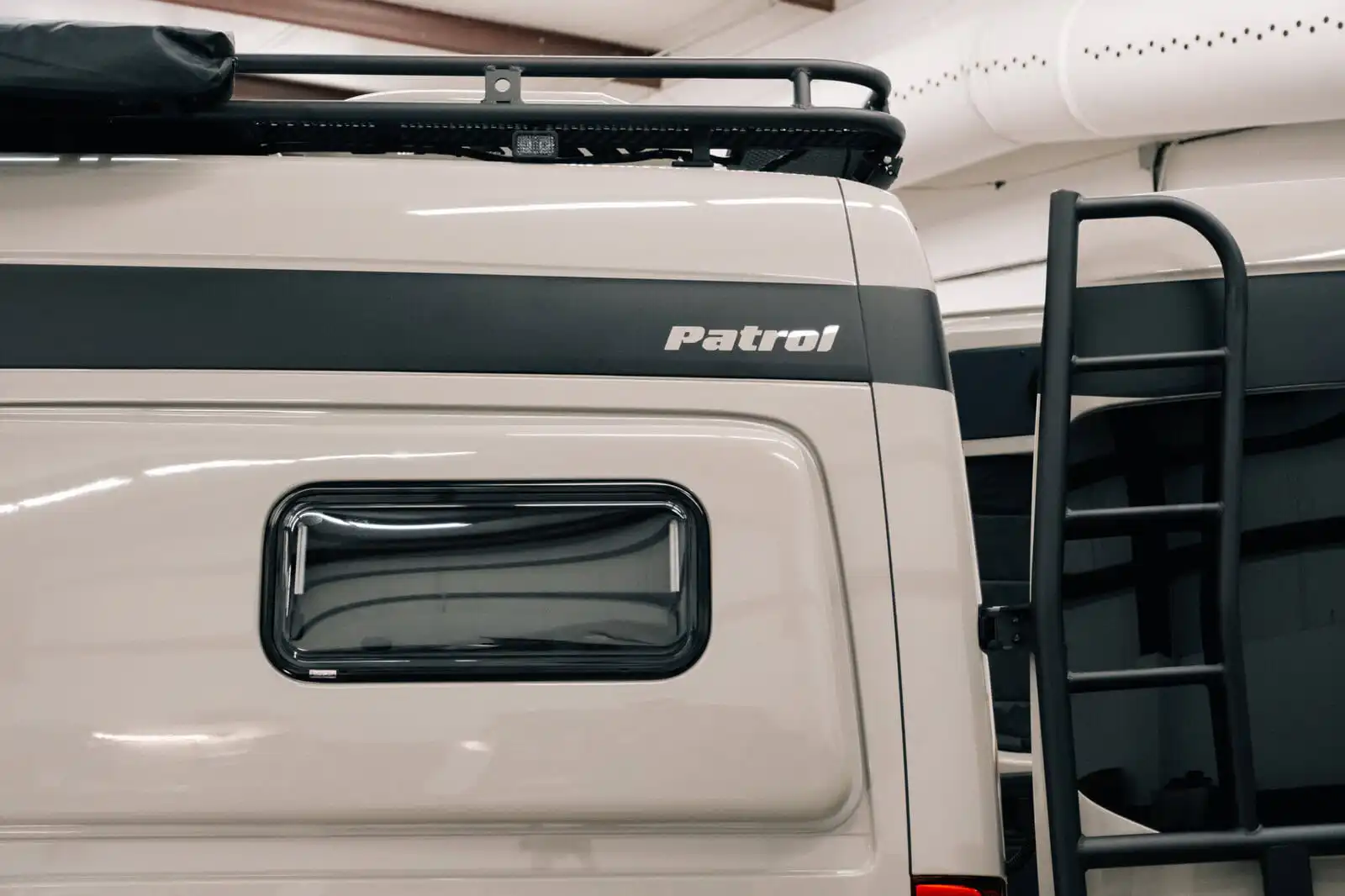
The rear ladder is a small addition that changes daily life on the road: safe, solid access to the roof for cleaning solar panels, checking a roof rack, or simply seeing over a crowded trailhead. And the horn upgrade — easy to overlook — is a genuinely useful safety improvement for a heavy van that shares highways with distracted traffic. None of these are trophy upgrades. All of them earn their place trip after trip.
Integration is where the value lives
Bolting on an accessory and integrating one are different things. When we install Owl Vans hardware, we are thinking about how it interacts with the rest of the build: how a door rack loaded with weight affects the door and its hinges over time, how a roof rack coordinates with the solar array and any awning, how the added exterior weight changes handling and where the spare should sit for the best balance. The goal is a van where the exterior gear works with the vehicle and the interior systems, not against them.
This is the same philosophy that guides how we think about a complete overland Sprinter build — every component chosen and placed with the whole vehicle in mind. Exterior accessories are not an afterthought you add once the real build is done. On a serious overland rig, they are part of the design from the start, because they change weight, balance, and how you actually live out of the van.
Matching accessories to how you travel
Not every build needs every accessory, and part of our job is helping owners spend on the hardware that fits their travel. A weekend explorer who mostly stays near maintained roads may want a ladder and a modest rack and little else. A build headed for remote, self-supported travel benefits from the full complement — spare carrier, gear racks, and the storage that keeps essentials reachable when you are far from help. The right setup is the one that matches your trips, which is worth thinking through before the holes are drilled.
If you are still deciding what kind of van you are building toward, our comparison of overland vans, adventure vans, and camper vans is a good place to start, and our look at what actually makes a true adventure van covers the capabilities that exterior hardware like this supports.
Frequently asked questions
What is the Owl Vans B2 rack system?
The B2 is Owl Vans’ modular rear-door rack platform for Sprinters. It mounts to the rear doors and carries spares, fuel or water containers, and gear you want accessible from outside the van. Because it is engineered for the Sprinter’s specific door geometry, it distributes load in a way generic racks often cannot.
Will a rear tire carrier damage my Sprinter’s doors?
Not when it is the right hardware, correctly installed. A full-size spare is real weight on a door that swings and slams constantly, so the carrier has to be engineered for the platform and mounted to distribute that load properly. Sprinter-specific carriers like Owl Vans’ are designed for exactly this, which is why fit and proper installation matter so much.
Do I need a roof rack and a ladder, or just one?
It depends on how you use the van. A roof rack adds carrying capacity and mounting space for solar or an awning; a ladder gives you safe access to reach it. Many overland builds use both, but a simpler build may only need one. The right choice follows how you actually travel.
Are Owl Vans accessories only for hardcore overlanding?
No. While the full complement suits remote, self-supported travel, individual pieces — a ladder, a modest rack, a horn upgrade — add everyday practicality to any Sprinter. The system scales to the build, from weekend explorer to full expedition rig.
The takeaway
Exterior hardware is easy to treat as an afterthought and easy to get wrong. Owl Vans’ Sprinter-specific racks, carriers, ladders, and accessories are some of the most practical upgrades on an overland build precisely because they are engineered for the platform and, when integrated thoughtfully, work with the whole vehicle rather than hanging off it. Chosen to match how you travel and installed with the full build in mind, they are the quiet hardware that makes real overland use possible.
If you are building a Sprinter for genuine overland travel, talk with the Patrol Vans team about the right exterior setup, or explore our models to see which platform fits your kind of adventure.