

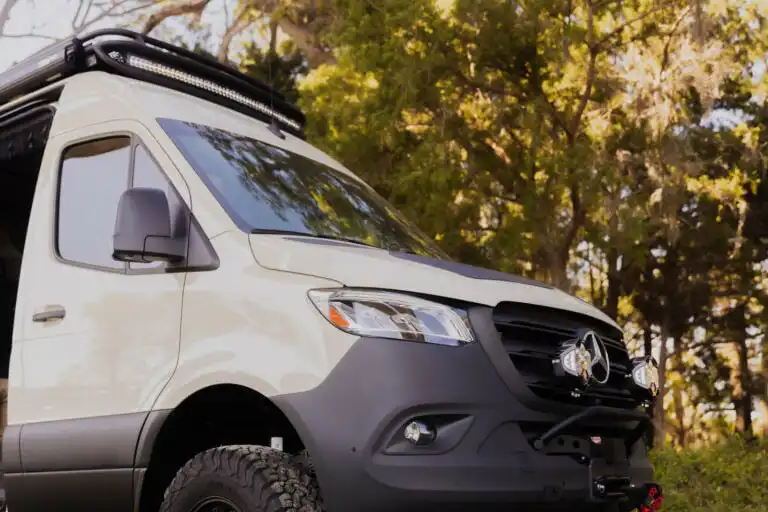
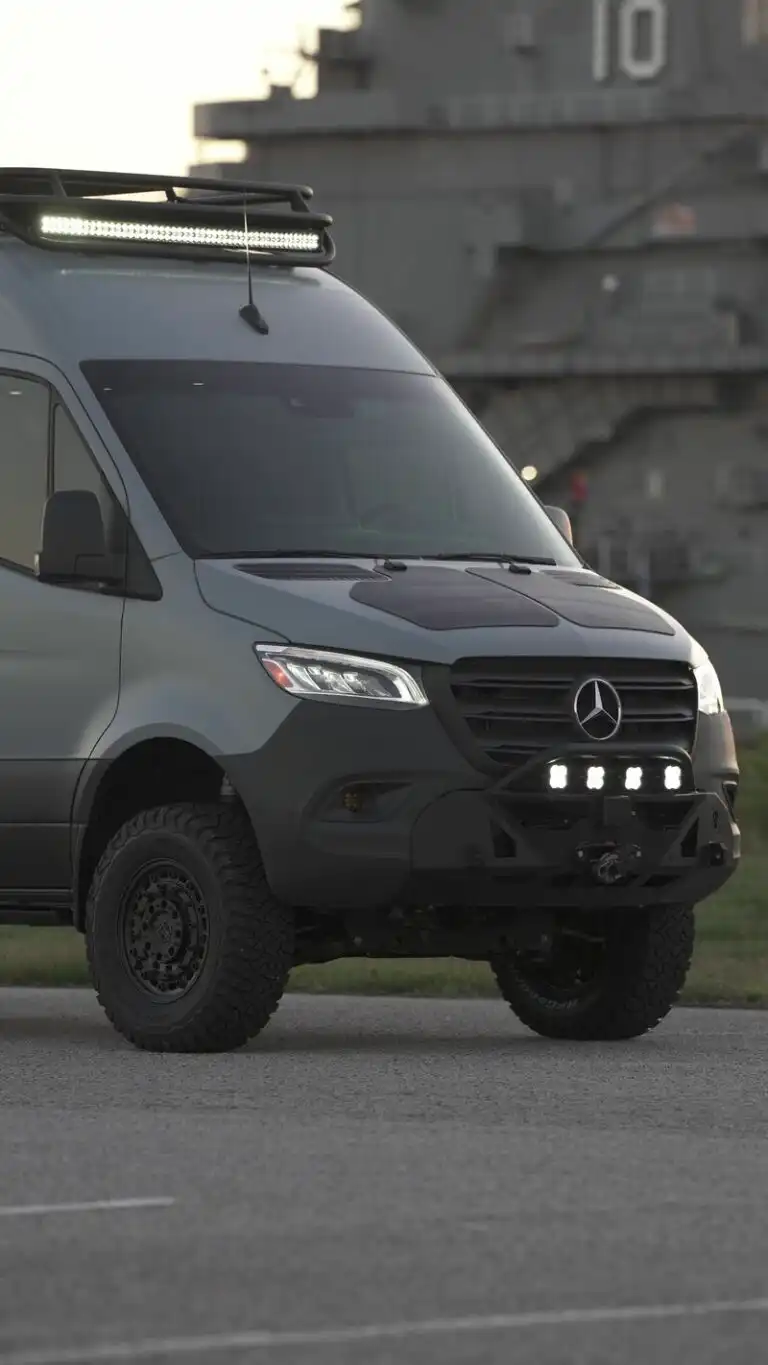
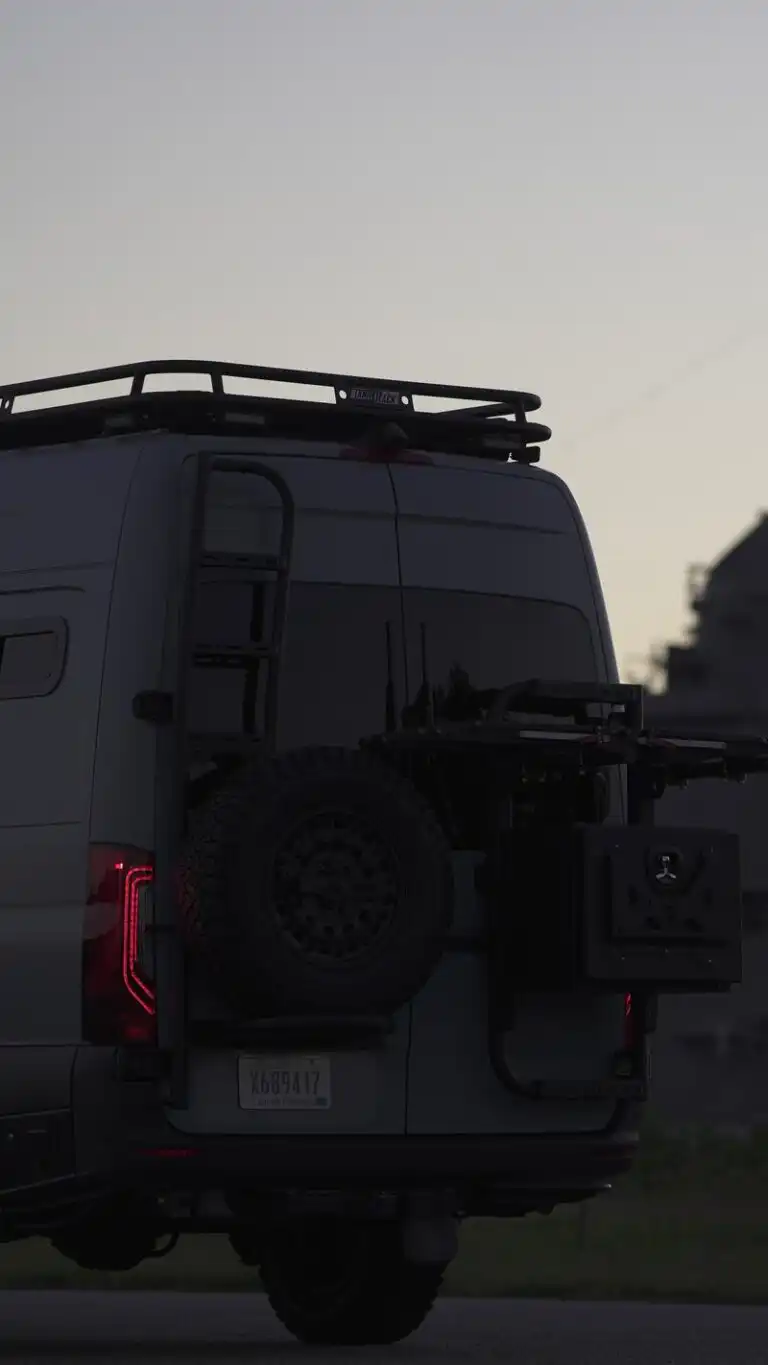
“Adventure van” is one of the most overused terms in the conversion industry. It gets applied to everything from $30,000 DIY shells with a fold-out bed to $400,000 expedition-grade rigs that have crossed three continents. That range makes the term effectively meaningless when you’re shopping — which is exactly the problem we hear from buyers comparing builders.
The honest answer is that what separates a true adventure van from a camper van wearing the label is capability under real conditions. Not the wrap. Not the lighting kit. Not the Instagram-ready interior. Capability — measured in how the van performs when the road runs out, the temperature drops, and you’re three days from the nearest service center.
The capability standard, not the aesthetic
A true adventure van is engineered around a use case that involves going somewhere most vehicles can’t go and staying there longer than most vehicles can support. That means three things that you should be able to verify on any build before you sign:
Off-road capability that’s actually rated, not implied. Suspension upgrades from a specialist (we use Agile Off-Road on Sprinter platforms), wheels and tires sized for the unpaved use case, recovery points that are bolted to the chassis rather than the bumper, and ground clearance that survives the kind of two-track road that gets you to actual remote sites.
Off-grid systems that hold up across a real trip. A lithium electrical system with usable capacity (typically 400+ Ah at 12V or the 24V equivalent), solar that recharges fast enough to keep up with daily use, water capacity sized to your trip length, and heat that works at 10°F without depleting the house battery overnight. Pretty fixtures don’t matter if the system fails on night three.
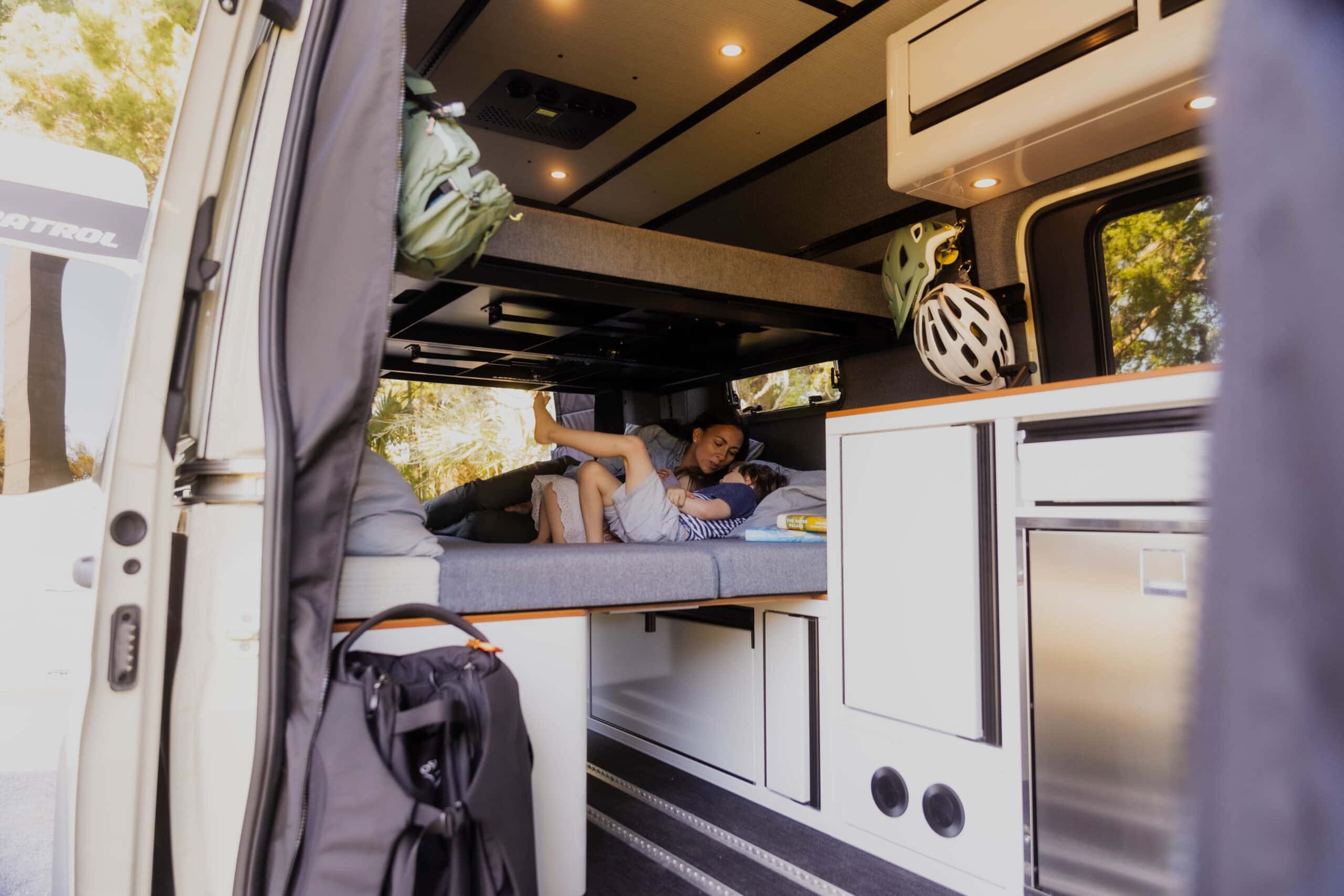
An interior built for changing use. Adventure travel isn’t one activity. It’s a mix of sleeping, cooking, working, hauling gear, occasionally hauling people, and sometimes just sitting out the weather. A van whose interior commits to one configuration is a van that’s working against half of those days.
This is where the Smartfloor system that anchors every Patrol Vans build earns its keep — the interior reconfigures in minutes rather than days. Here’s how Smartfloor works if you haven’t seen the full system explained.
Adventure van vs camper van vs overland van
The category overlap is what makes shopping confusing. Here’s the practical distinction we use internally:
A camper van prioritizes onboard comfort — bed, kitchen, water — for paved-road travel. Most fall apart on the kind of road conditions adventure use cases actually involve.
An overland van prioritizes long-duration self-sufficiency: water capacity, recovery gear, redundant electrical, often heavy enough to limit unpaved access. Built for expedition-grade trips measured in weeks.
An adventure van sits between them — capable off-pavement, self-sufficient for a long weekend or a multi-week trip, and configurable enough that it doesn’t lock you into a single use. Most of our customers’ actual lives sit in this middle space. For a fuller breakdown, see our comparison of overland, adventure, and camper categories.
What separates a true adventure van from a marketed one
Five questions cut through the marketing fast:
Is the suspension actually engineered for the load and the terrain?
Factory Sprinter suspension is fine for a delivery van. It’s not fine for a fully loaded build on washboard roads. A Sprinter-specific suspension upgrade — typically a 2-inch lift with valved shocks tuned for the loaded weight — changes the vehicle’s behavior fundamentally. If a builder doesn’t talk about suspension specifics, the build is a camper van.
What’s the real off-grid duration?
Ask for the numbers: usable amp-hours, solar wattage on the roof, water gallons aboard, heater fuel autonomy. Calculate the run-time at typical use. A “weekend ready” van that runs out of power on day two of an overcast trip isn’t adventure-capable.
How does the interior change when your trip changes?
A van you’ll use for three different things (family travel, gear hauling, work) needs an interior that adapts. If reconfiguring it means tools or a body shop, it’s not configurable — it’s just optional.
What happens when something breaks remotely?
Critical systems should be serviceable on the road. Lithium batteries should be replaceable as modular components. Heaters should be brands with a service network. Electrical should be documented well enough that a sympathetic shop can work on it. Custom one-off systems with no spare-parts pipeline are a liability on long trips.
Who built it, and what’s their service relationship?
The build company you can call when something fails six months in is part of what you’re paying for. A builder who hands over the keys and disappears is selling you a finished product. A builder who’s still on the phone with you in year three is selling you a long-term capability.
Where Patrol Vans sits in the category
Patrol Vans builds adventure-class vehicles on the Mercedes Sprinter platform. The model lines — AlphaVan, EchoVan, and OmegaVan — each sit at a different point on the capability-versus-cost curve, but every model is built around the same engineering philosophy: rugged, modular, off-grid capable, configurable.
What our customers tend to notice over the first year of ownership isn’t the day-one features. It’s the durability under real conditions and the absence of the small failures that plague aesthetic-first builds — squeaks, rattles, electrical glitches, layout regrets. Adventure use exposes shortcuts the way paved-road use never will.
How to evaluate a builder beyond the showroom photos
If you’re a serious buyer, a few practical moves separate the builders worth your time from the ones worth a quick pass.
Ask to see a build that’s two or three years old, not a fresh delivery. The way an interior holds up after a real ownership cycle tells you what the build quality actually is.
Ask the builder about their service network. Who works on the electrical when the customer is in Wyoming? What’s the warranty path on the suspension? The build company that has answers has been doing this long enough to be the right partner.
Ask about configurations the van will need over its life, not just at delivery. A buyer in year two might add a child to the family. A buyer in year four might switch from weekend adventure to full-time travel. A van that can absorb those changes saves you a future re-build.
Frequently asked questions
What’s the difference between an adventure van and a 4×4 van?
4×4 refers to the drivetrain — power going to all four wheels. Adventure van refers to the build philosophy as a whole. Most premium adventure vans are 4WD (the Mercedes Sprinter 4×4 is a common base platform), but a 4WD drivetrain alone doesn’t make a van adventure-capable. The build around it does.
Do I need a 4×4 Sprinter for adventure use?
Most buyers do, especially if the use case includes mountain travel, snow, or genuinely unpaved roads. A well-built 2WD Sprinter with proper suspension and tires handles more than most owners expect, but 4WD removes a category of decisions you’d otherwise have to make about route and conditions.
How much should an adventure van cost?
Real adventure builds on a Sprinter platform typically land between $185,000 and $325,000 depending on model, drivetrain, and outfitting. Builds below that range almost always cut something that matters — suspension, off-grid systems, or interior craftsmanship. Here’s a fuller breakdown of where the money actually goes.
How long does a custom adventure van take to build?
From signed contract to delivery, expect 8 to 16 weeks for a Patrol Vans configuration. Builds with non-standard requests, special-order components, or substantial customer-side design changes can extend beyond that.
Is an adventure van worth the cost over a camper van?
For occasional pavement-only travel, no — a quality camper van is the better-value choice. For travel that actually involves unpaved roads, off-grid duration, or use cases that change across the year, an adventure-class build pays back the premium across the ownership cycle in capability and in absence of regret.
Where to go from here
If you’re comparing adventure van builders, the most useful thing you can do is be specific about how you intend to use the vehicle across a typical year. “I want an adventure van” is a starting point. “I want a van I can sleep two adults and a kid in for ten days at a time, off-grid in the West, with cargo capacity for two mountain bikes” is the brief a builder can actually work with.
Talk with the Patrol Vans team about your specific use case, and we’ll tell you which model fits and where the tradeoffs land.
For background on the platform itself, Mercedes-Benz publishes the Sprinter technical specifications at mbvans.com/sprinter.