

AlphaVan Electrical Architecture: Victron Components, LiFePO4 Sizing, and Solar Specs
Most buyers who shop AlphaVan want a clean answer to one question: what’s the electrical system going to let me do? AlphaVan electrical specs sit at a deliberate sweet spot — capable enough for true weekend-capable off-grid use, sized small enough to keep the build approachable for first-time custom van buyers. This article documents the components, the sizing logic, and the realistic capability of the AlphaVan electrical system in the kind of detail buyers actually need to compare against other premium builds.
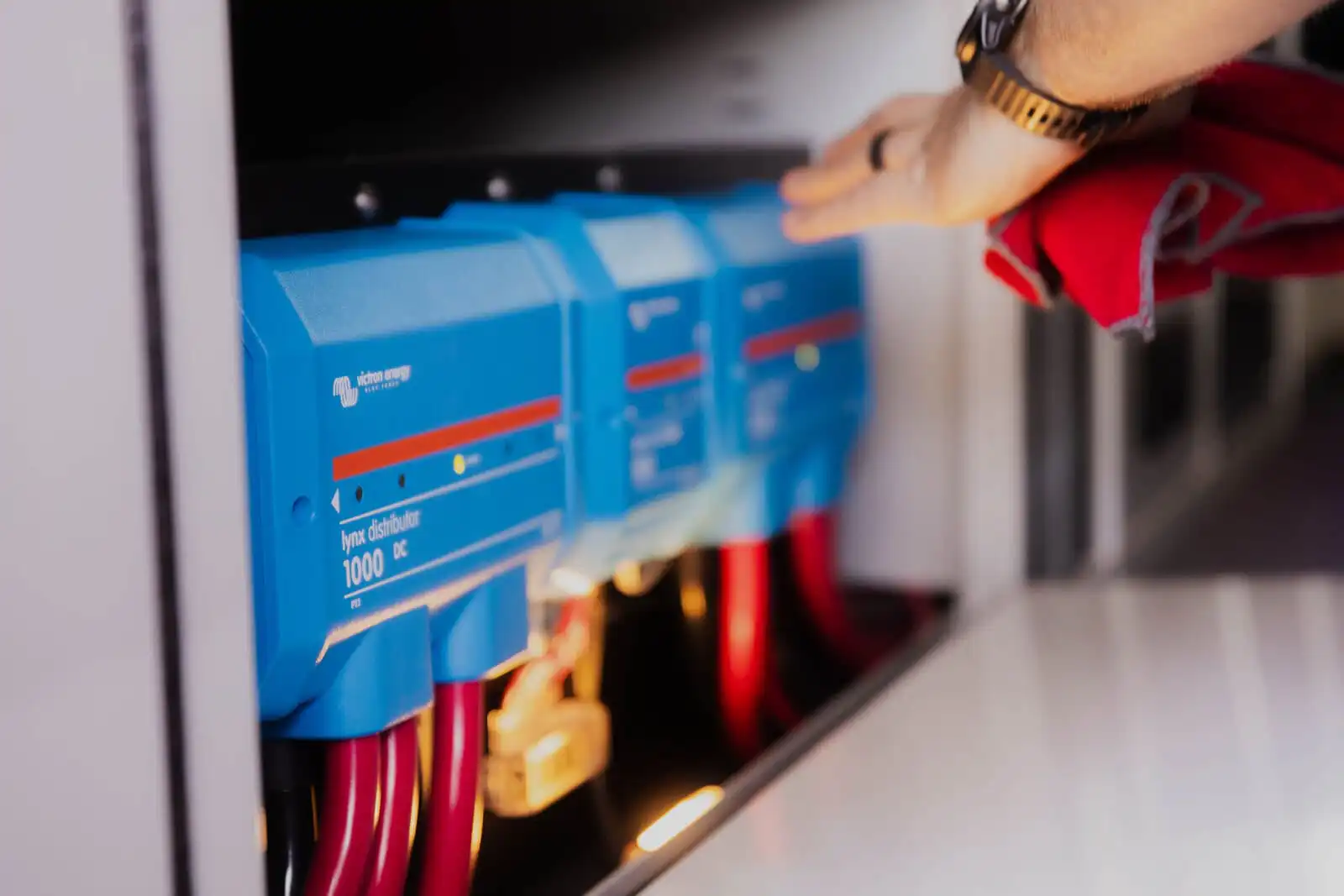
For the broader architecture context — why we standardize on Victron, how the components coordinate, what design rules we follow across every Patrol Vans build — see our Victron electrical architecture hub. This article is the per-model deep-dive.
AlphaVan electrical spec at a glance
The standard AlphaVan electrical specification:
- House battery bank: 200Ah LiFePO4 (12V nominal, ~2.56 kWh usable at 80% depth-of-discharge)
- Inverter / charger: Victron MultiPlus 12/2000 (2,000W continuous AC output, 50A pass-through)
- Solar: 400W roof-mounted panels (typically two 200W flexible or rigid panels)
- MPPT controller: Victron SmartSolar MPPT 100/30
- Alternator charging: Single Victron Orion-Tr 12/12-30A DC-DC charger
- Monitoring: Victron SmartShunt + Cerbo GX (optional GX Touch 50 display upgrade)
- Shore power: 30A inlet with integrated automatic transfer
That’s the foundation. Every AlphaVan ships with these components configured to talk to one another through the Cerbo GX so the system behaves as a coordinated architecture rather than five independent boxes.
Battery — 200Ah LiFePO4
200 amp-hours of LiFePO4 (lithium iron phosphate) is the AlphaVan default. At 12V nominal, that’s roughly 2.56 kWh of usable energy when discharged to 80% — the depth-of-discharge we treat as the practical floor for daily cycling. LiFePO4 can technically go deeper, but 80% gives the bank the long cycle life we design for (10+ years of regular use).
We size the bank around realistic daily draw on a weekend adventure trip: lights (5-15 Ah/day), a 12V fridge (30-50 Ah/day depending on outside temperature), a ventilation fan running periodically (5-20 Ah/day), device charging (5-15 Ah/day), and occasional small AC loads through the inverter (variable, but typically 10-20 Ah for a coffee maker session or a phone charger left plugged in). Total typical draw lands in the 60-120 Ah/day range. A fully-charged 200Ah bank gives 2-3 nights of that load before solar harvest or alternator charging brings it back.
Inverter / charger — Victron MultiPlus 12/2000
The MultiPlus 12/2000 is the AlphaVan’s inverter and shore-power charger in a single chassis. The 2,000W continuous AC output handles the appliances most AlphaVan owners actually use: a coffee maker, a single-burner induction cooktop, a laptop, device chargers, and the smaller end of resistive AC loads.
What it doesn’t comfortably handle: dual-burner induction running simultaneously, larger heating appliances, or industrial tools. Buyers who need that headroom should look at EchoVan (MultiPlus 12/3000) or OmegaVan (MultiPlus-II 12/3000-120-50).
The 50A pass-through matters when plugging into shore power at higher-amperage RV sites — the AlphaVan can pass the full site load through to internal appliances while simultaneously charging the LiFePO4 bank. Lower-pass-through inverters force a choice between charging and AC use, which gets frustrating.
Solar — 400W on the roof, SmartSolar 100/30 MPPT
400W of roof solar is the AlphaVan default — typically two 200W panels, mounted flat to preserve roof rack capacity. In Charleston-summer conditions (long days, decent angles), that 400W array reliably harvests 80-120 Ah/day, enough to fully cover the typical 60-120 Ah daily draw and bring a partially-depleted bank back toward full.
The Victron SmartSolar MPPT 100/30 sits between the panels and the battery. “100” means 100V max input voltage; “30” means 30A max output current. The combination accommodates the AlphaVan’s panel configuration with margin, and the SmartSolar’s bluetooth radio means owners can watch live solar harvest from their phone.
For owners who want more harvest — for example, regular winter shoulder-season camping where solar input is weaker — we can step the AlphaVan up to 600W of solar with a SmartSolar 100/50 MPPT. That’s a build-time decision, not a retrofit, so it’s worth flagging in the configurator conversation.
Alternator charging — Orion-Tr 12/12-30A
The Orion-Tr 12/12-30A DC-DC charger sits between the Sprinter’s alternator and the LiFePO4 bank. It does two jobs: it isolates lithium chemistry from the Sprinter’s electrical system (alternator regulators aren’t designed for lithium and can damage cells over time without isolation), and it provides a clean 30A charge path while the engine is running.
At 30A, the Orion-Tr puts roughly 30 amp-hours into the bank for every hour of driving. On a long-distance day (4-6 hours behind the wheel), the bank fully tops up from alternator alone, no solar required. That’s the design intent — buyers who drive between camps shouldn’t depend on sunny solar conditions to recharge.
EchoVan and OmegaVan run dual Orion-Tr chargers (60A combined alternator charging). AlphaVan single Orion-Tr is sufficient for the smaller bank.
What this powers, realistically (use-case math)
The AlphaVan electrical system supports the following without aggressive load management:
An LED lighting kit (interior + reading lights) for evening use. A 12V fridge running 24/7 in summer conditions. A roof fan cycling on humid afternoons. Device charging for two phones, two laptops, and a tablet. A small AC appliance session (coffee maker, electric kettle, single-burner induction) once or twice a day. A heating mattress pad on shoulder-season nights. Roof fans through warm summer nights.
The system doesn’t comfortably support: dual-burner induction running simultaneously, resistive electric heaters as primary heat source, hair dryers (~1,500W spike trips smaller inverters even when the MultiPlus can handle them — buyer expectation), residential-size mini-split air conditioning. Buyers planning for those loads belong on EchoVan or OmegaVan.
Realistic off-grid capability with the standard AlphaVan electrical system: 2-3 nights of comfortable use between full sun days, or 4-5 nights if the days between have any meaningful solar harvest at all. Owners report stretches of 6-7 days when the weather cooperates and the load profile stays moderate.
Where AlphaVan electrical sits vs EchoVan and OmegaVan
AlphaVan is the entry point. The architecture is identical to EchoVan and OmegaVan — same Victron components, same Cerbo GX coordination, same monitoring story. The capacity is the difference.
EchoVan doubles the bank (400Ah), doubles the alternator charging (dual Orion-Tr), and upgrades the inverter (MultiPlus 12/3000). That’s the configuration we design for week-long boondocking. See the EchoVan off-grid electrical guide for the math behind “a week without plugging in.”
OmegaVan triples the bank (600Ah), steps up to the MultiPlus-II 12/3000-120-50 (a fundamentally different inverter chassis with 50A AC pass-through), and adds a larger MPPT (150/85) to support 800W+ of solar. OmegaVan is for utility-heavy use: tools, comms, mobile workshop loads.
If you’re not sure which model matches your usage pattern, the model comparison guide from our May batch covers the decision in detail.
Frequently asked questions
Can the AlphaVan bank be expanded later? Yes — adding a second 100Ah or 200Ah LiFePO4 module is a supported upgrade. The MultiPlus and SmartSolar handle the additional capacity without reconfiguration. The Orion-Tr’s 30A charge rate stays the same, so alternator-driven recharge takes longer, but solar and shore-power charging scale.
What’s the realistic solar harvest in winter conditions? Roughly half summer harvest in Charleston-latitude winter (40-60 Ah/day vs 80-120 Ah/day). Owners traveling to higher latitudes in winter should plan for shore power top-ups every 3-4 days, or shift their use pattern to include more driving (alternator-driven recharge).
Does the AlphaVan electrical system support remote work? Yes — a typical remote-work load (laptop, monitor, video calls, a small printer) draws roughly 40-60 Ah/day, well within the AlphaVan’s daily capacity envelope.
Can I add a Starlink to the AlphaVan electrical system? Yes. Starlink draws ~60W continuous (about 5 Ah/hour at 12V). Running it 4-6 hours a day adds 20-30 Ah of daily load, which the AlphaVan absorbs comfortably.
What about a small mini-split AC? Not on the standard AlphaVan electrical spec. Even efficient 5,000 BTU 12V air conditioners draw 30-50 Ah/hour when running. Mini-split AC is supported on EchoVan and OmegaVan builds with the larger banks and MultiPlus 12/3000.
Where to go from here
If the AlphaVan electrical envelope fits your use pattern, the next step is the AlphaVan model page for full configuration options. If you want to compare against the higher-capacity options, see the EchoVan boondocking electrical guide shipping in this same batch, or talk with the Patrol Vans team about which build matches your travel pattern.
External reference: Victron Energy for component spec sheets.