

Sprinter van insulation is one of those build decisions that is invisible when it’s done right and impossible to ignore when it’s done wrong. It is buried behind the walls before the cabinetry goes in, which means there is no fixing it later without tearing the interior apart — and yet it determines whether the van is comfortable in a cold high-country night, a humid Southern afternoon, or a sweltering desert noon. This guide explains how we think about insulating a Sprinter for genuine four-season use, why the details matter more than the material, and what separates a van that holds temperature from one that fights you.
Insulation is part of the larger ownership and capability story. If you’re planning a build, it pairs naturally with long-term Sprinter ownership and the real-cost conversation in Mercedes Sprinter conversion costs.
Why insulation is a capability decision, not a comfort upgrade
It’s tempting to think of insulation as a comfort feature — nice to have, easy to skimp on. In a van that travels into real conditions, it is a capability decision. Insulation determines how hard your heating and cooling systems have to work, which determines how much power and fuel you burn, which determines how long you can stay off-grid. A poorly insulated van bleeds heat in winter and gains it in summer, forcing the diesel heater or the fans and AC to run constantly, draining the battery and the fuel tank far faster than they should. Good insulation is what makes off-grid climate control actually sustainable.
That’s why we treat insulation as part of the systems design, not a separate finishing step. The insulation strategy and the electrical and heating systems are sized together, because they are the same problem viewed from two angles.
The detail that matters most: thermal bridging and condensation
The single biggest difference between a van that holds temperature and one that doesn’t is not the R-value printed on a material — it’s how well the build manages thermal bridging and condensation. A Sprinter’s steel ribs and panels conduct heat and cold straight through the wall unless they’re addressed. Insulate the cavities but leave the metal ribs exposed and you’ve built a van with thermal shortcuts in every wall, where heat escapes and condensation forms.
Condensation is the quieter problem and the more damaging one. Warm, moist interior air (from breathing, cooking, and just living) hits a cold metal surface and condenses into water, which then sits against bare steel behind your finished walls. Over time that’s rust and mold you never see until it’s a serious problem. Managing it means a thoughtful approach to vapor control, ventilation, and making sure warm air doesn’t reach cold metal in the first place. This is the part of insulation that DIY builds most often get wrong, and it’s the part that’s most expensive to fix later — because by the time symptoms appear, the walls are closed up.
Materials: a system, not a single product
There’s a lot of debate online about the “best” van insulation material, and most of it misses the point. No single material does everything. A real four-season strategy uses different materials for different jobs: products suited to the curved, irregular cavities of the van body; rigid materials where flat surfaces allow them; and treatments for the thermal bridges that cavity fill alone can’t solve. The goal is a continuous thermal envelope, not a high number on one product’s spec sheet.
What matters more than brand loyalty is that the materials are chosen to work together and installed without gaps, compressions, or shortcuts. An expensive material installed carelessly underperforms a modest one installed well. That’s true of most of a van build, and it’s especially true of insulation, where the performance lives in the continuity of the envelope rather than any single component.
Heat and ventilation: insulation’s partners
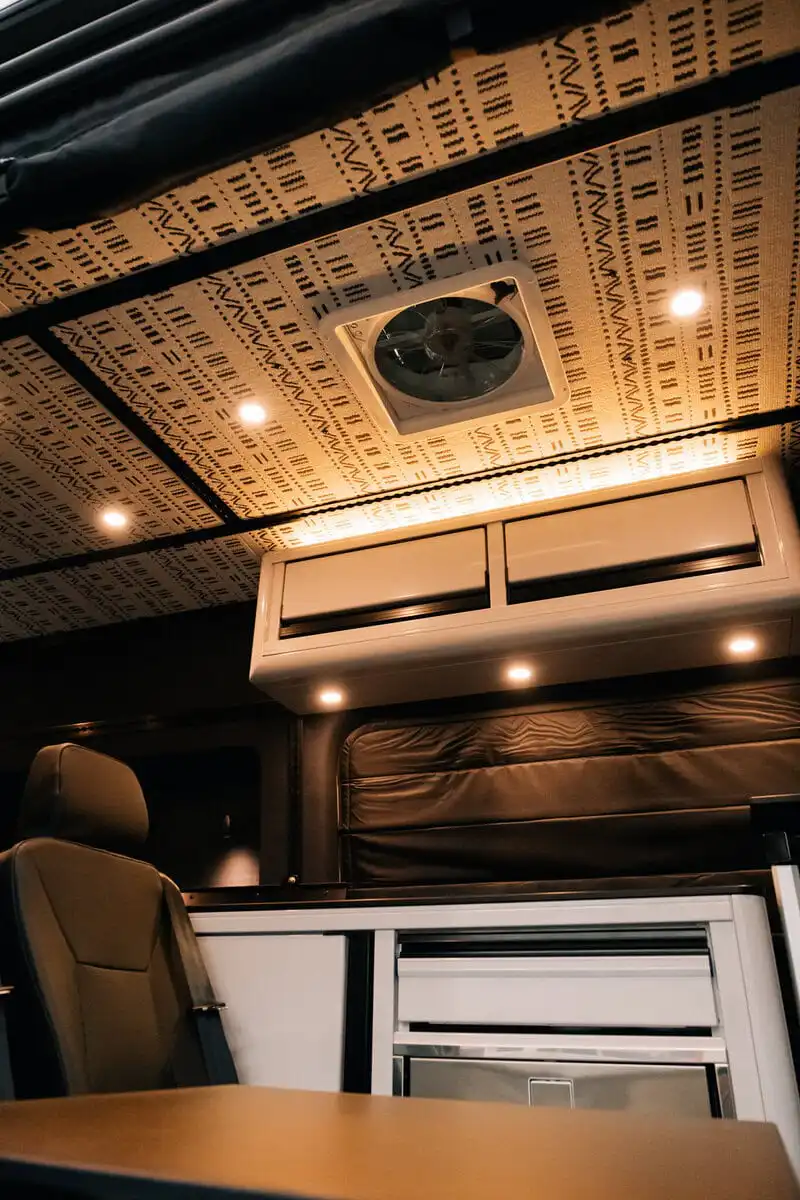
Insulation slows heat transfer; it doesn’t create or remove heat. For four-season comfort it has to be paired with the right heating and ventilation. We pair a well-insulated Sprinter with a diesel heater for reliable, low-draw heat that doesn’t lean on the battery the way resistive electric heat would, and with strong ventilation for humid climates and warm nights. A roof fan that can both exhaust hot, moist air and pull in cooler air does more for summer comfort than most people expect — and it works with the insulation rather than against it.
In hot climates, insulation’s job flips: instead of keeping heat in, it keeps heat out, reducing the cooling load. A van built to hold temperature in both directions is far easier to keep comfortable off-grid, which is the whole point of building it for four seasons rather than fair weather.
Why we build it in, not bolt it on
Insulation can’t be retrofitted without consequences. Because it lives behind the walls, getting it right means doing it early, in sequence, before the electrical rough-in and the cabinetry. That’s why a professional build treats insulation as one of the first stages, and why a van’s four-season capability is largely decided in the first weeks of the build, long before it looks like anything. A buyer evaluating builders should ask how they handle thermal bridging and condensation specifically — the answer reveals whether insulation is a thought-through system or a box being checked.
Frequently asked questions
What’s the best insulation material for a Sprinter van? There isn’t a single best material — a four-season build uses a combination chosen for the body’s curved cavities, flat surfaces, and thermal bridges. Continuity of the thermal envelope and careful installation matter more than any one product’s R-value.
How do I prevent condensation in a van? Manage vapor and ventilation, and keep warm interior air from reaching cold bare metal. Insulating the steel ribs (not just the cavities) and running adequate ventilation are the core of it. Done right, it’s largely preventable; done poorly, it leads to hidden rust and mold.
Does better insulation really improve off-grid capability? Yes, significantly. Better insulation means heating and cooling systems run less, which conserves battery power and heater fuel — directly extending how long you can stay off-grid comfortably.
Can insulation be added to a van after it’s built? Not without removing the interior. Because insulation sits behind finished walls and cabinetry, it has to be done early in the build. Retrofitting means a substantial teardown, which is why it’s worth getting right the first time.
Is insulation as important in hot climates as cold ones? Yes — in heat, insulation keeps warmth out and reduces the cooling load, just as it keeps warmth in during cold. A van built to hold temperature in both directions is far easier to keep comfortable in any season.
Where to go from here
If you’re planning a build meant to travel into real conditions, insulation is one of the decisions worth getting right from the start. See how it fits the larger picture in long-term Sprinter ownership and what “off-grid ready” actually means, review how we coordinate climate and power in the Victron electrical architecture hub, or talk with the Patrol Vans team about building a van that stays comfortable in every season.
External reference: Mercedes-Benz Vans for Sprinter body specifications.