

“Overland van,” “adventure van,” and “camper van” get used interchangeably across builder websites, gear retailers, YouTube channels, and the broader van travel community. They are not the same thing. The category distinction matters because each category optimizes for a different use case, prices into a different range, and serves a different buyer.
Buying a camper van when you needed an overland van leaves you with a vehicle that fails on the trips you actually want to take. Buying an overland van when you needed a camper van leaves you with $300,000 of capability you’ll never use. This guide is the framework for telling the categories apart so you can shop in the right one.
The three categories in one sentence each
A camper van prioritizes onboard living comfort for paved-road travel.
An adventure van balances capability and configurability for travel that involves both paved and unpaved roads, with off-grid duration measured in days to a couple of weeks.
An overland van prioritizes long-duration self-sufficiency and serious off-pavement capability for expedition-grade travel measured in weeks or months.
Those sentences hide a lot of nuance, but the categories cluster around those distinct optimizations.
Camper vans, properly defined
A camper van is a Class B RV. The optimization is comfort for paved-road travel between developed campgrounds with hookups. The buyer use case is weekend getaways, national park visits, and shoulder-season travel on roads a passenger sedan could handle.
Engineering signatures: factory or near-factory suspension, street-oriented tires, fixed interior furniture, dinette-based seating, smaller battery and water systems sized to short hookup-to-hookup intervals, often a wet bath, and a strong residential-style finish level.
Strong fit for: occasional travelers, retirees doing campground tours, weekend warriors on paved-road trips, buyers prioritizing onboard comfort over capability.
Where camper vans fail: any road where pavement ends, sustained off-grid use, weather conditions beyond mild seasons, trips that genuinely depart from the developed-campground network.
Adventure vans, properly defined
An adventure van is the middle category — the one most premium custom builders actually occupy. The optimization is the balance between off-pavement capability, off-grid self-sufficiency for trips up to a few weeks, and the configurability to handle multiple use cases without buying a different van.
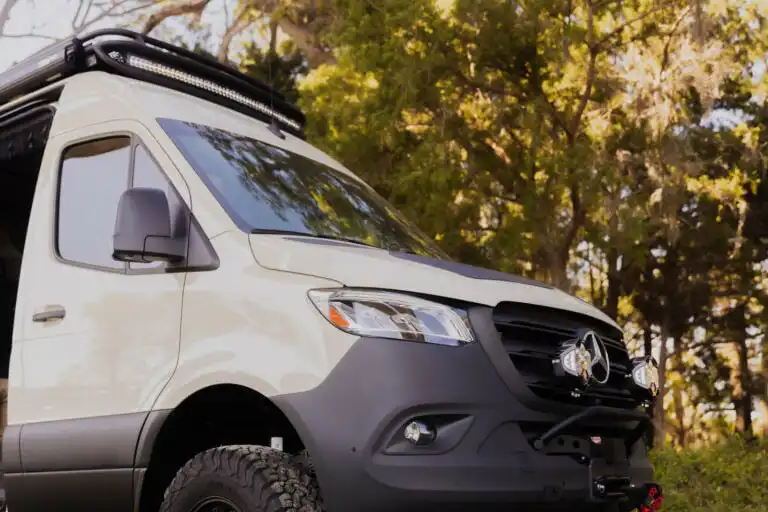
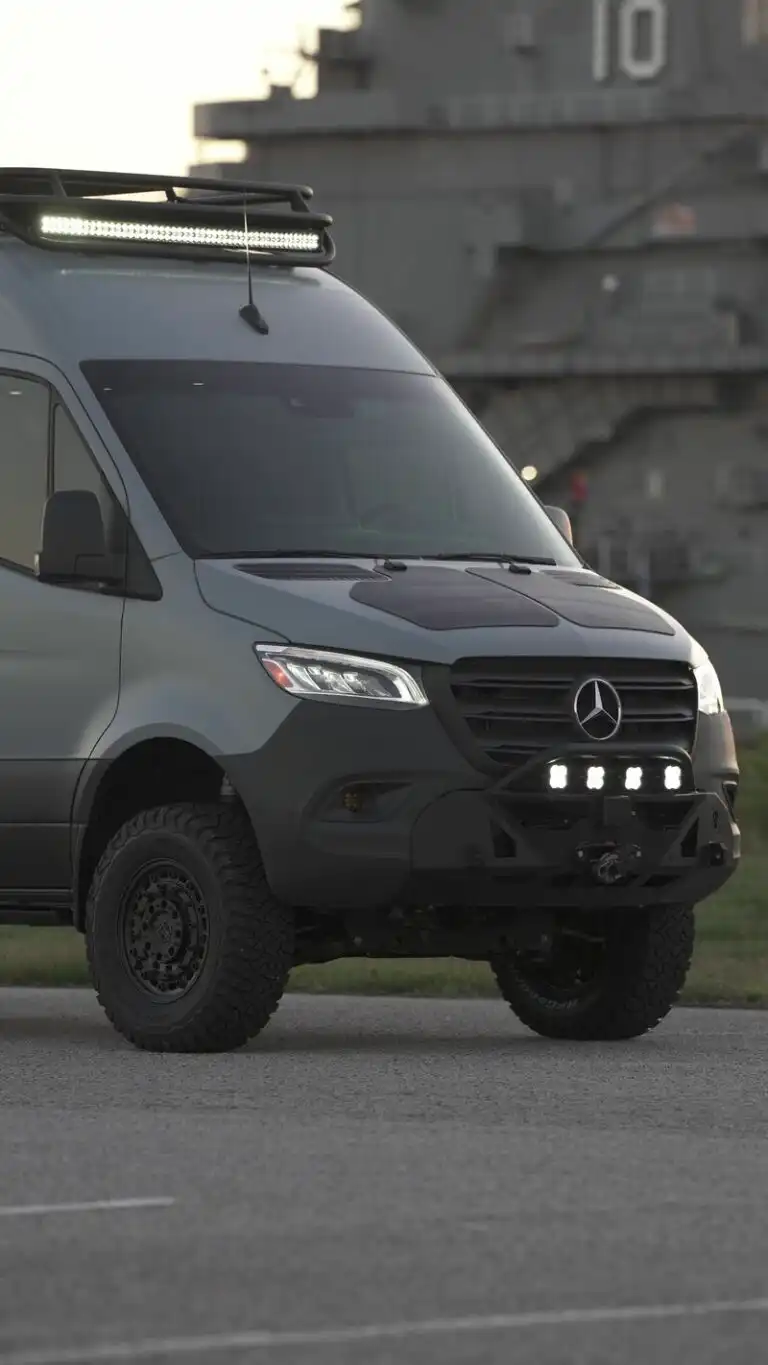
Engineering signatures: real suspension upgrade (Agile Off-Road or equivalent), aggressive but not extreme tires, modular interior (typically Smartfloor or L-Track based), lithium electrical sized to a real off-grid duration, certified seating, dedicated heat, real ventilation, often an outdoor shower setup and indoor toilet enclosure.
Strong fit for: serious adventure travelers, families who travel a mix of pavement and unpaved, professionals who need a configurable vehicle that handles work-and-play, full-time travelers, the buyer whose actual use case crosses categories.
Where adventure vans fall short: extreme expedition use (true overland), the lowest-cost end of the camper market (a built-out adventure van costs more than a basic camper).
For more on what specifically distinguishes a true adventure van, see our guide to capability versus aesthetic in adventure builds.
Overland vans, properly defined
An overland van is the heaviest, most self-sufficient category. The optimization is sustained off-pavement travel — measured in weeks, sometimes months — through remote terrain that a typical adventure van couldn’t sustain.
Engineering signatures: heavy-duty suspension and chassis modifications, aggressive off-road tires, often a 4×4 conversion at the highest specification levels, water capacity measured in 75+ gallons, oversized fuel range, redundant electrical, recovery gear integrated into the build, often an external water filtration system, often the ability to refuel from drums or jerry cans, sometimes a roof tent or expanded sleeping platform.
Strong fit for: true expedition users, full-time overlanders crossing continents, buyers building toward extremely remote travel where re-supply is rare, photographers and adventure professionals whose work happens in places the typical adventure van can’t reach.
Where overland vans fall short: everyday adventure use (they’re heavier than they need to be), buyers whose actual trips never push past adventure-van capability, families with kids (overland builds often optimize for two adults).
How to figure out which category you actually need
The most reliable way to pick the right category is to be specific about the trips you’ll actually take in years two and three of ownership — not the aspirational trip you imagine when you’re shopping.
If your actual trips are paved-road campground tours with the occasional national park: camper van.
If your actual trips involve unpaved roads, varying terrain, multi-day off-grid stays, family or multi-use configuration, mixed weather: adventure van.
If your actual trips involve sustained remote travel where the nearest service center is days away, water and fuel supply is genuinely scarce, and the vehicle needs to be self-sufficient for weeks: overland van.
Most buyers’ aspirations overshoot their actual use. The most expensive mistake we see is buyers spec’ing an overland-class build for a use case that adventure-class would have handled with less cost and less weight. The second most expensive mistake is buyers spec’ing a camper-class build for use cases that turn out to involve unpaved roads or off-grid duration the camper can’t actually support.
Where the categories blur
The boundaries aren’t sharp. Several patterns blur the lines:
A camper van with a suspension upgrade isn’t an adventure van. Suspension is necessary, not sufficient. The other systems (electrical, water, modular interior) have to be sized to the actual use too.
An adventure van with extreme off-grid spec approaches overland territory. A Sprinter on long wheelbase with 600+ Ah of lithium, 1,200+ watts of solar, 90+ gallons of water, and proper suspension can handle most of what overland buyers actually do, at a cost reasonably below true overland builds.
An overland van used primarily on pavement is just a heavy adventure van. Buyers who spec to the maximum but use the vehicle for adventure-class travel are paying for capability they don’t access. There’s nothing wrong with this except the cost.
How Patrol Vans fits the categories
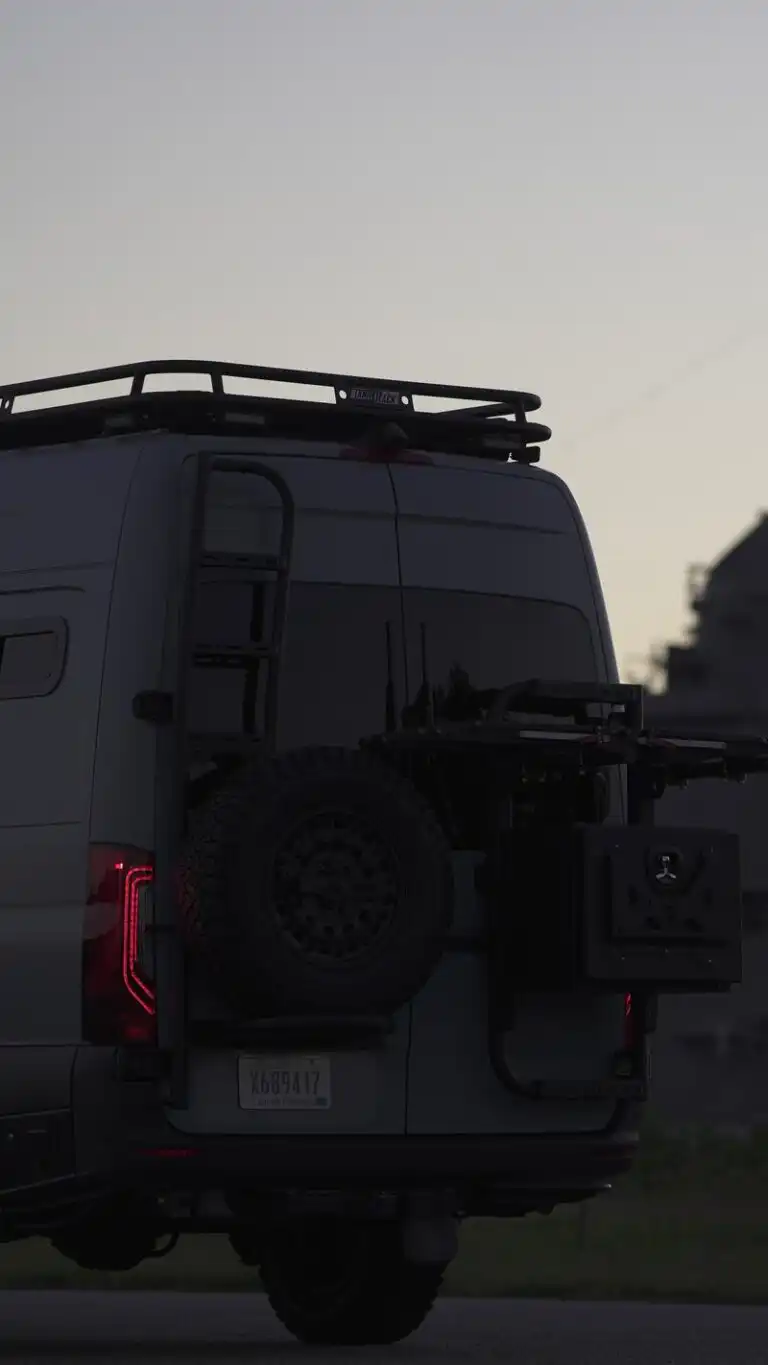
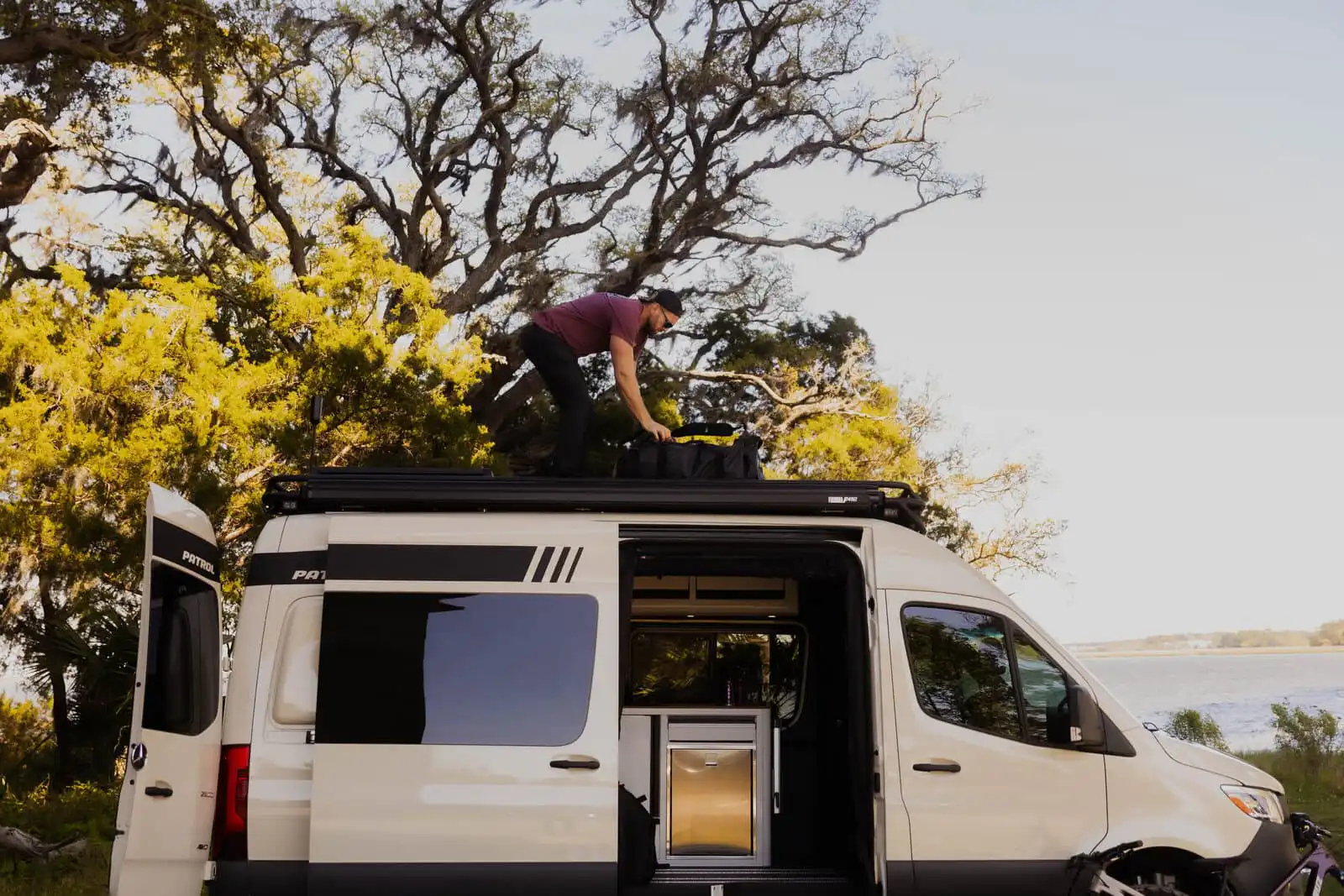
Patrol Vans builds adventure-class vehicles. The model lines — AlphaVan, EchoVan, OmegaVan — each sit at a slightly different point on the adventure-class spectrum but share the underlying philosophy: modular interior, real off-grid capability, real suspension, configurable across multiple use cases.
We’re explicit about this: we don’t build pure overland-class expedition vehicles, and we don’t build pure camper-class RVs. The middle category is where the broadest range of buyers actually live, and it’s the category we’re optimized for. Buyers whose real use case is overland or camper are usually better served by builders specialized in those categories.
Frequently asked questions
Is an overland van just a 4×4 adventure van?
No. 4WD is one component. An overland-class build is the combination of 4WD plus heavy-duty suspension plus sized-for-weeks off-grid systems plus often a roof tent or expanded sleeping plus integrated recovery plus expanded water and fuel range. The whole stack is engineered to weeks of remote self-sufficiency, not just rough roads.
Can a camper van handle off-grid camping?
For a night or two with conservative use, yes. For multi-day off-grid stays, most factory camper vans are undersized in battery and water. Some premium camper builds approach adventure-class off-grid capability, but the suspension and tires aren’t built for the road conditions that get you to off-grid sites.
How much does each category cost?
Camper vans: $80,000 to $180,000 for premium factory and aftermarket builds. Adventure vans: $185,000 to $325,000 for serious custom builds. Overland vans: $300,000 to $500,000+ for true expedition-class vehicles. The categories overlap in price at the boundaries.
Do I need a 4×4 Sprinter for an adventure van?
Most buyers do. 4WD on a Sprinter unlocks travel categories that 2WD doesn’t support. Buyers whose actual use case stays on improved roads can save money with 2WD, but the value at resale and the breadth of usable terrain favor 4WD for most adventure-class builds.
Which category is right for full-time travel?
Adventure-class is the right answer for most full-timers. Overland-class is overbuilt for full-time travel that mostly happens on developed routes. Camper-class is undersized for the duration and off-grid demands full-time travel creates. The exception is full-timers whose travel involves extended expedition routes, where overland makes sense.
Where to go from here
If you’re not sure which category fits your use case, the deciding question is usually about the unpaved-road percentage of your actual travel. Above roughly 20%, adventure-class is the right answer. Above 50% and with remote-terrain duration, overland is worth considering. Below 10%, camper-class is the better-value choice.
Talk with the Patrol Vans team about your actual travel patterns, and we’ll tell you honestly which category fits — including pointing you to a different builder if your use case is genuinely overland or camper. If you’ve decided adventure-class fits, the Basecamp configurator walks through each Patrol Vans model.
For broader context on the overland travel community and standards, the Overland Journal at overlandjournal.com publishes long-form coverage of the category.