

Every modular interior comes down to a simple question: what are you actually going to hang on it, and will it hold? The mounting system is the unglamorous foundation that decides whether your storage stays put on a washboard forest road, whether a bike rack can move to a new spot next season, and whether the walls of your van are working surfaces or just decoration. The Adventure Wagon MULE system is one answer to that question, and when it is installed properly, it turns the inside of a Sprinter into a grid you can build on for years.
This is a companion piece to our broader look at Adventure Wagon builds in a Patrol Vans Sprinter. Here we go one level deeper into the hardware itself — the L-Track, the MULE panels, and the modular storage that mounts to them — and explain what done right means when this system goes into a professional build.
The MULE system, in plain terms
MULE stands for Adventure Wagon’s modular panel and mounting ecosystem. Think of it as three layers working together. First, structural wall and ceiling panels that replace bare van metal with insulated, mountable surfaces. Second, L-Track rails integrated into those panels, giving you continuous anchor points. Third, the modular accessories — shelving, cabinets, gear mounts, tie-downs — that clip, bolt, or slide onto the L-Track wherever you need them.
The reason builders reach for it is straightforward. A conventional interior fixes everything in place; if your needs change, you rebuild. A MULE-based interior treats the walls as a permanent framework and the storage as movable. You are not committing to one layout forever — you are committing to a grid, and then arranging and rearranging within it as your travel changes.
L-Track: the part that has to be right
L-Track is the load-bearing heart of the system, and it is also the part most likely to disappoint if it is installed carelessly. The rail itself is strong — it is the same style of track used to secure cargo in aircraft — but it is only as good as what sits behind it. Anchor L-Track to a thin panel with no structural backing and you have a rail that looks capable and fails under real load. Anchor it to properly engineered backing, tied into the van’s structure, and it will carry heavy, shifting weight over years of rough travel.
That distinction is the whole game in a professional install. When we integrate MULE L-Track, the backing is planned before the panels go on, the fastener pattern is chosen for the loads that section will carry, and the rail is positioned where you will actually use it rather than wherever the panel seam happened to fall. The result is track you can trust with a loaded gear rack on a rough road, not just track that looks the part in photos.
Panels, insulation, and the details behind the wall
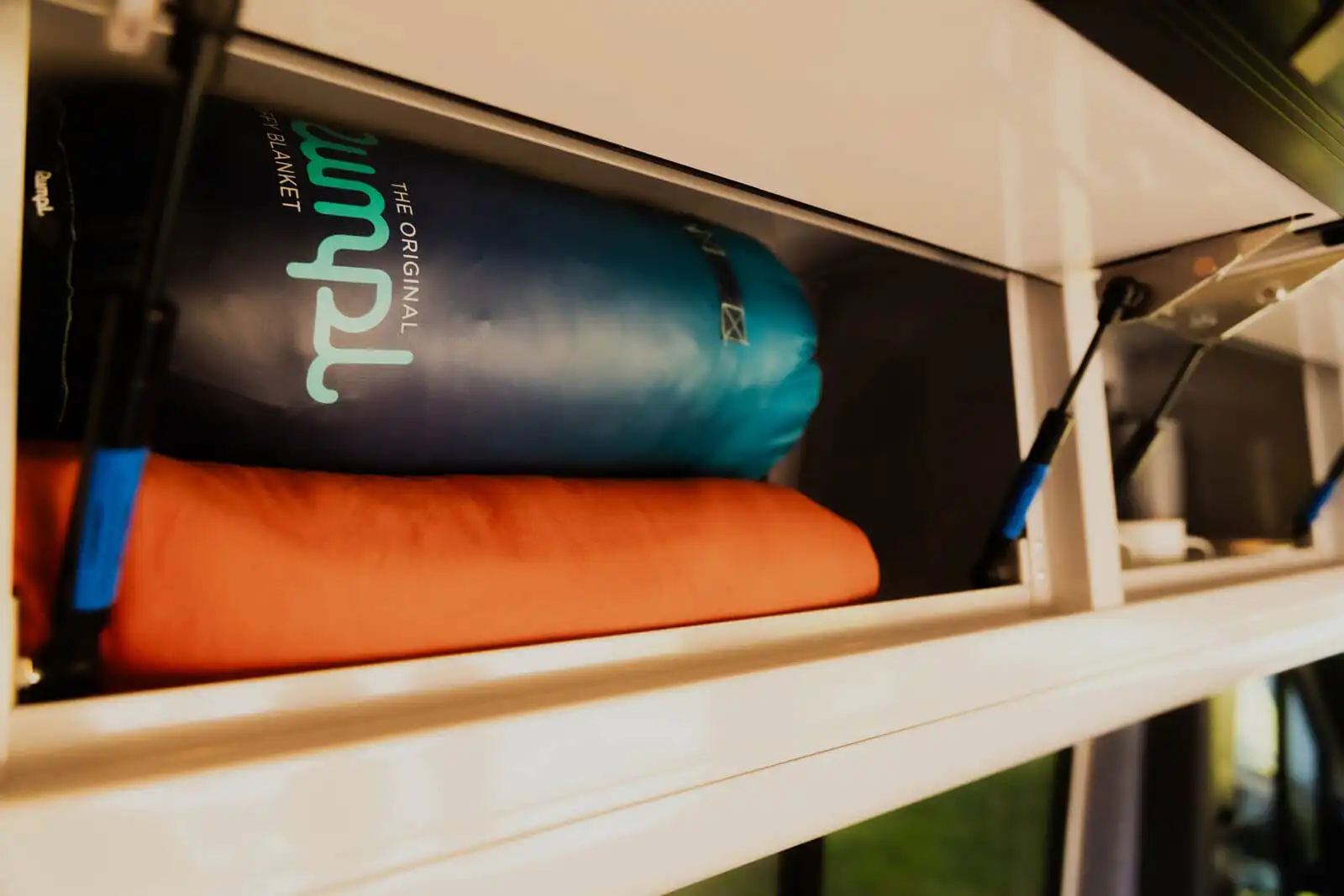
The MULE panels do more than provide mounting points. They are also part of the van’s thermal and acoustic story. Behind a well-installed panel sits proper insulation and clean wire routing; in front of it sits a finished, durable surface. Get that layering right and the van is quieter, better insulated, and easier to live in. Rush it, and you end up with rattles, thermal bridges, and access problems the first time you need to reach something behind the wall.
This is where planning the modular grid alongside the rest of the build pays off. The panels, the electrical runs, the insulation strategy, and any plumbing all share the same wall cavities. Coordinating them from the start — rather than fitting the modular system around a finished interior — is what lets the panels come off cleanly for service and go back without damage. It is the same integration discipline we bring to our modular Sprinter interior work generally.
Modular storage that actually moves
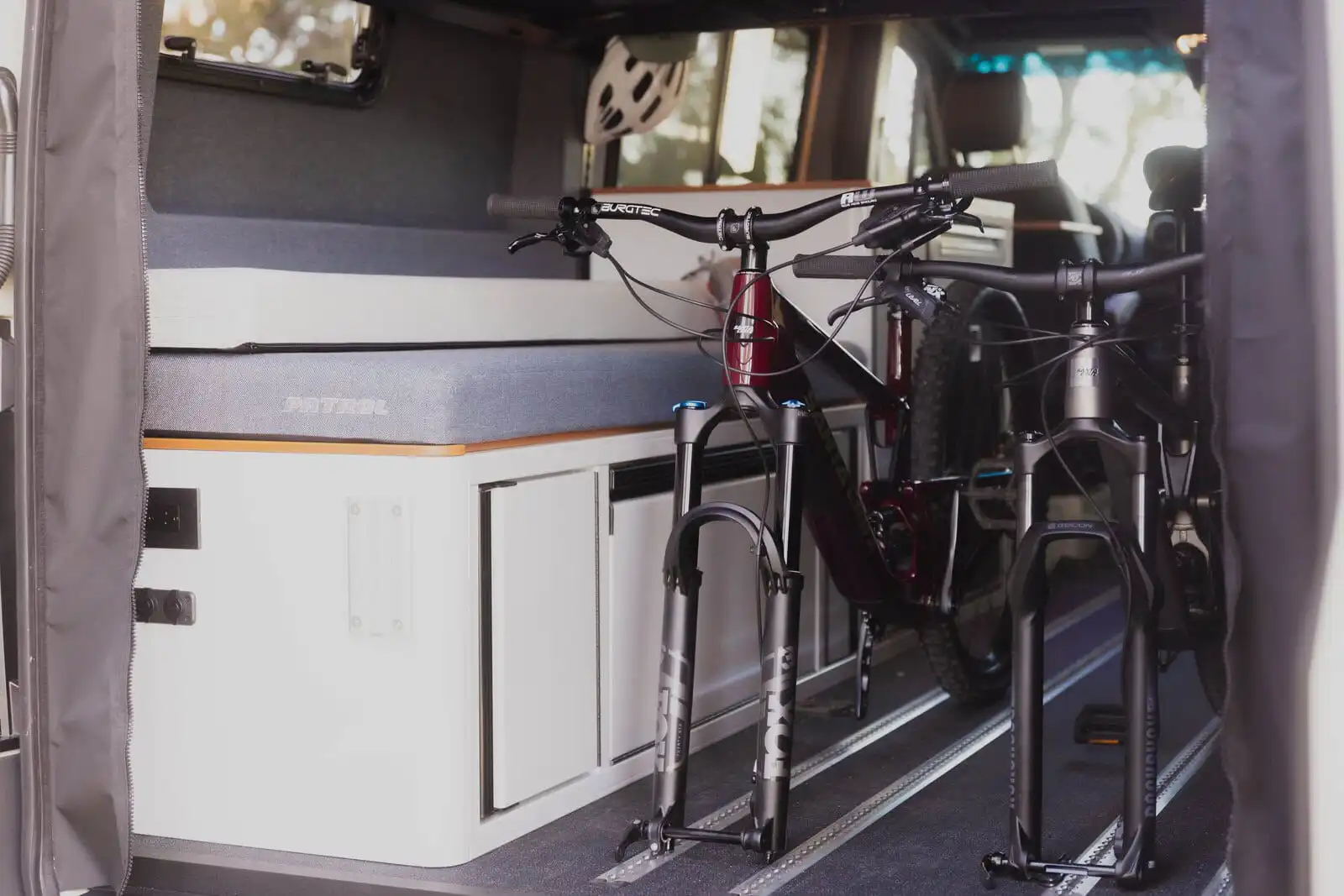
The payoff of all this foundation is storage that adapts. Because everything mounts to the L-Track grid, a shelf can relocate, a cabinet can come out for a big haul, and a new gear mount can go up without drilling fresh holes into the van. Owners who travel different ways in different seasons — bikes in summer, snow gear in winter, open cargo for a move — get one van that reconfigures instead of three compromises.
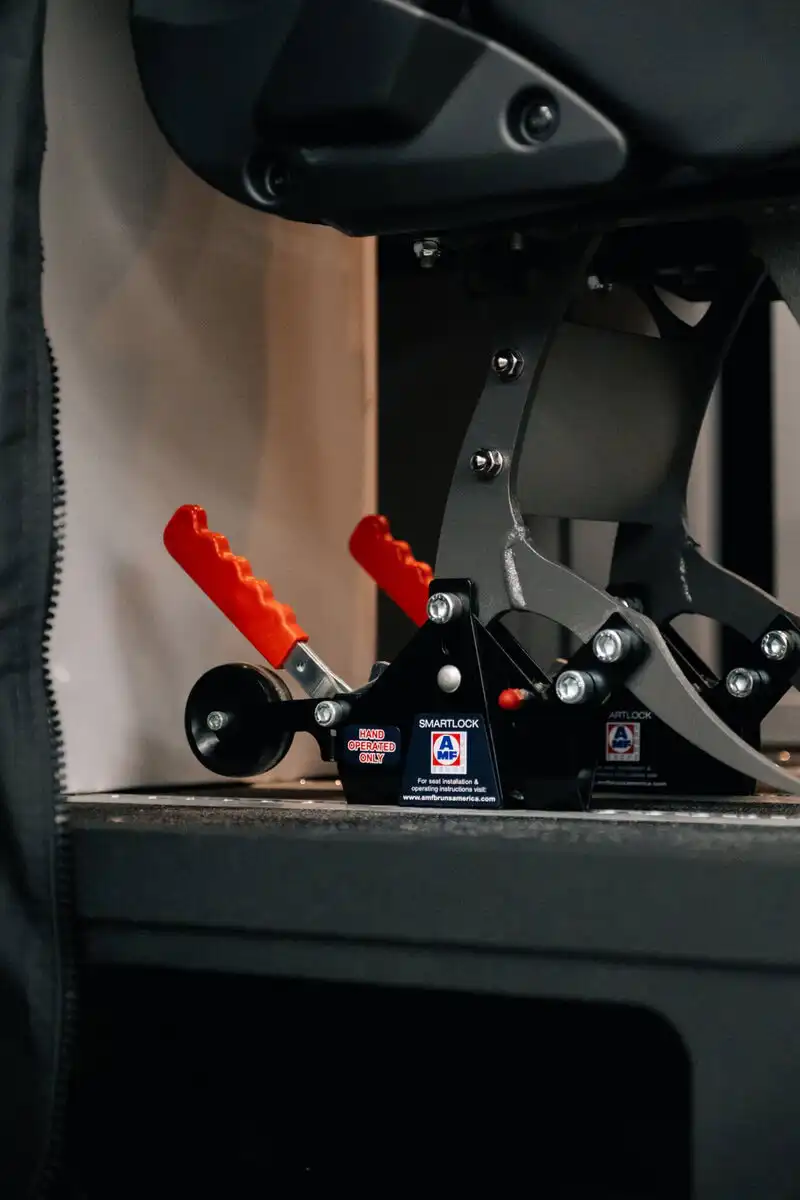
It pairs naturally with floor-level flexibility, too. Where a build also uses removable seating, the wall grid and the floor system together let you rethink the entire interior. We compare those floor approaches in our guide to removable seating: Smartfloor vs L-Track, and the trade-offs between integrated and kit-based modular systems in our Smartfloor vs modular kit systems comparison.
What done right really means
If there is one theme to take from this, it is that the MULE system rewards the work you cannot see. The visible panels and shiny L-Track are the easy part. The engineered backing, the coordinated wire routing, the insulation behind the panels, and the placement decisions made before anything was mounted are what separate a modular interior that performs from one that merely looks modular. That is the standard we hold ourselves to on every build.
Frequently asked questions
What does MULE stand for in the Adventure Wagon system?
MULE is Adventure Wagon’s name for their modular panel and mounting ecosystem — the combination of structural wall and ceiling panels, integrated L-Track, and the accessories that mount to them. It is designed so an interior can be rearranged over time rather than fixed in one configuration.
How much weight can L-Track hold in a van?
L-Track itself is rated for substantial loads, but real-world capacity depends entirely on the backing behind it and how it is fastened. Track anchored to properly engineered, structurally tied backing can carry heavy, shifting gear over rough travel; track mounted to unsupported panel can fail well below its rating. This is why professional backing and fastener planning matter so much.
Can the MULE panels be removed for service later?
Yes — when they are installed with service in mind. Part of a good install is coordinating the panels with the wiring, insulation, and plumbing so a panel can come off for access and go back cleanly. That planning is one of the biggest differences between a professional integration and a rushed one.
Do I need the full MULE system or just L-Track?
It depends on how you travel. Some builds only need targeted L-Track for a few gear mounts; others benefit from the full panel-and-grid treatment for maximum flexibility. The right amount is the amount that matches how you actually use the van — a decision worth making before the interior goes in.
The takeaway
The Adventure Wagon MULE system is a strong foundation for a modular interior, but installed and installed right are two different things. The value lives in the engineering behind the panels — the backing, the routing, the placement — that lets the L-Track and modular storage do real work for the life of the van. Done properly, it gives you a Sprinter interior that keeps adapting as your travel does.
If a flexible, gear-ready interior is part of your build plan, talk with the Patrol Vans team about how we integrate modular systems, or view recent builds to see the approach in action.