

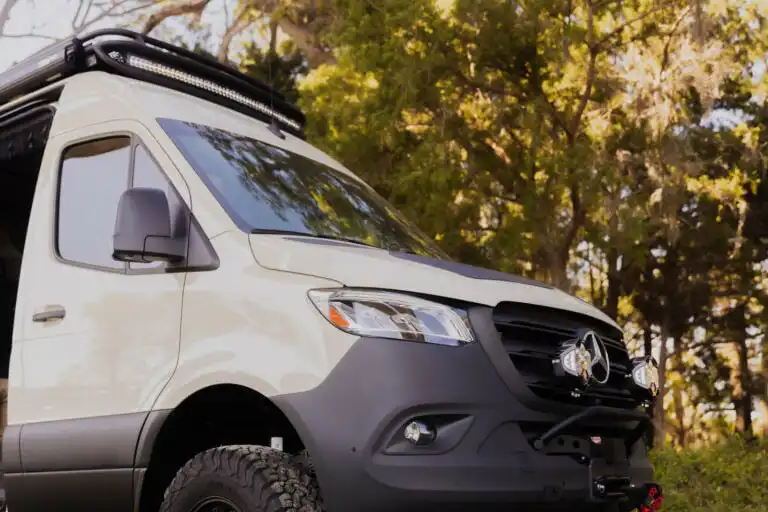
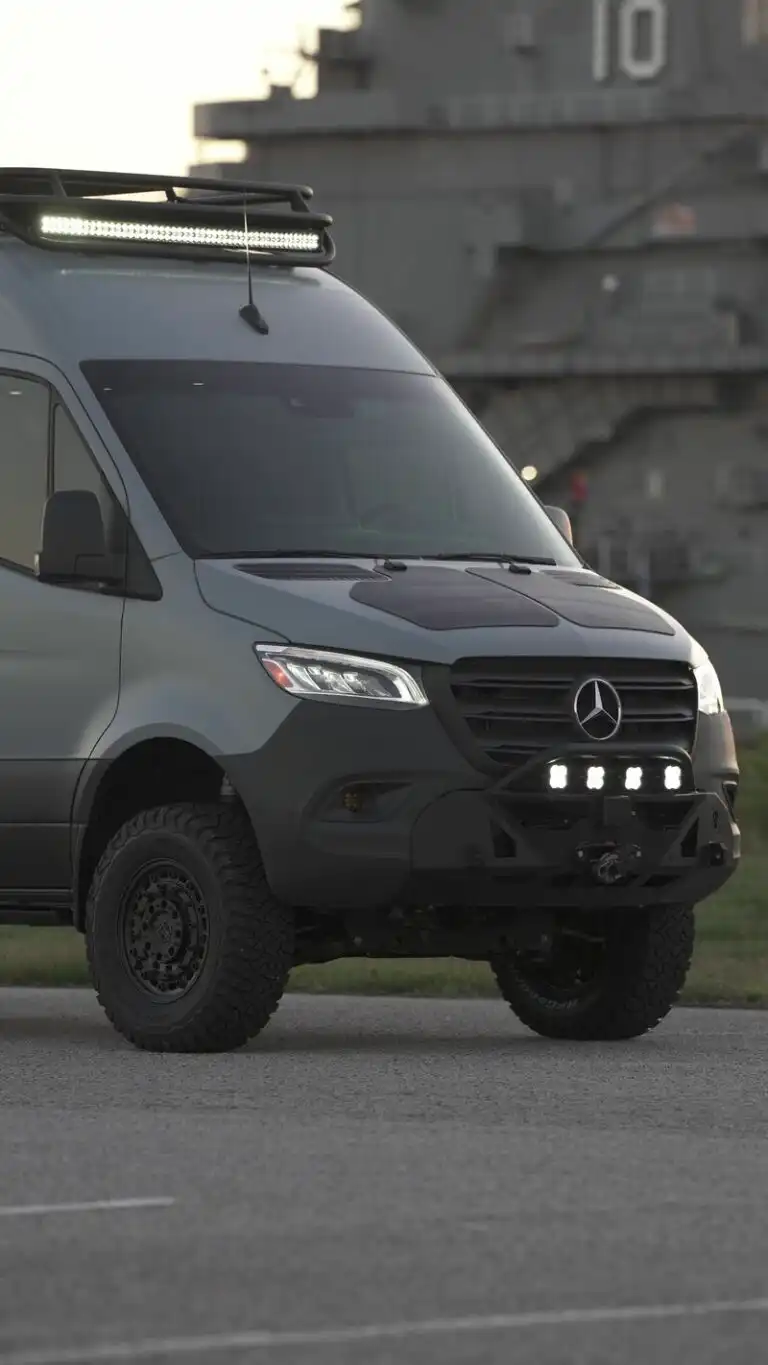
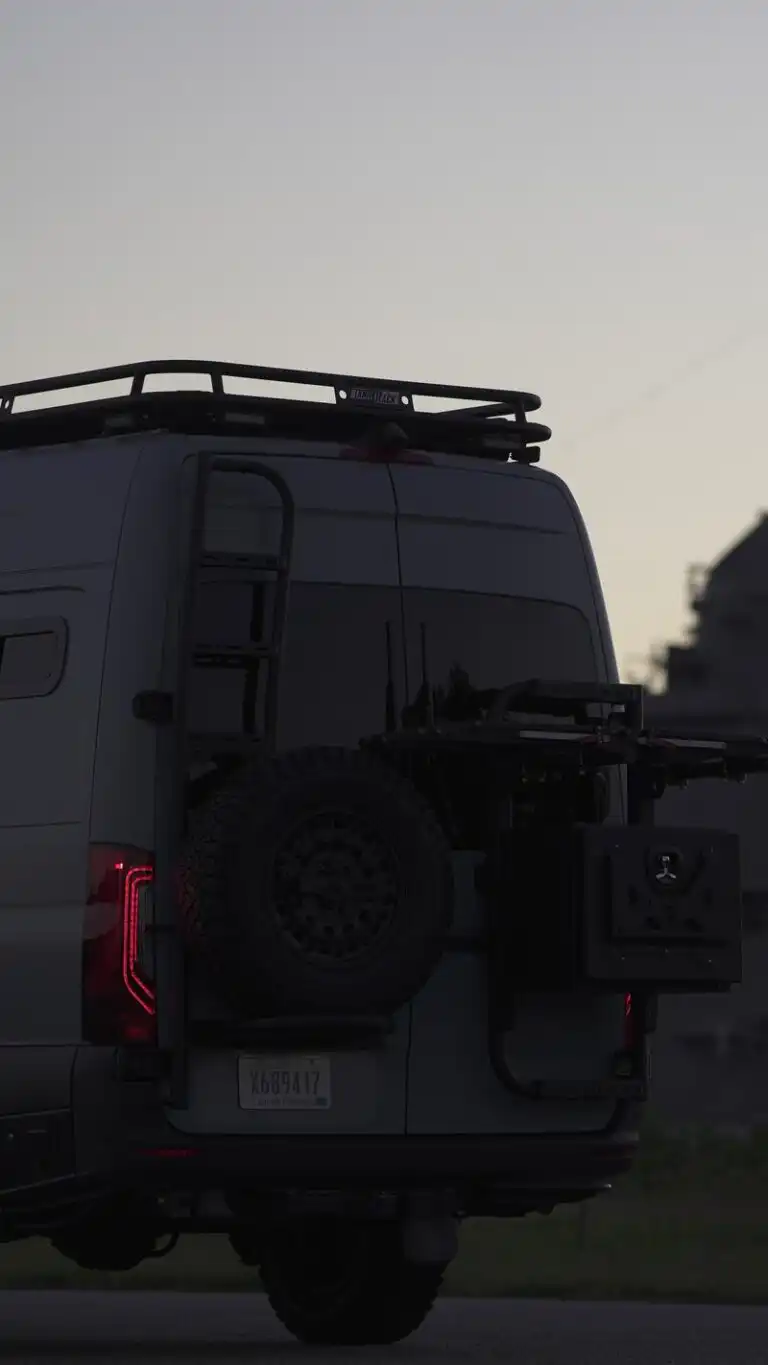
Ask most people what makes a van interior feel finished and they will point at the obvious things — the cabinetry, the countertop, the bed. Ask someone who has lived in a van for a season and they will talk about something quieter: whether the interior can change. Whether the bed can come out for a gear haul. Whether a bench can move. Whether the walls can carry a rack today and a different one next year. That adaptability is the real test of a modular interior, and it is where components like the Adventure Wagon system earn their place in a build.
Adventure Wagon is one of the modular interior brands we install in Patrol Vans Sprinter conversions, and it is worth understanding why. Their hardware is designed around flexibility — L-Track, structural panels, and mounting systems that let an interior evolve instead of locking into one shape. This article walks through how those systems work in a real, professionally finished build, what they do well, and how we integrate them so the result feels purpose-built rather than kit-assembled.
What Adventure Wagon systems are built to do
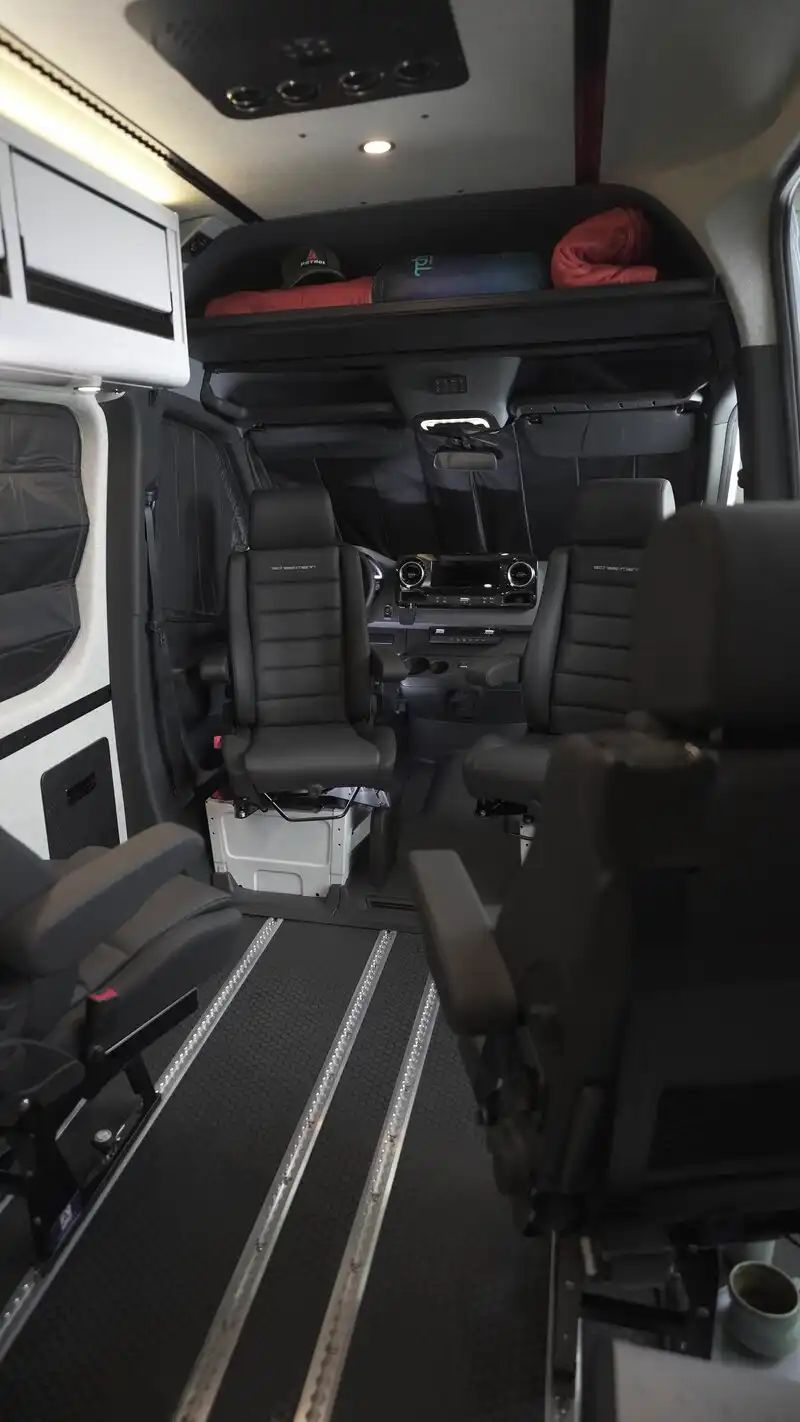
At its core, the Adventure Wagon approach treats the interior as a grid rather than a fixed room. Structural wall and ceiling panels replace bare metal with insulated, mountable surfaces. L-Track — the aircraft-style rails you have probably seen running along van walls — turns almost any surface into an anchor point. Once that grid exists, gear, furniture, and storage attach to it in a way that can be rearranged as needs change.
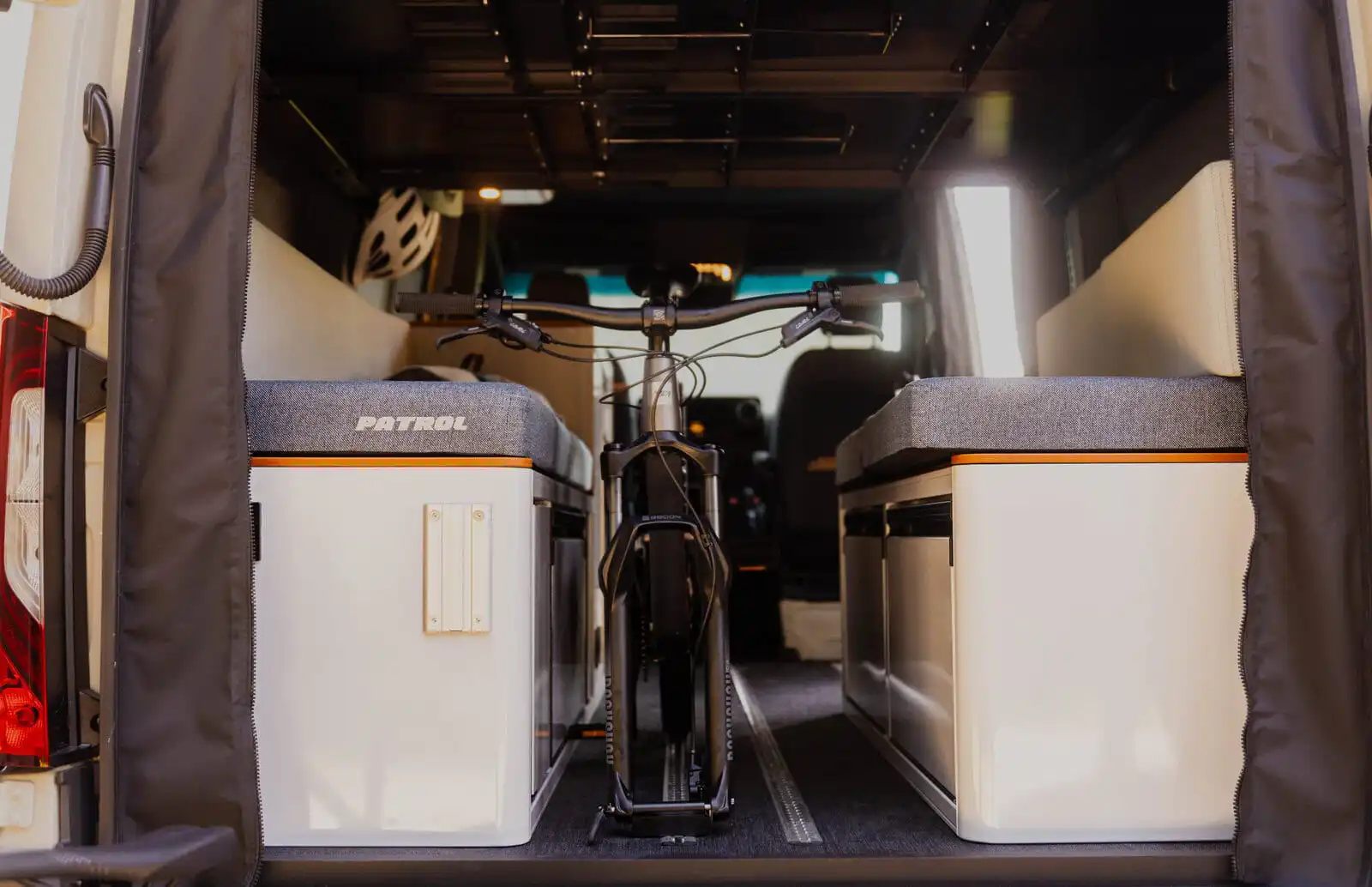
The appeal is obvious for the way real people actually use vans. A family heading out for a week wants seating and sleeping. The same family hauling bikes and camping gear the following weekend wants open floor and secure tie-downs. A modular grid lets one van serve both without a rebuild. That is the same philosophy behind our Smartfloor work — the belief that a van should adapt to your lifestyle rather than forcing your lifestyle to fit the van.
Where a professional install differs from a DIY kit
Adventure Wagon sells directly to DIY builders, and plenty of capable owners install their kits themselves. So it is fair to ask what a professional integration adds. The honest answer is: the difference is in the parts you do not see. Panel gaps, fastener backing, insulation behind the panels, wire routing through the grid, and the way the modular system ties into the rest of the build — the electrical, the plumbing, the cabinetry — are where a finished build either feels solid or feels like a collection of add-ons.
When we install Adventure Wagon components, we are not just bolting panels to a wall. We are planning the grid alongside the electrical runs, the insulation strategy, and the layout so the modular hardware and the fixed build reinforce each other. Mounting points land where you will actually want them. Panels meet cleanly. The L-Track carries real loads because the backing behind it was engineered for it. The goal is a van that reconfigures easily and still feels like one cohesive vehicle years down the road.
Adventure Wagon and Smartfloor: complementary, not competing
People sometimes assume you have to choose between a modular wall system like Adventure Wagon and a modular floor system like Smartfloor. In practice, they solve different problems and work well together. The floor system handles removable seating and heavy, floor-anchored loads; the wall and ceiling grid handles storage, gear mounting, and interior flexibility above the floor. In many of our builds, both are present, giving an owner the freedom to reconfigure top to bottom.
If you are weighing modular approaches against one another, we cover the trade-offs in depth in our guide to Smartfloor versus modular kit systems, and our overview of a modular Sprinter interior shows how these pieces come together in a finished layout. The short version: the best modular interiors are usually not one system but a thoughtful combination, planned from the start.
What this looks like in a finished Patrol Vans build
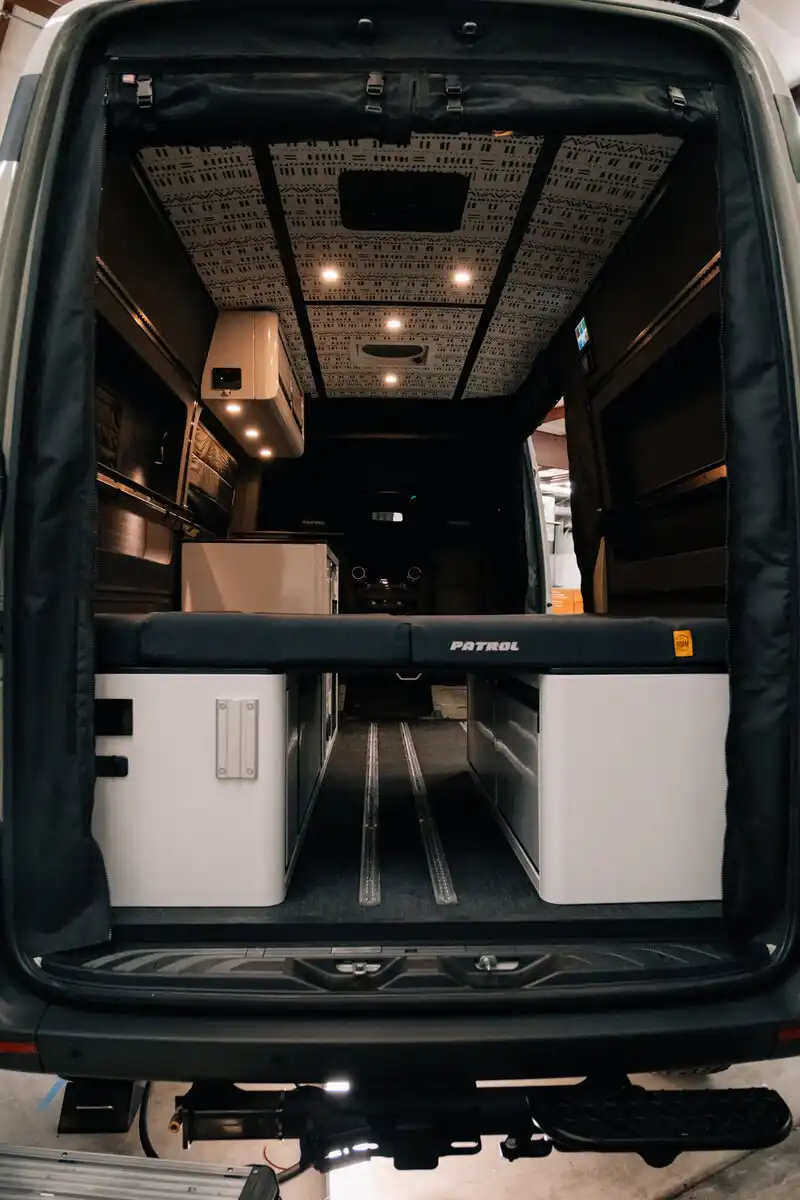
In a completed build, the Adventure Wagon grid mostly disappears into the finished interior — which is the point. You see clean insulated walls and a tidy ceiling, and it is only when you want to change something that the flexibility reveals itself. A storage module unclips and relocates. A gear mount moves to a new position on the L-Track. A panel comes off for access to a run behind it and goes back without damage. The system is doing constant quiet work to keep the van adaptable.
That is exactly the capability we want every owner to have. Whether the build is oriented toward removable-seating flexibility or toward gear-hauling and overland travel, the modular interior is what lets one van keep up as your travel evolves. It is also why we treat the interior grid as a foundational decision rather than a finishing touch — get it right early, and the van stays useful for a long time.
Choosing modular hardware for the way you travel
Not every build needs the full modular treatment, and part of our job is being honest about that. A dedicated adventure rig that will always haul the same gear may not need much reconfigurability. A family van that has to be seating one day and cargo the next benefits enormously. The right amount of modular hardware is the amount that matches how you actually use the van — no more, no less. That is a conversation worth having before the panels go on, not after.
Frequently asked questions
Is Adventure Wagon only for DIY builders?
No. Adventure Wagon is well known in the DIY community, but their modular components are equally at home in a professional build. Installed as part of a fully integrated conversion, the same hardware benefits from engineered backing, clean insulation, and coordination with the electrical and plumbing systems — the details that make a modular interior feel solid rather than assembled.
What is L-Track and why does it matter?
L-Track is a strong, aircraft-style mounting rail that runs along the walls or floor of a van. It turns fixed surfaces into a flexible grid of anchor points, so seating, storage, and gear can be secured, moved, or removed without drilling new holes each time. It is one of the core reasons a modular interior can change shape safely.
Can I combine Adventure Wagon components with a Smartfloor system?
Yes, and many of our builds do exactly that. Smartfloor handles removable seating and floor-anchored loads; Adventure Wagon’s wall and ceiling grid handles storage and gear mounting. Used together and planned from the start, they give you flexibility from floor to roof.
Will the modular hardware make the interior feel unfinished?
It should not. Done well, the grid lives behind clean panels and a tidy ceiling — you notice it only when you want to reconfigure something. The finished interior should feel cohesive and durable, with the flexibility waiting quietly underneath.
The takeaway
A modular interior is not about having the most hardware on the wall. It is about building a van that can keep up with a changing life — one that carries a family this month and a mountain of gear the next, without a rebuild in between. Adventure Wagon systems, installed and integrated properly, are one of the ways we deliver that adaptability in a Patrol Vans Sprinter.
If you are planning a build and want an interior that can evolve with you, talk with the Patrol Vans team about your modular options, or compare our models to see which platform fits how you travel.