

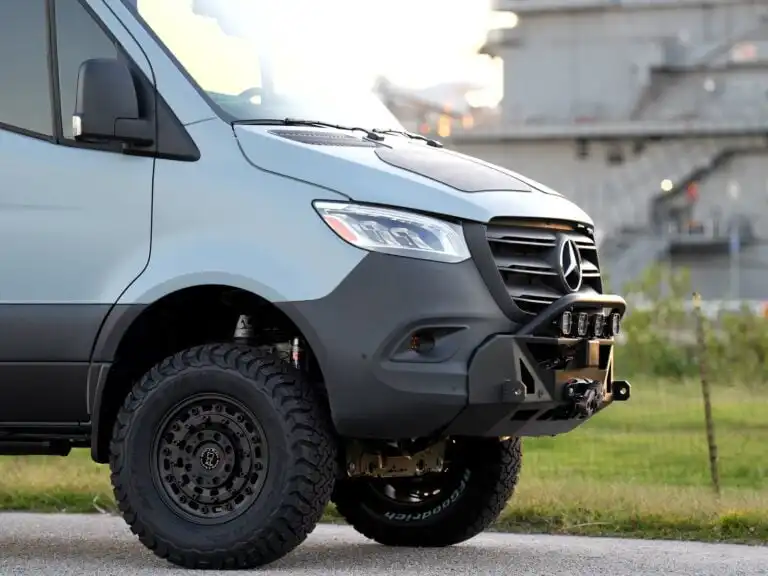
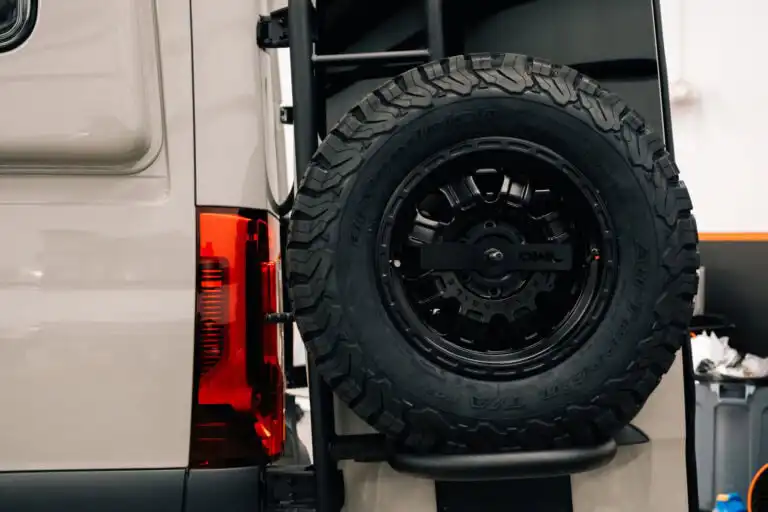
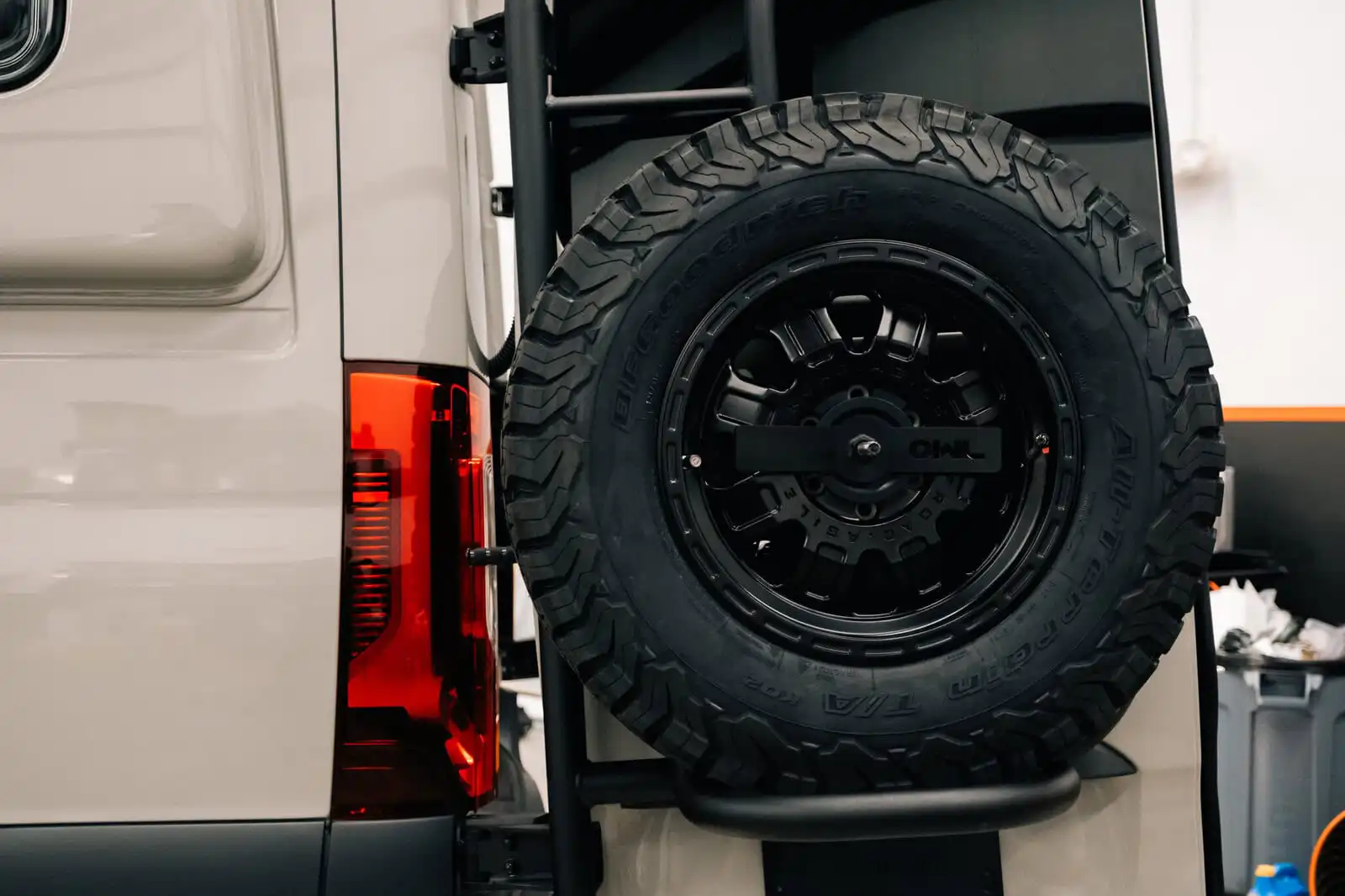
Every overland Sprinter build eventually runs into the same argument with itself: the full-size spare. It is heavy, it is bulky, and it has to go somewhere. Inside, it consumes floor space that a conversion cannot spare and puts a dirty tire in the living area. Underneath, on a van that spends time on rough roads, the factory location can be difficult to access and vulnerable. Which leaves the rear doors — and that is where a Sprinter tire carrier and a properly engineered rear door rack earn their place.
This article follows on from our overview of Owl Vans Sprinter upgrades and narrows in on the rear door specifically: what the B2 system does, what hanging real weight on a door means over a van’s life, and how to decide what actually belongs back there.
Why the rear doors are the right place for heavy gear
Rear door mounting solves several problems at once. It moves weight out of the living space, which is the scarcest resource in any conversion. It puts frequently needed items — spare, fuel or water containers, recovery gear, tools — where you can reach them without unpacking the interior. It keeps dirty equipment outside, which matters more than it sounds after a week of dusty roads. And it uses vertical space on a surface the van already has, rather than adding length or height.
The trade-off is that a rear door was engineered to carry a door, its glass or panel, and its own hardware. It was not engineered to carry an additional eighty to a hundred pounds swinging on its hinges, slamming shut thousands of times, and shaking on washboard for hours. That is a real engineering load, and it is exactly why the hardware you choose matters more here than almost anywhere else on the exterior of the van.
What the Owl Vans B2 system does
Owl Vans builds the B2 as a modular rear door platform engineered specifically for the Sprinter — the actual door geometry, the factory mounting locations, and the load paths the vehicle can support. That platform then accepts what the build needs: a tire carrier for a full-size spare, mounts for fuel or water containers, storage boxes, recovery boards, or a combination.
Modularity is the useful part. Owners rarely need the same configuration, and needs change as travel changes. A build that starts as a weekend explorer with a spare and a storage box can add water carriage and recovery gear later without replacing the foundation. It is the same modular logic we apply to interiors — the structure stays, the configuration adapts.
What sets Sprinter-specific hardware apart from a universal rack is where it puts the load. Generic carriers frequently rely on adapters, shims, or door skins never intended to take that force, and the consequences arrive slowly: hinges that develop play, doors that stop closing cleanly, mounting points that work loose, and rattles that no amount of tightening resolves. Hardware engineered for the platform distributes load into the structure the van actually has.
What hanging weight on a door does over 100,000 miles
This is the part worth being honest about, because the failures are gradual rather than dramatic.
A loaded rear door has more mass and more leverage every time it swings. Hinges take that on every opening, and wind catching a heavy door adds shock loading. Latch alignment shifts as the door settles under sustained weight, and a door that no longer closes squarely will eventually leak, whistle, or wear its seals unevenly. On rough roads the whole assembly vibrates continuously, and any fastener not correctly torqued and secured will find its way loose.
None of this is an argument against rear door carriage — it is an argument for engineered hardware, correct installation, and periodic checks. Fasteners want inspecting after the first few hundred miles and then at sensible intervals. Latch and hinge alignment want checking annually, particularly on a van that lives on dirt. And weight wants keeping to what the door is genuinely rated for rather than everything that will physically fit, which is the temptation.
Rear door weight and how the van drives
Weight at the extreme rear of a long vehicle has more effect on handling than its number suggests, because it sits well behind the rear axle. Loaded rear doors add to rear squat, contribute to the pendulum feel in crosswinds, and change how the van settles after bumps. On a conversion already carrying substantial permanent weight, it compounds.
Which is why exterior load planning and suspension specified for the finished loaded van belong in the same conversation. Springs and damping sized for the real weight — including what hangs off the back — is what keeps the van composed rather than wallowing. Plan them together and the rear carriage is a capability upgrade; plan them separately and it is a handling complaint waiting to happen.
Deciding what actually goes on the doors
The useful discipline is to earn every item’s place rather than filling the available mounting space.
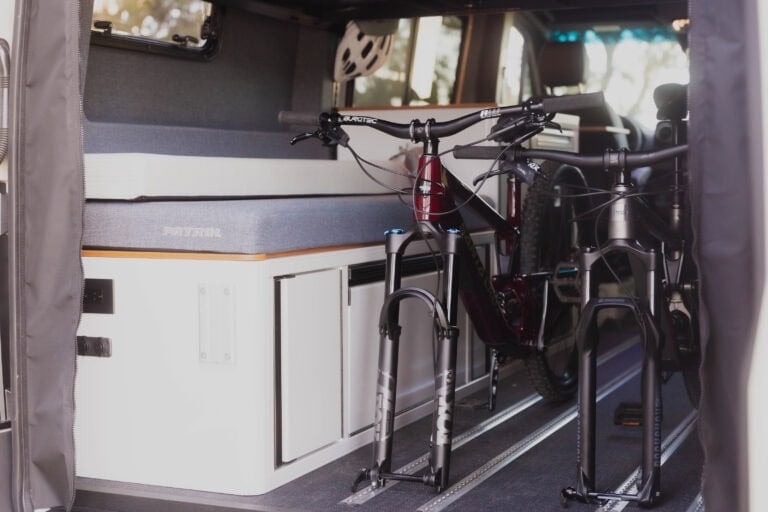
The full-size spare almost always justifies itself on a build headed anywhere remote, because it is heavy, awkward, and the whole point of carrying it is that you can get to it when you need it. Fuel and water containers make sense for genuinely remote travel and much less sense for a van that resupplies every couple of days. Recovery gear belongs outside because it is dirty and needed exactly when you cannot unpack the interior. Bulky sporting equipment is worth a harder look — a lot of it is better served by a properly designed interior gear garage, which keeps it secure, dry, and out of the weather rather than exposed on a door.
Everything else is worth questioning. Exterior mounting trades interior space for weight, wind noise, and a slightly harder-working door — a good trade for the right items and a poor one for gear you use twice a year. That thinking runs through how we approach a complete overland Sprinter build: exterior storage is designed with the interior, not bolted on once the interior is finished.
Frequently asked questions
What is the Owl Vans B2 rack?
The B2 is Owl Vans’ modular rear door rack platform for Sprinters. It mounts to the rear doors using the van’s structure and accepts configurable attachments — tire carrier, fuel or water container mounts, storage boxes, recovery board mounts. Because it is engineered for Sprinter door geometry, it distributes load in a way universal racks generally cannot.
Will a rear tire carrier damage my Sprinter’s doors?
Not with correct hardware, correct installation, and sensible maintenance. The risks — hinge wear, latch misalignment, loosening fasteners — come from load paths the door was not designed for, or from fasteners that are never re-checked. Sprinter-specific carriers are engineered around what the door can support, which is why fit and installation quality matter so much here.
How much weight can a Sprinter rear door carry?
It depends on the door, the hardware, and how the load is distributed, so the manufacturer’s rating for the specific system is the number that governs. The practical guidance is to stay within it rather than up against it, and to distribute weight across the platform rather than concentrating it. A carrier that is easily within its limits will outlast one that is always at the edge of it.
Should the spare tire go on the rear door or underneath?
For remote travel, the door is usually better: accessible when you need it, out of the living space, and not buried under a loaded van in the mud. Underneath keeps weight lower and the doors lighter, which suits builds that stay closer to pavement. The right answer follows how far from help you actually travel.
Does rear door gear affect fuel economy or handling?
Handling more than fuel economy. Weight behind the rear axle increases squat and adds to the pendulum sensation in crosswinds, which is why suspension should be specified with exterior load included. The aerodynamic penalty of a door rack is modest on a vehicle already shaped like a Sprinter.
The takeaway
Rear door systems solve the storage problem that every serious overland Sprinter eventually runs into — where to put heavy, dirty, occasionally needed equipment without surrendering interior space. Owl Vans’ B2 platform does it with hardware engineered for the Sprinter specifically, which is what determines whether the doors carry that weight cleanly for a hundred thousand miles or slowly develop play, misalignment, and rattles. Choose deliberately, install properly, plan the suspension around the finished weight, and put on the doors only what genuinely earns the spot.
If you are planning an overland build and working out where the gear goes, talk with the Patrol Vans team, or view recent builds to see how exterior and interior storage get planned together.