

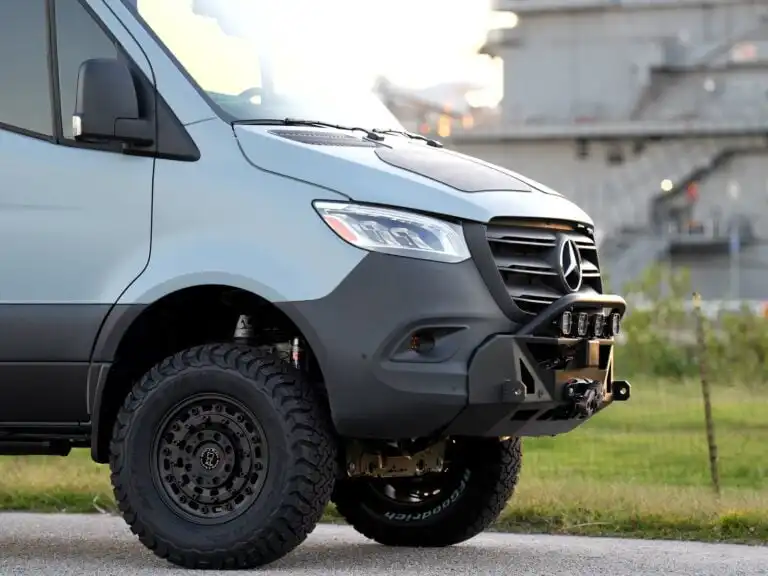
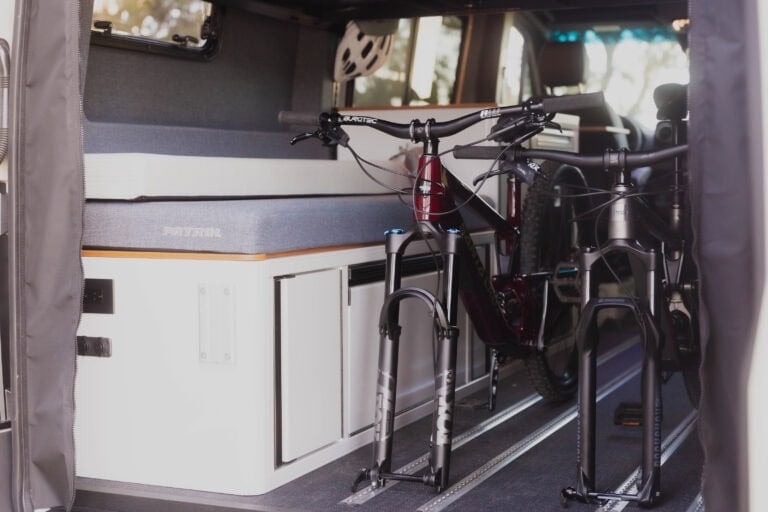
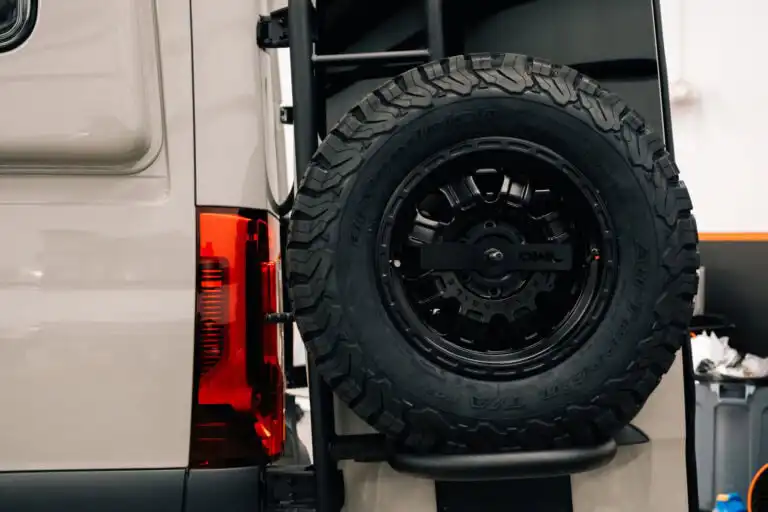
A finished Sprinter conversion is not the van Mercedes delivered. By the time the cabinetry, batteries, water, insulation, seating, and gear are in, a build can carry two to three thousand pounds it did not leave the factory with — and most of that weight sits high and toward the rear. Factory suspension is engineered for a cargo van that is loaded and unloaded every day, not for a vehicle that lives permanently near its weight limit and spends its life on washboard forest roads. That gap is why a Sprinter van suspension upgrade is one of the few modifications that changes how a build feels every single mile, not just on the trail.
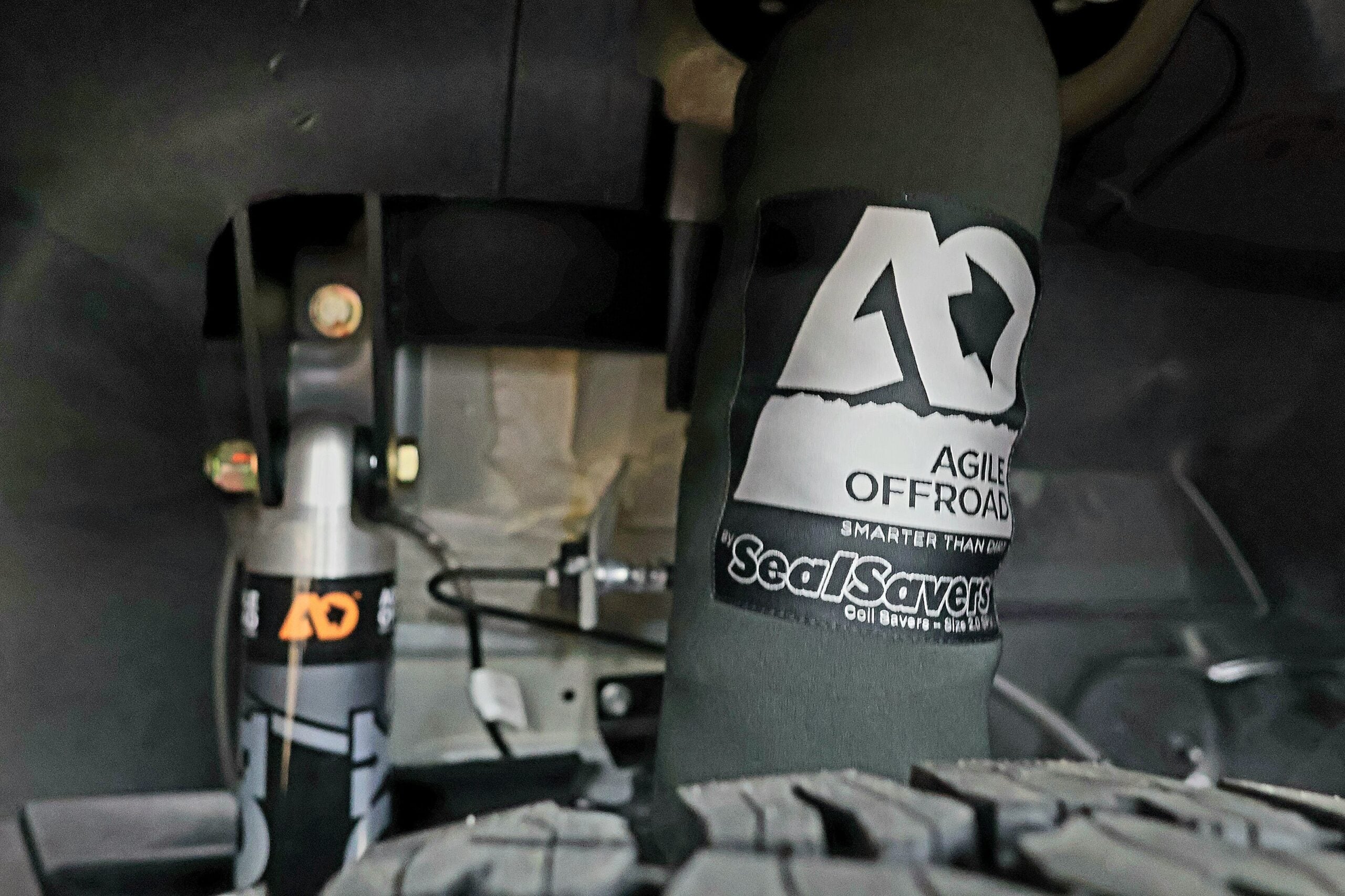
This is the first article in our series on Agile Off-Road suspension work, covering what the factory setup actually struggles with on a loaded conversion, what upgraded components change in practice, and how we approach suspension as part of the build rather than as a bolt-on afterthought.
What a loaded conversion does to factory suspension
The complaints owners bring us are remarkably consistent, and they all trace back to the same cause. The van squats at the rear. It wallows through corners and takes an extra beat to settle after a dip. Crosswinds and passing semis move it around more than they should. On rough dirt, the rear end skips sideways instead of tracking, and the ride gets sharp and busy in a way that wears passengers out over a long day.
None of that means the factory suspension is poorly made. It means it is being asked to do a job it was not specified for. Rear springs sized for intermittent cargo loads sag under permanent build weight, which changes ride height, alters the geometry the rest of the suspension depends on, and eats into the travel available before the bump stops take over. Shocks tuned for a lighter vehicle run hotter and fade sooner when they are damping more mass. The result is a van that is not unsafe, but is working harder than it should — and telling you so through the steering wheel.
What upgraded suspension actually changes
Suspension work on a conversion is not about lifting the van for looks. It is about restoring the vehicle’s designed behavior under the weight it now permanently carries, and then adding capability on top of that.
Correctly rated springs bring ride height back to where the geometry works, restore usable suspension travel, and stop the rear from riding on the bump stops over anything more than a smooth road. Better shocks control the mass properly, which is what removes the wallow and the busy, unsettled feeling on dirt — and shocks with more thermal capacity keep doing it on hour three of a rough road rather than fading. Where a build carries variable loads, air-assist systems let the rear be leveled for the trip rather than compromised year-round. Sway bar and alignment work address the body roll and the wandering that come with a taller, heavier vehicle.
The honest version of the benefit is this: the van stops feeling like it is being pushed around by its own weight. It corners flatter, tracks straighter in wind, absorbs washboard without hammering the interior, and — the part owners notice most — is less tiring to drive for eight hours. Component life improves too, because a suspension operating in its designed range is not repeatedly slamming into its limits.
Why Agile Off-Road, and why Sprinter-specific engineering matters
Agile Off-Road develops suspension specifically for the Sprinter platform rather than adapting generic van components, and that specificity is the whole point. Sprinter suspension geometry, load paths, and weight distribution are particular to the vehicle, and a system engineered around them behaves like an improvement rather than a compromise. Generic components can raise a van and stiffen it without ever addressing the actual problem, which is a mismatch between spring and damping rates and the real, permanent weight of a finished conversion.
Agile also occupies a useful niche in the market: their audience is serious Sprinter owners, and there is remarkably little content showing what their hardware does inside a professionally finished build rather than on a bare van. That is the perspective we can offer, because we are integrating it alongside every other system in the vehicle.
Suspension is a build decision, not an accessory
The most useful thing we can tell an owner is that suspension should be specified early, with the rest of the build, because it depends on numbers that only exist once the build is planned. Spring rate depends on final loaded weight and how that weight is distributed front to rear. Ride height interacts with tire size, which interacts with whether the wheel wells need flare work and what the finished overland package looks like. Added height changes the center of gravity, which matters when there is also a roof rack, solar, and exterior gear hardware carrying weight up high.
Deciding all of that at the end, after the build weight is set and the tires are chosen, means working around constraints instead of designing with them. Deciding it at the start means the suspension is specified for the van that will actually exist — which is the difference between a van that drives well loaded and one that merely sits higher.
Drivetrain choice belongs in the same conversation. Suspension and traction solve different problems, and it is worth understanding what 4×4 and AWD actually change once the pavement ends before assuming that one substitutes for the other. They do not. A well-sorted suspension on an AWD van will outperform a poorly sorted one on a 4×4 in most of the conditions owners actually drive.
Living with it: maintenance and the long view
Upgraded suspension is not maintenance-free, and treating it as fit-and-forget is how owners end up disappointed three years in. Alignment should be checked after installation and again once the build is fully loaded, because ride height and geometry shift as weight goes in. Airbag systems need periodic pressure checks. Bushings and shocks are wear items that eventually need attention, and a van used hard on dirt will reach that point sooner than one that mostly tours pavement.
Handled properly, though, the payoff compounds. A van that is not constantly bottoming out is easier on its chassis mounts, its cabinetry, and everything bolted to it. This is the same thinking that runs through how we approach long-term Sprinter ownership — the goal is a vehicle that is still composed and pleasant to drive at 150,000 miles, not just impressive on delivery day.
Frequently asked questions
Does a van conversion actually need a suspension upgrade?
Not every one does, but most heavily built conversions benefit meaningfully. If a van carries a full off-grid system, water, and gear permanently, factory rear springs are typically working near their limit. The clearest signs are rear squat, wallowing on uneven roads, and a harsh ride that comes from riding on the bump stops rather than the springs.
Will upgraded suspension make the ride harsher?
Correctly specified, no — usually the opposite. Harshness in a loaded conversion generally comes from running out of suspension travel, not from soft springs. Springs rated for the real load restore travel, and better-damped shocks control the mass rather than fighting it. The common mistake is over-springing a van that does not carry that much weight, which does produce a stiff, empty-truck ride.
Do I need a lift, or just better springs and shocks?
They are separate decisions. A lift buys ground clearance and room for larger tires; corrected springs and shocks fix how the van carries and controls its weight. Plenty of builds need the second without needing much of the first. Choose based on where you actually drive, not on stance.
When in the build should suspension be decided?
Early. Spring rate depends on final loaded weight and its distribution, and ride height interacts with tire size, wheel-well clearance, and center of gravity. Specifying it once those are known — rather than after everything else is finished — produces a better result than retrofitting around decisions already made.
How does upgraded suspension affect towing and payload?
Better control does not raise the van’s legal ratings. Gross vehicle weight rating and axle limits are set by the manufacturer and do not change because springs were upgraded. What improves is how the van behaves within those limits — less squat, better stability, more predictable handling with a trailer or a heavy rear load.
The takeaway
Suspension is the least visible upgrade on a Sprinter conversion and one of the most consistently felt. A finished build is a fundamentally different vehicle from the van that left the factory, and matching the suspension to that reality restores the composure, control, and durability the extra weight took away. Specified early, engineered for the platform, and integrated with tire, drivetrain, and load decisions, it is the change owners notice on every drive — not only on the rough stuff.
If you are planning a build that will carry real weight into real terrain, talk with the Patrol Vans team about specifying suspension alongside the rest of the systems, or explore our models to see which platform suits how you travel.