

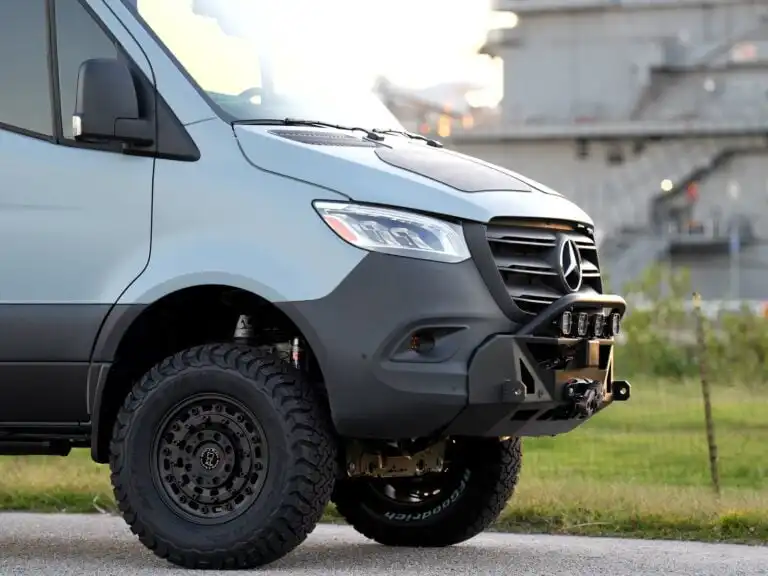
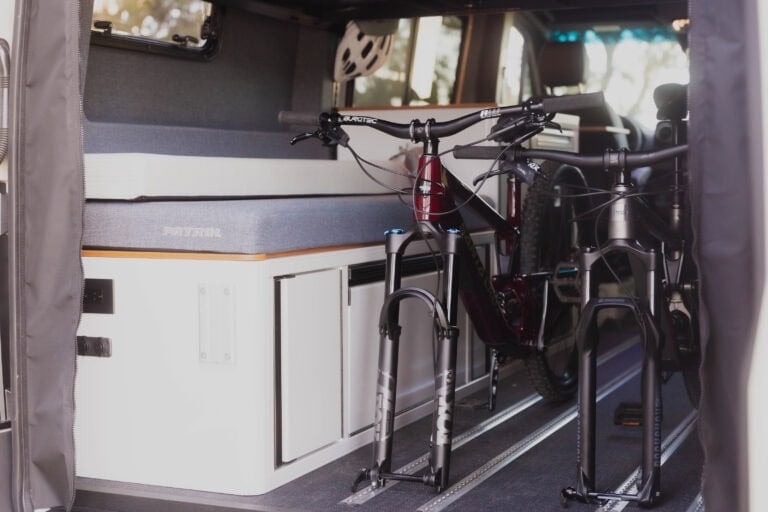
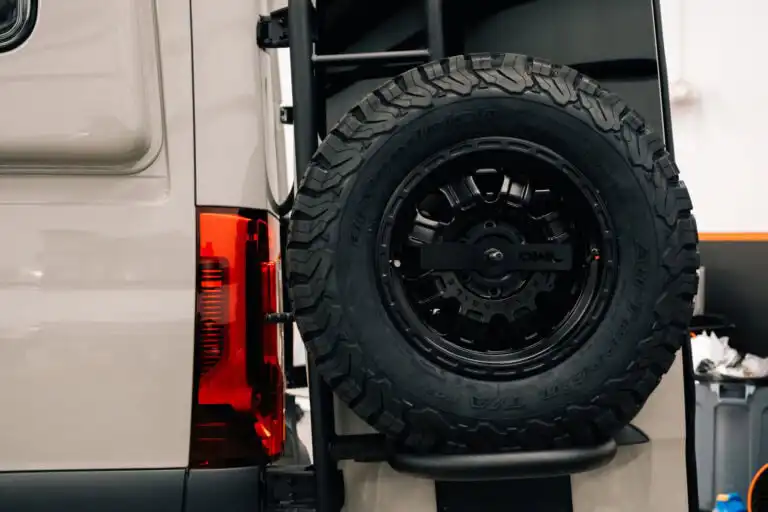
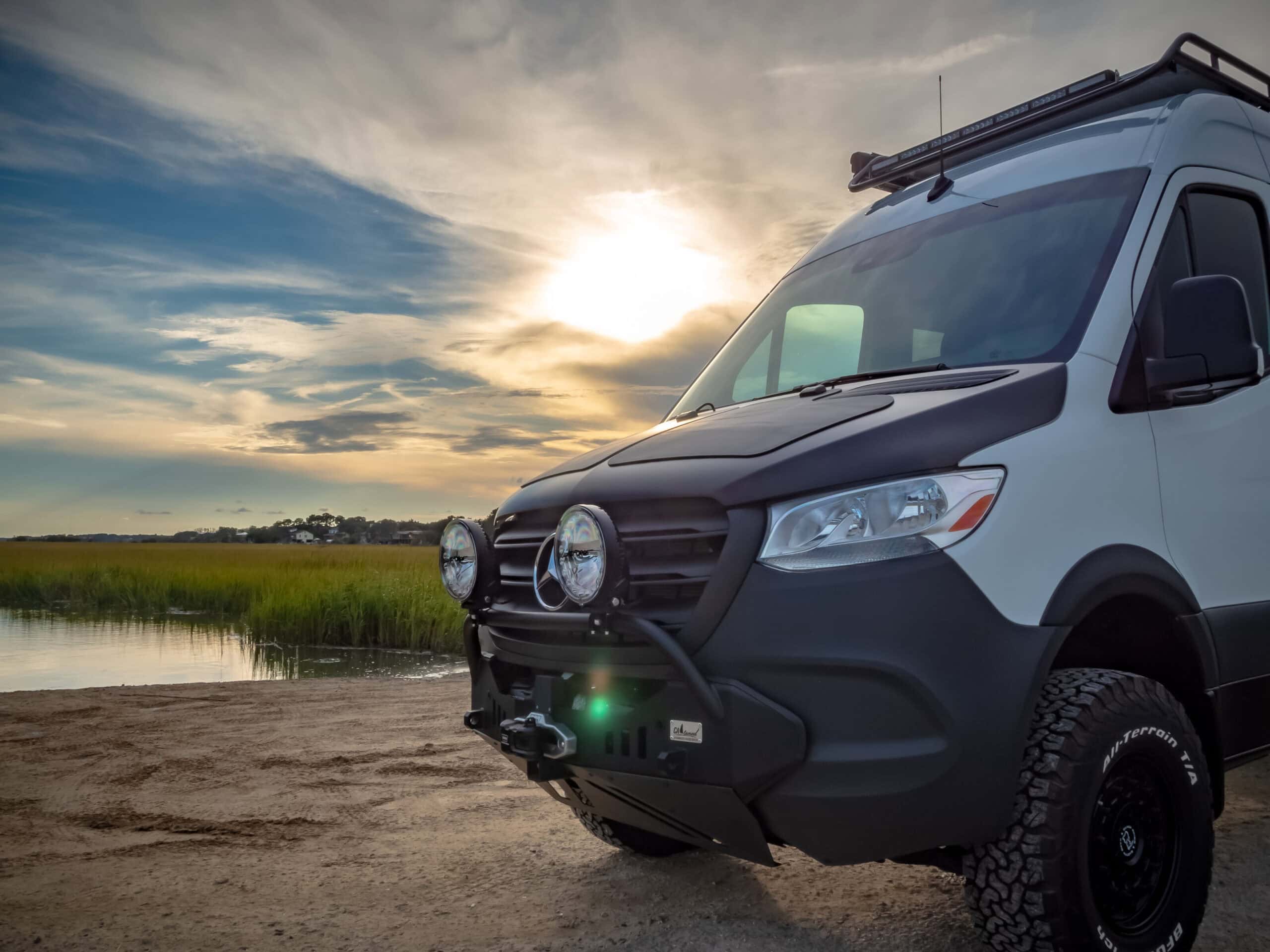
Almost every conversation about an adventure build reaches the same fork: does this van need to be four-wheel drive, all-wheel drive, or is rear-wheel drive with good tires enough? It is one of the few decisions that cannot be changed later, it carries real cost, and it is answered badly almost everywhere online — usually by treating 4×4 and AWD Sprinter vans as interchangeable, which they are not. They solve related problems in different ways, and the right answer depends far more on where you actually drive than on which sounds more capable.
This guide explains what each drivetrain does mechanically, what changes when you add the weight of a finished conversion, and how to decide honestly — including the case for spending the money elsewhere.
The mechanical difference, without the marketing
All-wheel drive on a Sprinter is a full-time system that distributes power to all four wheels automatically, without driver input. It is designed for traction on surfaces where grip is inconsistent — wet pavement, snow, gravel, packed dirt, a slick boat ramp, a muddy trailhead parking area. It works continuously, transparently, and well, and it is the right tool for the overwhelming majority of the driving adventure-van owners actually do.
Four-wheel drive on a Sprinter — offered by Mercedes-Benz Vans on selected configurations — is a driver-selected system, typically paired with a low range. Low range is the meaningful part. It multiplies torque so the van can crawl at very low speed with control — up a steep loose grade, down a rocky descent under engine braking, out of deep sand or ruts. That is a different capability from “traction on slippery surfaces.” AWD helps you keep moving on marginal grip. 4×4 with low range helps you keep control where the terrain itself is the obstacle.
Rear-wheel drive deserves a mention because it is dismissed too quickly. A rear-wheel-drive Sprinter that carries a genuinely loaded conversion has meaningful weight over its drive axle — which is most of what traction depends on — and with proper all-terrain tires it handles dirt roads, forest service roads, and most trailhead access far better than its reputation suggests.
Tires and weight matter more than most people expect
The single most common misdiagnosis we see is an owner buying drivetrain to solve a tire problem. Highway tires on a heavy van will find their limits on wet grass, loose gravel, or mud long before any drivetrain does, and no amount of driven wheels compensates for a contact patch that cannot grip. A quality all-terrain tire is the cheapest, highest-return traction upgrade available and should be settled before drivetrain is even discussed.
Weight complicates the picture in both directions. A loaded conversion presses its tires into the surface, which helps. But that same mass has to be stopped, steered, and controlled, and it sits higher than it did in the cargo van — which is why suspension specified for the finished build weight does more for real-world capability than most drivetrain upgrades. A well-sorted AWD van with correct springs, damping, and tires will go further, more comfortably and more safely, than a 4×4 that squats on its bump stops and rolls through corners.
Ground clearance is the limit people forget
Drivetrain determines whether the wheels can pull. Clearance determines whether the van can physically pass. A Sprinter is a long vehicle, and its breakover angle — the point where the middle of the van hangs up on a crest — is often what stops it, not a lack of traction. The same is true of approach and departure angles on steep transitions, and of anything low-hanging underneath.
This is why clearance, tire size, and suspension height should be evaluated as one decision rather than three. Adding driven wheels to a van that will beach itself on the first ledge does not buy capability. Getting the geometry right often does — and it does so for every kind of driving, not just the difficult kind.
How to decide, honestly
Start with the trips you actually take, not the trips you imagine. If your travel is highways, campgrounds, maintained forest roads, and trailhead parking — with the occasional snowy pass or muddy pullout — AWD with all-terrain tires and properly specified suspension covers it comfortably, and does so with better fuel economy, lower cost, and less complexity than 4×4. This describes most owners honestly assessing their driving.
If you regularly drive genuinely technical terrain — steep loose climbs, rocky descents needing engine braking, deep sand, remote routes where getting stuck is a serious problem rather than an inconvenience — low range earns its cost. That is the specific capability you are buying, and nothing else substitutes for it.
And if your travel is seasonal pavement touring with light dirt, rear-wheel drive plus good tires and the right suspension is a legitimate, well-considered choice that frees budget for the systems you will use daily. Deciding what kind of vehicle you are actually building is worth doing deliberately — our breakdown of where overland vans, adventure vans, and camper vans diverge and our look at what makes a true adventure van are both useful before you commit to a drivetrain.
What drivetrain does not solve
Traction gets you to the place. It does nothing once you are parked, which is where most of the value of an adventure van actually lives. Whether you can stay somewhere remote for a week is a question of electrical capacity, water, heat, and storage — not driven wheels. We regularly see builds where the drivetrain budget would have been better spent on genuine off-grid capability, because the limiting factor on their trips was never getting there.
Worth being blunt: 4×4 adds cost, weight, complexity, and some fuel-economy penalty, and it adds systems that eventually need service. Those are real trade-offs. They are entirely worth it for the driving that needs low range, and largely wasted on the driving that does not.
Frequently asked questions
Is AWD good enough for overlanding in a Sprinter?
For most overland travel in North America, yes. AWD combined with all-terrain tires, correct suspension for the loaded weight, and adequate ground clearance handles forest service roads, gravel, snow, and typical remote access very capably. Low range becomes necessary when terrain gets technical — steep loose climbs, rock, deep sand — rather than merely unpaved.
What is the real difference between 4×4 and AWD on a Sprinter?
AWD is a full-time system that manages traction automatically across all four wheels, optimised for slippery surfaces. 4×4 is driver-selected and adds a low range that multiplies torque for controlled crawling and engine-braked descents. AWD is about grip; 4×4’s low range is about control in terrain where the obstacle is the ground itself.
Can a rear-wheel-drive Sprinter handle dirt roads?
Generally yes, and better than expected. A loaded conversion puts substantial weight over the rear drive axle, and quality all-terrain tires do most of the work. Maintained dirt and gravel roads, forest service roads, and most trailhead access are well within its ability. Loose steep climbs, deep sand, and slick mud are where it runs out.
Should I spend on drivetrain or on tires and suspension?
Tires first, suspension second, drivetrain third — unless you specifically need low range. Tires determine whether power reaches the ground at all, and suspension determines whether a heavy build stays composed and keeps its wheels planted. Both improve every mile you drive; drivetrain only matters on the fraction of miles where traction is the limit.
Does 4×4 or AWD reduce fuel economy on a van build?
Both add drivetrain weight and mechanical drag, so both carry some penalty against a comparable rear-wheel-drive van, with 4×4 typically costing more than AWD. On a heavy conversion the effect is modest relative to the weight and aerodynamics of the build itself, but it is real and worth factoring into long-distance travel planning.
The takeaway
4×4 and AWD are not two grades of the same thing. AWD delivers automatic, full-time traction that suits the vast majority of adventure travel. 4×4’s low range delivers controlled crawling for terrain that genuinely demands it. Both sit downstream of tires, suspension, and ground clearance, which determine real-world capability more often than the badge on the drivetrain does. Decide from the roads you actually drive, get the fundamentals right first, and put the remaining budget into the systems that determine how long you can stay once you arrive.
If you are weighing drivetrain against the rest of the build, talk with the Patrol Vans team about how you travel, or compare Patrol Vans models to see how each platform is configured.