



There is a specific moment most people remember from their first long off-grid trip: it is late, the fridge is humming, someone just plugged in a laptop, and you find yourself wondering how much battery you actually have left. On a well-built van, you should never have to guess. The answer should be sitting on a screen in front of you, updating in real time, and it should be readable from your phone whether you are in the driver’s seat or two hundred miles away at a trailhead.
That level of visibility is what a Victron Cerbo GX brings to a Patrol Vans electrical system. It is not a flashy component and it will not show up in most walkthrough videos, but it is one of the parts that quietly separates a van you trust from a van you second-guess. In this guide we will explain what the Cerbo GX does, how remote monitoring through Victron’s VRM platform works in the real world, and why we treat system monitoring as a core part of an off-grid build rather than an afterthought.
What the Cerbo GX actually does
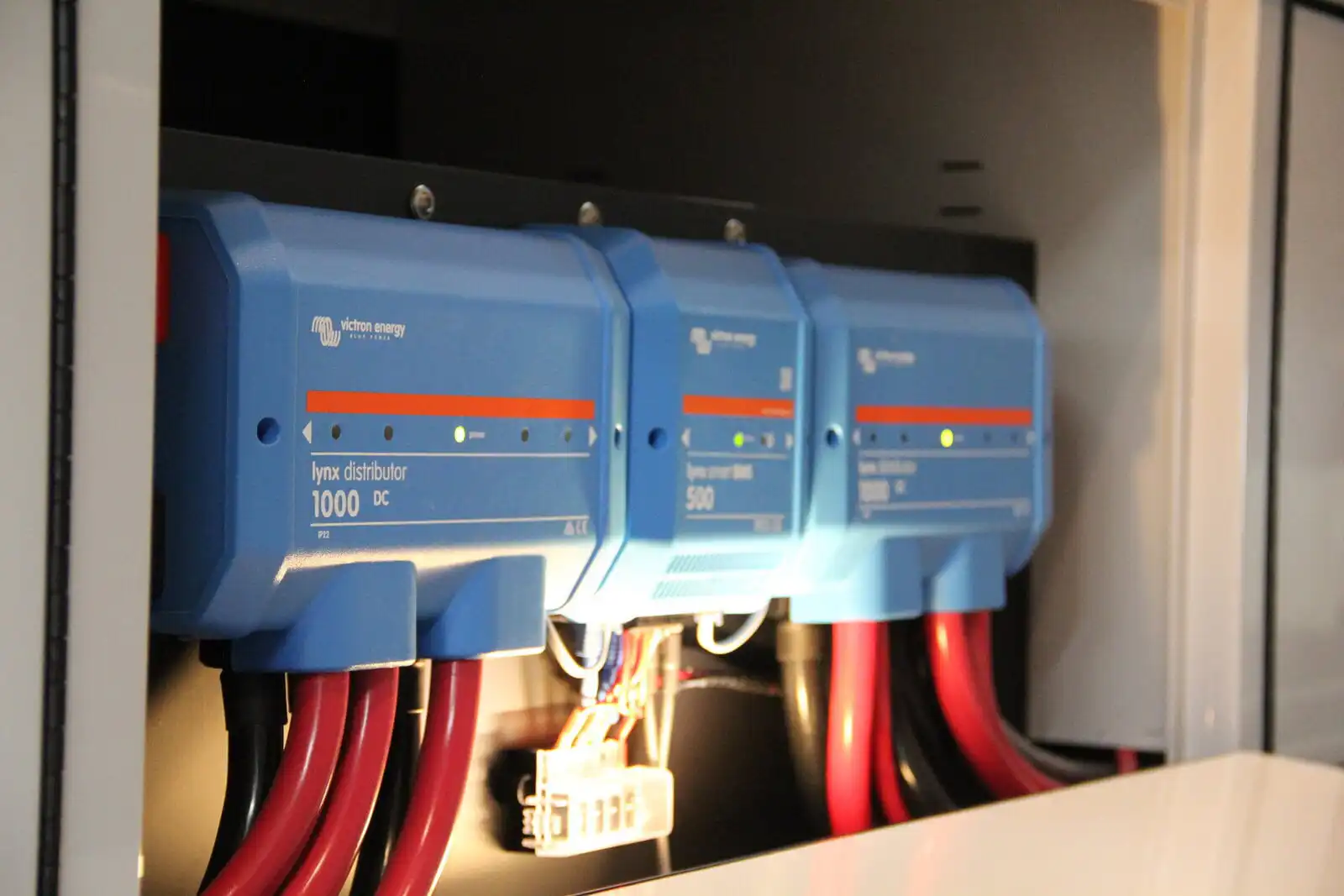
The Cerbo GX is the communication hub of a Victron-based electrical system. Every major component in a modern van power system — the inverter/charger, the solar charge controller, the battery monitor, the DC-DC charger pulling from the alternator — speaks its own language. The Cerbo GX listens to all of them, translates, and gives you one unified picture of what the system is doing. Battery state of charge, solar production, shore power draw, inverter load, and battery temperature all land in the same place.
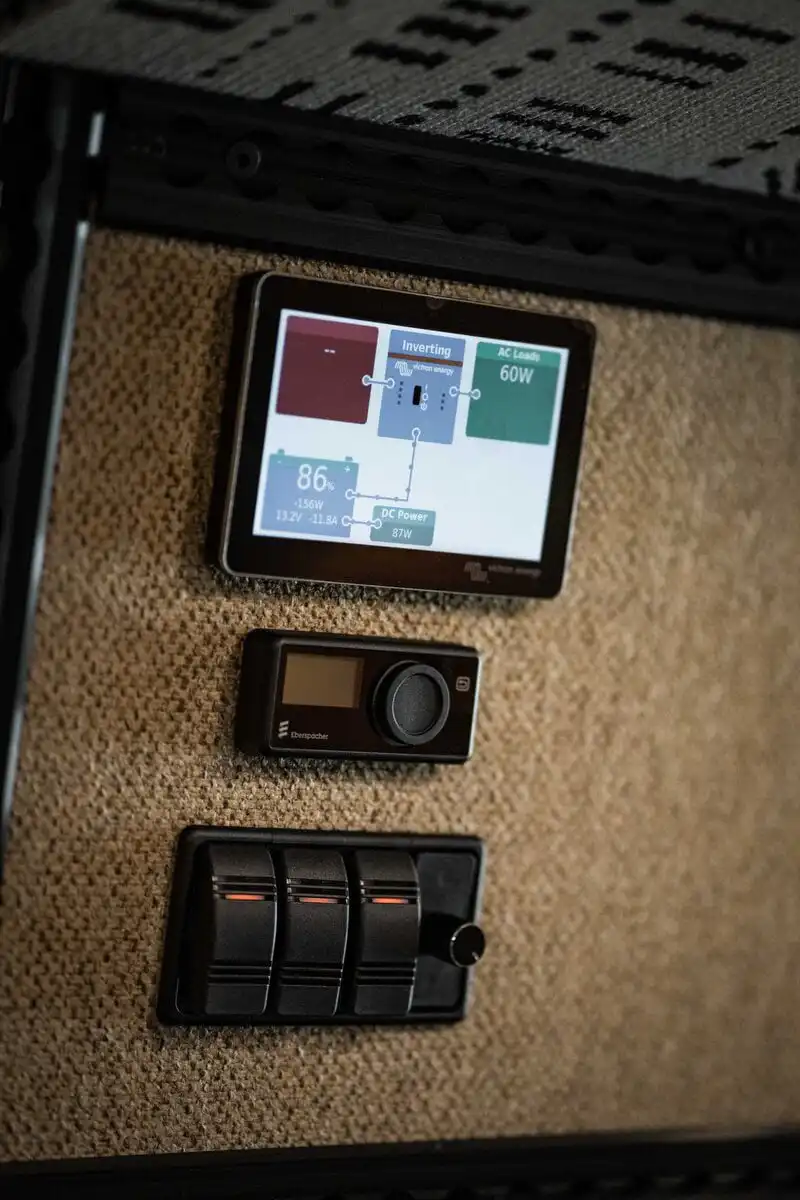
On its own, the Cerbo GX has no screen. That is by design. It is meant to be tucked into the electrical bay and paired with a display where you actually spend time. Most Patrol Vans builds use a GX Touch panel mounted in the galley or near the door, so a quick glance tells you the state of the system before you commit to running the induction cooktop or the air conditioner. If you prefer to keep the wall clean, the same data appears in the VictronConnect app over Bluetooth or on any phone or laptop through the VRM portal.
Remote monitoring through VRM, explained without the jargon
VRM — Victron Remote Management — is the piece that turns a good system into a genuinely reassuring one. When the Cerbo GX has an internet connection, whether through a cellular dongle, a Starlink setup, or a phone hotspot, it streams live and historical system data to Victron’s cloud platform. You open a browser or the app, and you see your van’s electrical system exactly as if you were standing in front of the panel.
That matters in ordinary ways and in reassuring ways. In ordinary use, you can check whether your batteries topped off during a sunny afternoon while you were out hiking. In reassuring use, it means someone can keep an eye on a van in winter storage, confirm the batteries are holding, and catch a slow drain before it becomes a dead bank in a cold garage. For families who leave a van parked between trips, or for owners who travel far from home, that visibility is worth more than almost any single hardware upgrade.
VRM also keeps a running history. Instead of a single snapshot, you get days and weeks of solar yield, consumption, and battery behavior. Over a season, that record tells you honest things about how you actually use power — which is exactly the information you want before deciding whether to add another solar panel or a second battery.
Why monitoring belongs in the build, not bolted on later
People often think about monitoring last, after the batteries, inverter, and solar are already chosen. We build in the other direction. When the Cerbo GX is planned from the start, the wiring is clean, every component is on the same communication network, and the display sits where it is genuinely useful rather than wherever a hole happened to be left. Retrofitting monitoring into a finished van is possible, but it usually means opening panels, chasing cables, and accepting compromises in placement.
There is also a durability argument. A monitored system is a system you can maintain intelligently. Battery temperature warnings, high-load alerts, and charge-source visibility all help you treat the electrical system well over years of ownership. That fits how we think about every Patrol Vans build — these are vehicles meant for long-term use and real conditions, not short-term novelty. A van you can see into is a van you can look after.
How the Cerbo GX fits a Patrol Vans off-grid architecture
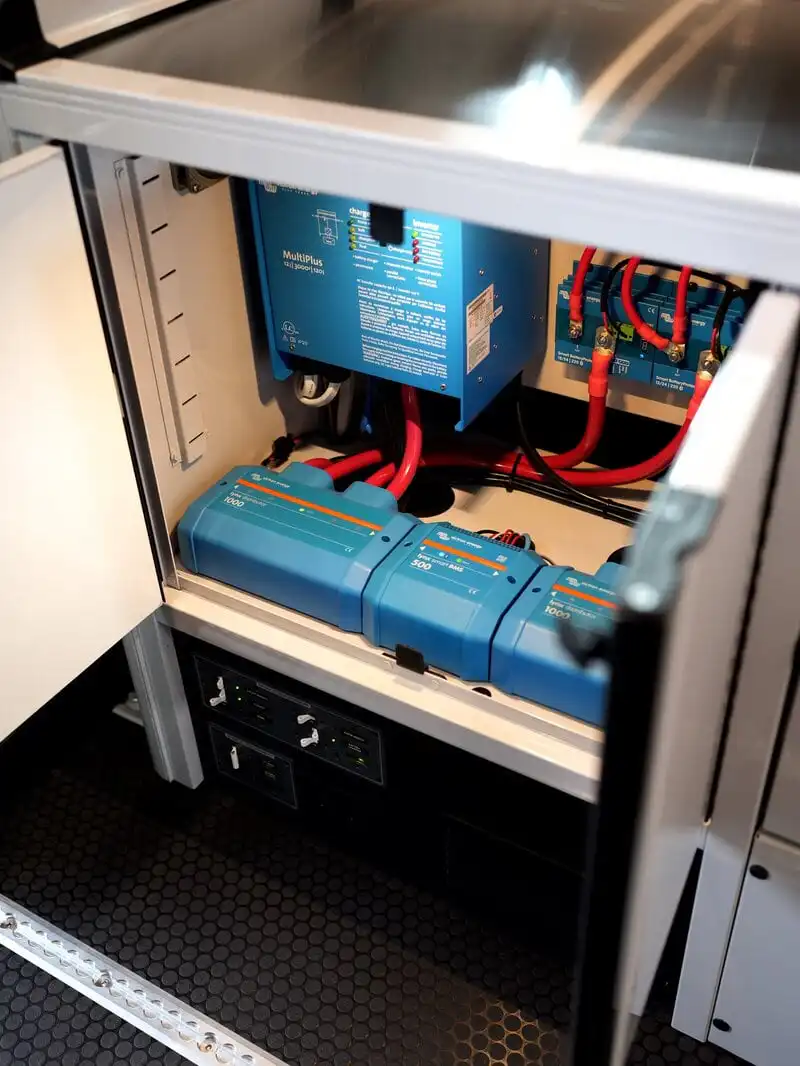
In a typical off-grid capable Patrol Vans build, the Cerbo GX sits at the center of the same Victron electrical architecture we use across our builds: a MultiPlus-II inverter/charger, a SmartSolar MPPT controller feeding the roof array, a lithium battery bank with a compatible battery monitor, and an Orion-Tr DC-DC charger topping the batteries off the alternator as you drive. Because all of these are Victron components on the same network, the Cerbo GX does not just report — it coordinates, letting the system prioritize charge sources and protect the batteries automatically.
The result is an electrical system that behaves like one designed thing rather than a pile of parts. You get accurate state-of-charge readings, solar production you can actually trust, and the ability to see, from anywhere, whether the van is ready for the next trip. That is the standard we hold across the AlphaVan, EchoVan, and OmegaVan electrical platforms, each tuned to how that build is meant to be used.
Getting the most from your monitoring setup
A few habits make a monitored system genuinely useful. Set VRM alerts for low state of charge and high battery temperature so the system tells you when something needs attention instead of waiting for you to notice. Check the historical solar yield after a few trips to learn your real-world numbers rather than the theoretical roof rating. And keep the Cerbo GX firmware current — Victron updates it regularly, and updates arrive over the same connection that carries your data. None of this is complicated, and all of it pays off in confidence on the road.
Frequently asked questions
Do I need internet for the Cerbo GX to work?
No. The Cerbo GX runs your system and drives the local display with no internet at all. Internet is only required for remote VRM monitoring — checking the van from your phone when you are not standing next to it. Many owners connect it through a cellular dongle, a hotspot, or an onboard Starlink setup so the remote view is always available.
What is the difference between the Cerbo GX and a battery monitor?
A battery monitor tracks one thing very well: the state of charge of your battery bank. The Cerbo GX is the system hub that pulls in the battery monitor’s data along with your inverter, solar, and DC-DC charger, then presents everything together and enables remote access. In a complete Victron system you generally have both, working as a team.
Can I add a Cerbo GX to a van that already has a Victron system?
Usually, yes. If your inverter, solar controller, and battery monitor are Victron components, the Cerbo GX is designed to tie them together. The work involved depends on how the van was originally wired and where a display can be cleanly mounted, which is exactly why we prefer to plan monitoring into the build from the start.
Does remote monitoring drain my battery?
The Cerbo GX itself draws very little power, and the connectivity device adds a small, predictable load. For most builds the visibility it provides — including the ability to catch a slow drain early — saves far more energy and worry than it uses.
The takeaway
Good power management is not about having the biggest battery bank or the most solar on the roof. It is about knowing, at any moment, exactly where your system stands — and being able to check it whether you are in the galley or across the country. A Victron Cerbo GX with VRM monitoring gives you that, and building it in from the start is how we make sure the visibility is genuinely useful rather than an afterthought bolted onto a finished van.
If you are planning an off-grid capable build and want an electrical system you can actually see into, talk with the Patrol Vans team about how we approach power and monitoring, or explore recent builds to see how these systems come together in the real world.