
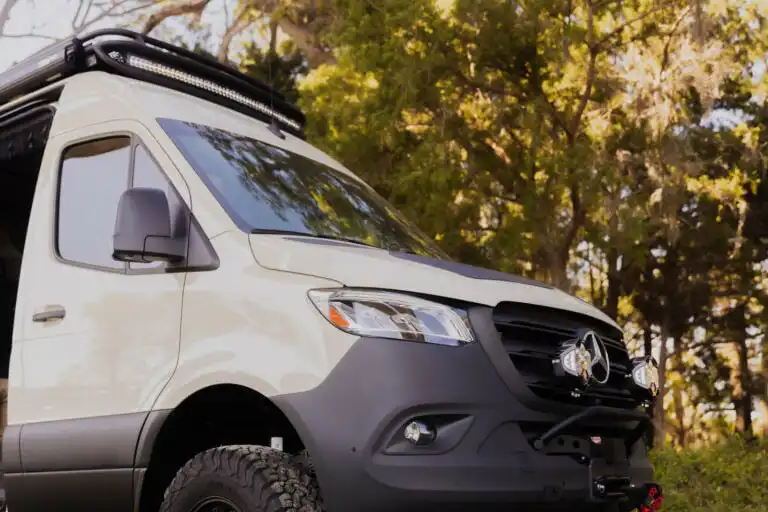
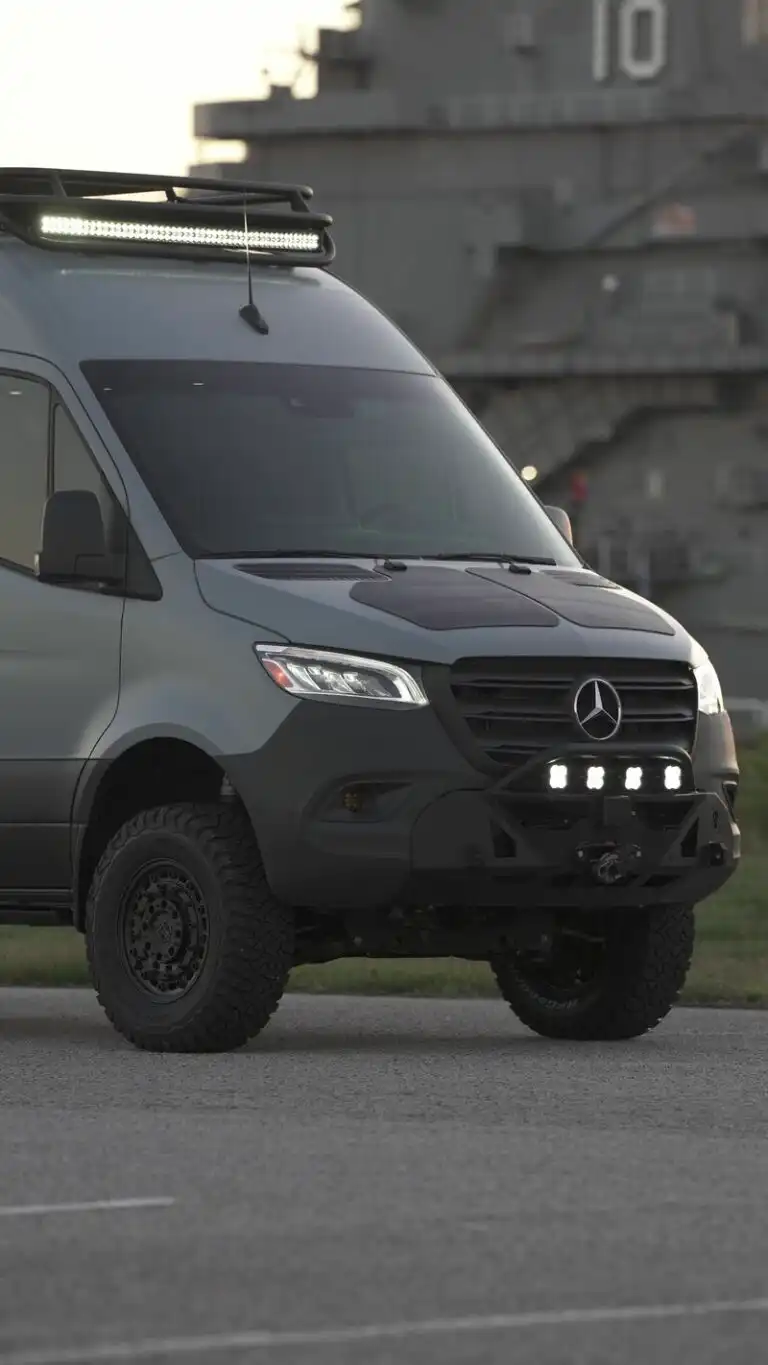
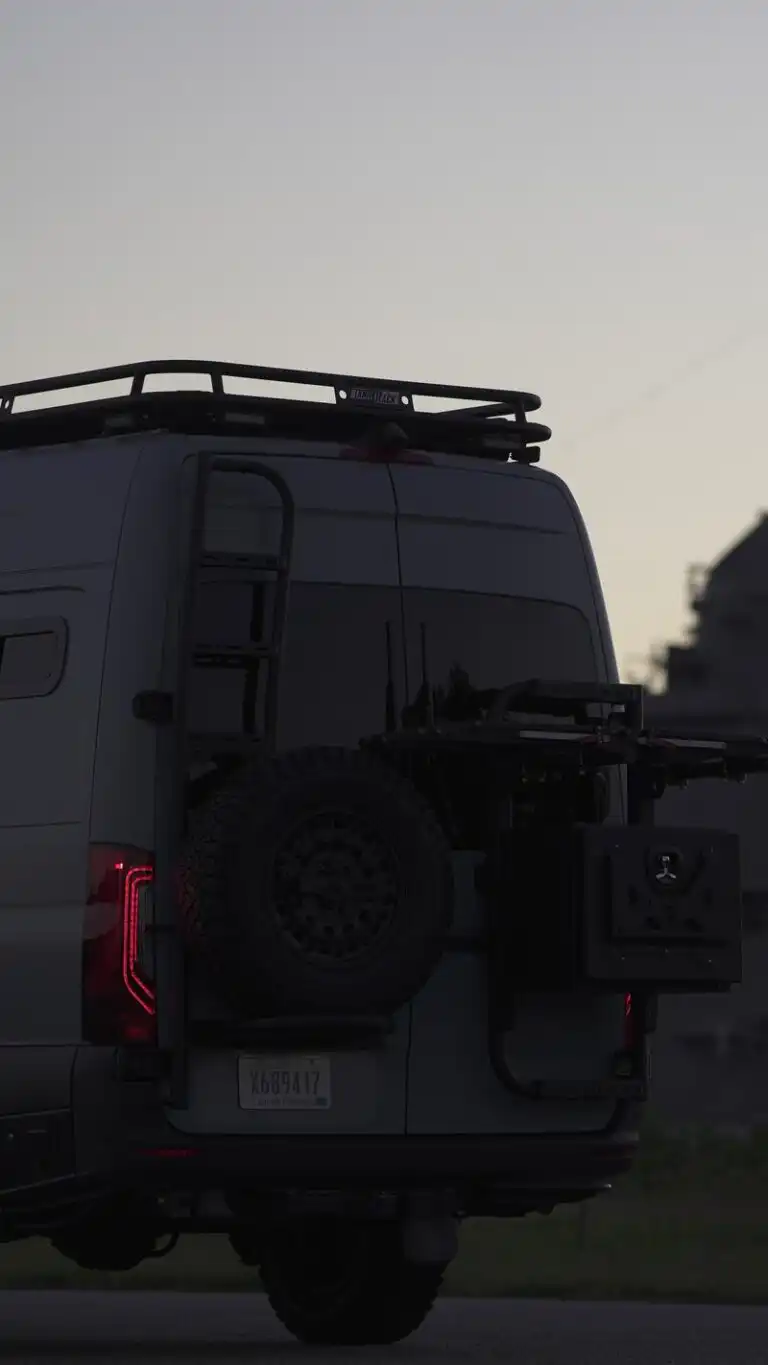
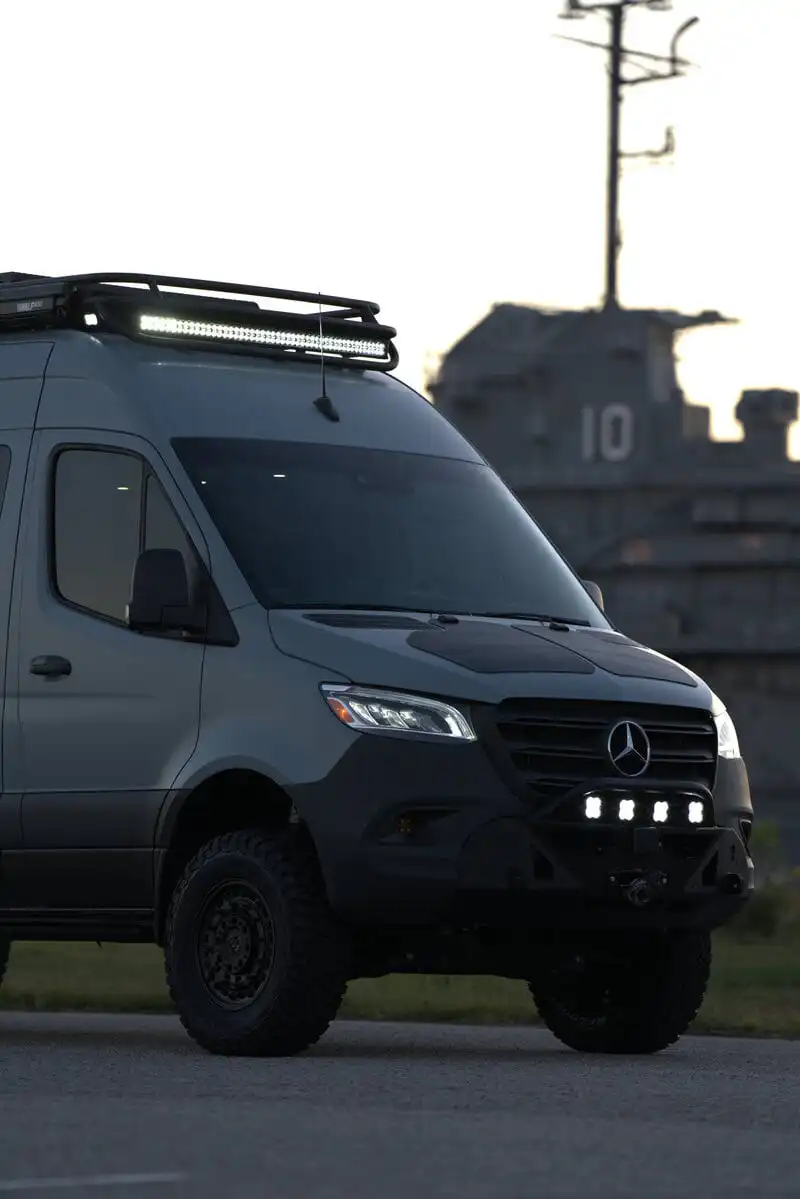
The best way to understand what a custom overland Sprinter van build actually involves is to follow one from a bare chassis to a finished, off-grid-ready vehicle. This is that walkthrough — the decisions, the systems, and the build sequence behind a capable overland Sprinter, told the way we think about it rather than the way a spec sheet lists it. Patrol Vans builds in Charleston and delivers nationwide, so the buyer in this story could be anywhere in the country; the build process is the same whether the van heads to the Blue Ridge or the Mojave.
If you are still deciding what kind of van you want, what makes a true adventure van is a useful companion piece on capability versus aesthetic. This article assumes you already know you want something built to travel hard and live comfortably off the grid.
It starts with how you actually travel
Every build we do starts with use case, not parts. Before a single panel goes in, we want to know how the owner travels: weekends or weeks, solo or as a family, hot climates or cold, driving daily between camps or parking for a week off-grid, working from the van or purely recreating. Those answers determine everything downstream — battery size, water capacity, insulation strategy, seating, and storage. A van built around an assumed lifestyle rarely fits the real one. A van built around how someone actually moves through the country tends to disappear into the background, which is exactly what a good build should do.
For this build, the owner travels several weeks at a stretch, mixes remote off-grid camping with the occasional campground, drives most days, and wants the van to handle both Southeastern humidity and high-country cold. That profile pushes the build toward strong off-grid electrical, real four-season insulation, and a layout that stays livable for long stretches.
The platform: Mercedes Sprinter, chosen for the right reasons
The build starts with a Mercedes Sprinter, and the choice is deliberate. The Sprinter’s combination of a tall interior, a proven drivetrain, available all-wheel drive, and a deep aftermarket makes it the platform that supports the widest range of overland configurations. It is the chassis we know best, and that familiarity matters — a builder who has solved the same problems on the same platform dozens of times makes better decisions than one improvising on an unfamiliar van.
From the bare van, the sequence is methodical: sound deadening and insulation first, then the electrical rough-in, then water, then the structural elements of the interior, then cabinetry and finish, then the systems commissioning that makes everything coordinate. Skipping or reordering those stages is how DIY builds end up with wiring buried behind finished walls and condensation problems that were preventable.
Off-grid electrical: the system that makes it possible
The electrical system is the heart of an overland build, because off-grid capability lives or dies on power. This build runs a Victron architecture — a LiFePO4 house bank, a MultiPlus inverter/charger, roof solar through a SmartSolar MPPT, and alternator charging through an Orion-Tr DC-DC charger, all coordinated by a Cerbo GX so the system manages itself across every charging source.
The reason that architecture matters for a van that travels nationwide is consistency of behavior. Whether the van is harvesting strong desert sun, topping up from the alternator on a long driving day in the rain, or plugged into shore power at an occasional campground, the system prioritizes sources intelligently and shows the owner the full picture on one screen. We size the bank to the owner’s real daily draw with margin, so off-grid stretches don’t turn into power management chores. The full design philosophy behind that is in our Victron electrical architecture hub.
Four-season capability, not fair-weather comfort
A van that only works in mild weather is not an overland van. This build gets a proper four-season insulation strategy — managing thermal bridging and condensation, not just stuffing material into cavities — paired with a diesel heater for reliable, low-draw heat and strong ventilation for humid climates. The goal is a van that stays comfortable in a cold high-country night and a muggy Southern afternoon without the owner fighting it. The full reasoning is in our guide to Sprinter van insulation, but the short version is that comfort in real conditions comes from the build details you cannot see after the walls are closed up.
Layout: built around the trip, configurable for the next one
The interior layout follows the use case, and modularity keeps it from being a one-trip wonder. We design layouts that match how the owner travels now while leaving room to reconfigure later — a Smartfloor system, for example, lets seating and storage move or come out entirely as needs change. A solo traveler’s gear-hauling layout and a family’s sleeping-and-storage layout are different builds, but the underlying flexibility means the van can adapt as life does. We cover the configuration decision in depth in our guide to Sprinter van floor plans and layouts.
Why “nationwide” changes nothing about the build quality
Patrol Vans is Charleston-built and ships finished vans across the country, and a fair question from a buyer two time zones away is whether distance compromises the build or the relationship. It does not. The build process, the consultation, the spec decisions, and the commissioning are the same regardless of where the van ends up. What distance does change is logistics, and we handle those so the buyer’s experience is about the van, not the miles. A capable overland Sprinter built right in Charleston is a capable overland Sprinter wherever it is parked.
Frequently asked questions
What makes a Sprinter good for overland travel specifically? Interior height, a proven drivetrain, available all-wheel drive, and the deepest aftermarket of any van platform — which together support the widest range of capable, four-season, off-grid configurations.
How long does a full custom overland build take? It varies with scope and configuration, but a full ground-up build is a multi-month project. The sequence (insulation, electrical, water, structure, finish, commissioning) cannot be rushed without compromising quality, so realistic timelines are part of the early conversation.
Can you build for someone who doesn’t live near Charleston? Yes — we build in Charleston and deliver nationwide. The consultation and spec process work the same remotely, and we manage the logistics of getting the finished van to the owner.
How off-grid can a build like this actually go? With a properly sized Victron LiFePO4 system and solar, a well-built overland Sprinter handles multi-day to week-long off-grid stretches depending on the bank size and load profile. See the EchoVan boondocking guide for the math behind a week off the grid.
Do I have to know every spec before I start? No. The build starts with how you travel, and we translate that into specs. Buyers who arrive with a use case rather than a parts list usually end up with a better-fitting van.
Where to go from here
If you want a van built around how you actually travel — and delivered wherever you are — the next step is to talk through your use case. Explore the AlphaVan, EchoVan, and OmegaVan builds to see the range, review recent work at Basecamp, or talk with the Patrol Vans team about your build. A capable overland Sprinter starts with a conversation, not a catalog.
External reference: National Park Service for public-lands travel planning.