

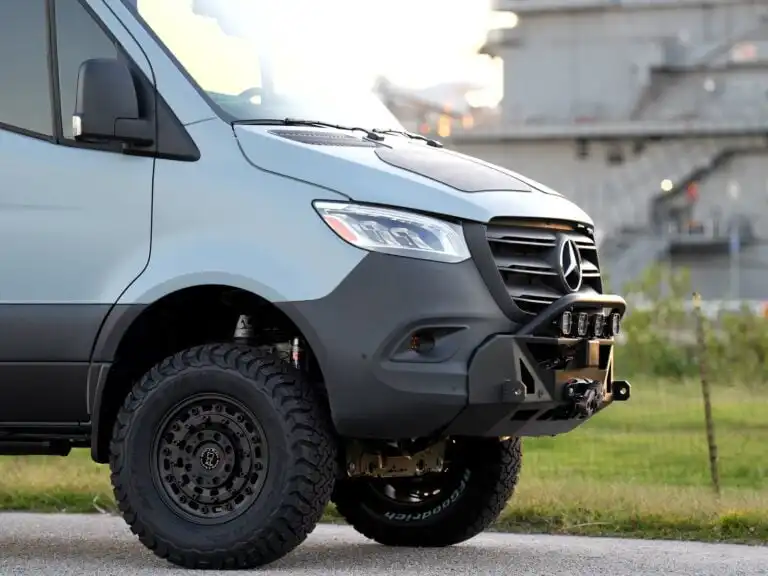
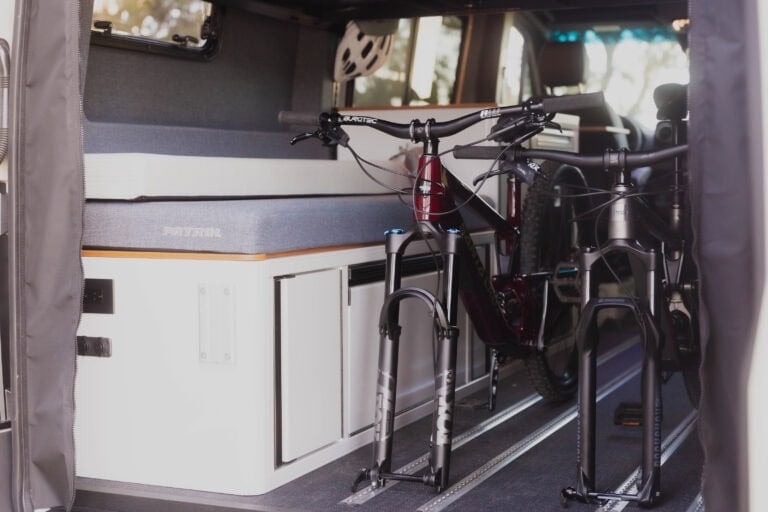
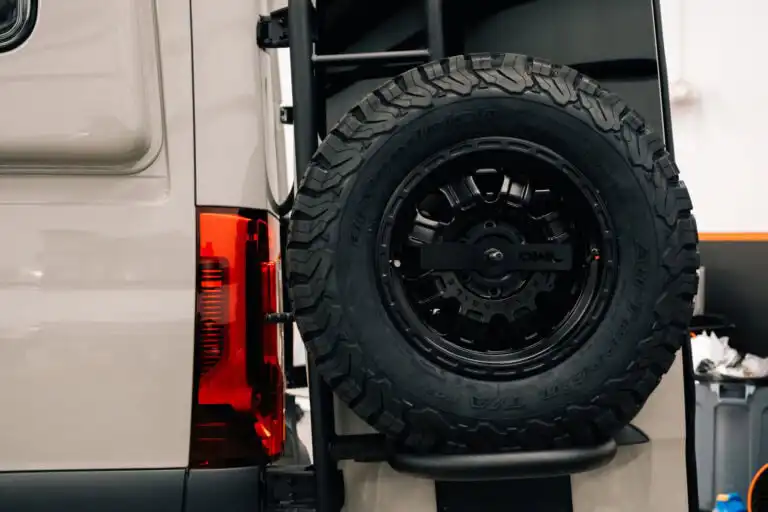
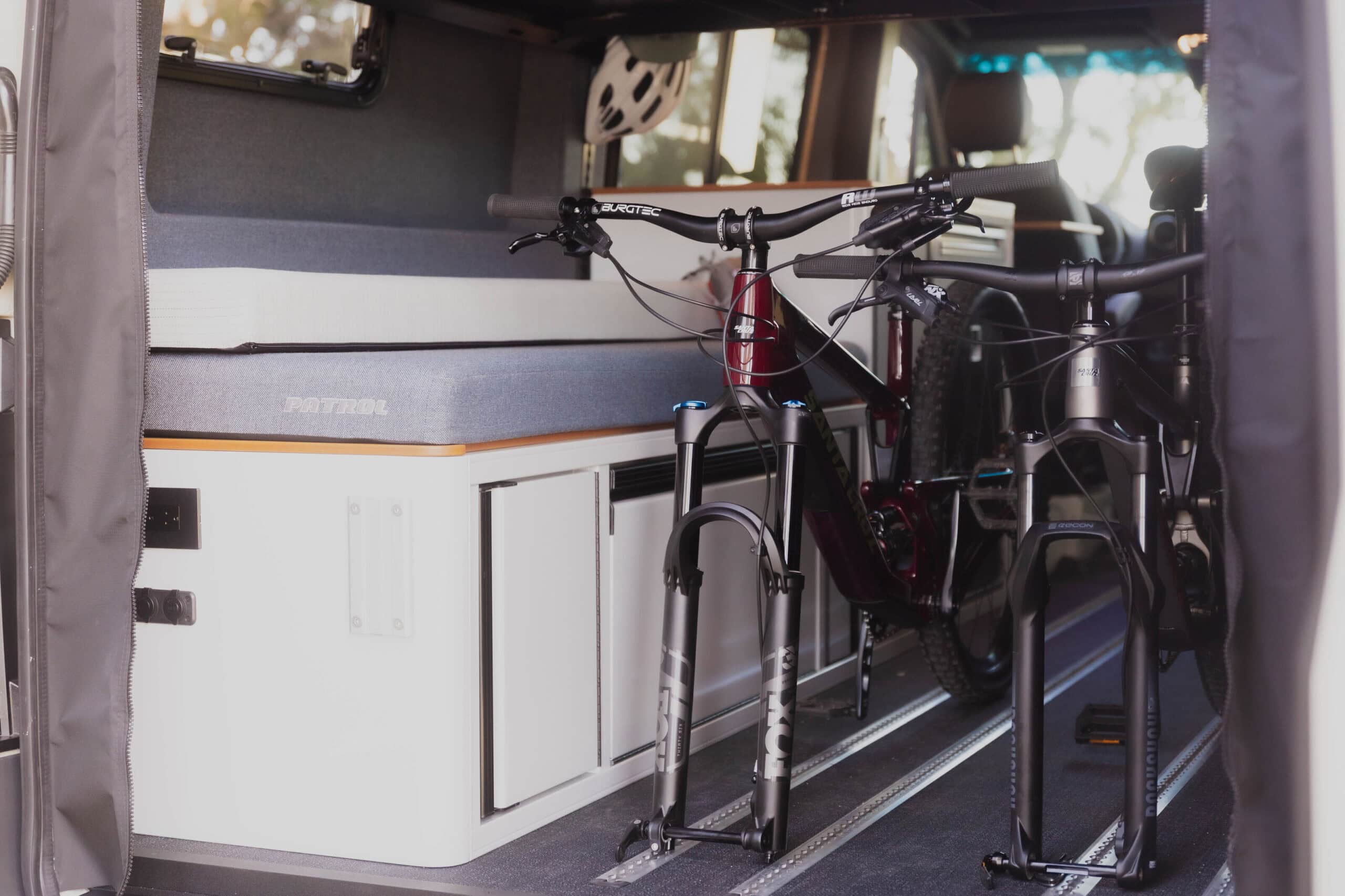
The gear is usually the reason for the van. Almost nobody builds a Sprinter conversion to sit in it — they build it to get bikes to trailheads, skis to the mountains, boards to the coast, or hunting gear somewhere remote in October. And yet gear storage is routinely the last thing designed, which is how you end up with a beautiful interior and two mountain bikes lying on the bed. A Sprinter van gear garage is the fix: dedicated, structured space engineered for the specific equipment you actually carry, planned at the same time as everything else.
This guide covers what a gear garage is, how it interacts with the rest of the layout, what different sports demand from it, and why modular hardware makes it adaptable rather than a single-purpose compartment.
What a gear garage actually is
A gear garage is a dedicated storage volume — most often under a fixed or elevated rear bed, sometimes a full-height rear section — built specifically for bulky, dirty, heavy equipment. It is separated from the living space, accessible from outside through the rear doors, and structured so equipment is secured rather than loose.
That last point is the one people underestimate. A mountain bike that is not tied down is a projectile in a hard stop, and even short of that, unsecured gear shifts, rubs, and damages both itself and the van over thousands of miles of vibration. A proper garage is not just a hole under the bed. It is anchor points, tie-downs, dividers, and surfaces that tolerate mud and salt water — the difference between storage and an equipment locker.
Layout is the real decision
Gear garage volume comes from somewhere, and in a fixed-length van that means it comes out of living space. Height is the main lever: raising the bed platform creates garage volume underneath but reduces sitting headroom on the bed and can crowd the ceiling. Lowering it does the reverse. The right compromise depends entirely on whether you sit up in bed to read or mostly sleep and get out.
This is why the garage has to be decided alongside the rest of the layout rather than after it, and why our breakdown of Sprinter van floor plans and layouts treats storage as a first-order constraint. Wheelbase matters too: longer vans have more length to allocate and can carry bikes upright without dismantling them, while shorter builds usually need wheels off or bikes laid down.
Weight distribution deserves attention as well. A gear garage concentrates load at the rear of an already rear-heavy vehicle, which affects squat and handling — the same consideration behind specifying suspension for the finished loaded weight. Heavy items belong low and as far forward in the garage as the space allows.
What different gear demands
Bikes. The bulkiest common cargo. Two full-size mountain bikes inside typically need a raised platform, often with front wheels removed, and always need fork mounts or wheel chocks plus straps so they cannot shift. E-bikes add substantial weight and a battery that should be stored and charged thoughtfully. Bikes also arrive wet and muddy, so drainage and wipeable surfaces matter more than for anything else.
Skis and snowboards. Long and comparatively light, so length is the constraint rather than volume — a side-mounted or overhead run often serves better than the main garage. Wet gear and edges that will mark anything soft mean protected surfaces and somewhere for melt to go. Boots and outerwear need a drying strategy, which is where a properly specified heating system stops being a comfort item and becomes gear management.
Water sports. Boards and paddles are long and awkward; wetsuits are wet, sandy, and corrosive. Rinse-friendly surfaces, drainage, and separation from anything you want to stay dry are the priorities, plus a plan for saltwater rather than the hope that it stays outside.
Hunting and remote-travel equipment. Heavy, dense, and often requiring secure, lockable storage. Weight distribution genuinely matters here, and access from outside without unpacking the living space is worth designing for. Game and field gear also mean the garage must be genuinely cleanable.
Modular hardware is what keeps it useful
The trap in gear storage is building perfectly around today’s equipment. Sports change, bikes get replaced, families grow, and a garage optimised for two specific bike frames becomes a nuisance the moment either one changes.
Modular anchoring solves this. L-Track and comparable systems let tie-down points, dividers, and mounts be repositioned as needs change, without rebuilding structure — the same principle as our Smartfloor system, where anchor positions rather than fixed furniture define the configuration. It is also why the MULE panel and L-Track hardware from Adventure Wagon shows up so often in our builds: it turns the walls and floor of the garage into a grid you can reconfigure in an afternoon.
That flexibility is the difference between a van that fits this season’s gear and one that keeps fitting whatever you get into over the next ten years. The same thinking runs through how we approach modular Sprinter interiors generally — structure fixed, configuration adaptable.
Details that decide whether you like it
A few things separate a garage you use happily from one you resent. Access from both the rear doors and, where possible, from inside means you are not standing in the rain to reach something. Lighting inside the garage sounds trivial until you are looking for a tool at 5 a.m. Ventilation and drainage matter for anything that goes in wet. Insulating the garage from the living space limits how much cold and damp migrate forward, which matters in winter. And a dedicated dirty-gear zone — even a small one — keeps the rest of the van habitable.
These are unglamorous decisions. They are also the ones owners mention most often a year in, in both directions.
Frequently asked questions
What is a gear garage in a camper van?
A dedicated storage compartment, usually beneath a raised or fixed rear bed, built for bulky and dirty equipment like bikes, skis, boards, and recovery gear. It is accessible from the rear doors, separated from the living space, and fitted with anchor points so equipment is secured rather than loose in transit.
Can two mountain bikes fit inside a Sprinter conversion?
Yes, in most cases, with the layout planned for it. Two full-size mountain bikes generally need a raised bed platform and often front wheels removed, plus fork mounts or wheel chocks and straps. The trade-off is bed height and the sitting headroom above it, which is why the decision belongs in the floor plan rather than after it.
How much interior space does a gear garage cost?
It is mostly a height trade rather than a floor-area trade. Raising the bed to create garage volume underneath reduces headroom over the bed; the usable living floor typically stays similar. How much you give up depends on how much garage height your gear genuinely needs, which is worth measuring rather than estimating.
How do you keep wet and muddy gear from ruining the van?
Separation, surfaces, and airflow. Keep the garage sealed from the living space, use wipeable and rinse-tolerant surfaces with somewhere for water to drain, and ventilate so damp gear dries rather than sitting. In cold weather a heating system that produces dry heat does a great deal of the drying work.
Can a gear garage be reconfigured later?
If it is built on modular hardware, yes. Track-based anchoring lets mounts, dividers, and tie-down points move as equipment changes, without rebuilding structure. Garages built with fixed furniture around one specific set of gear are much harder to adapt, which is the main argument for the modular approach.
The takeaway
A gear garage is what turns a well-built van into a vehicle that actually supports the activity you built it for. It has to be designed with the floor plan, not bolted on after it; it has to match the specific demands of your sport, from bike height to ski length to saltwater; and it should be built on modular anchoring so it adapts as your gear changes. Done properly, it keeps the equipment secure and the living space clean — which is, in the end, the whole point of bringing the gear along.
If you are planning a build around specific equipment, talk with the Patrol Vans team about designing the storage first, or compare Patrol Vans models to see how each platform handles gear.