

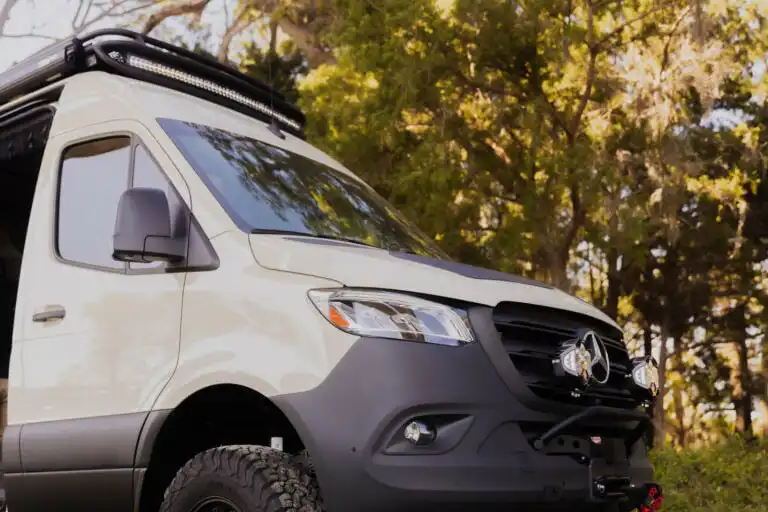
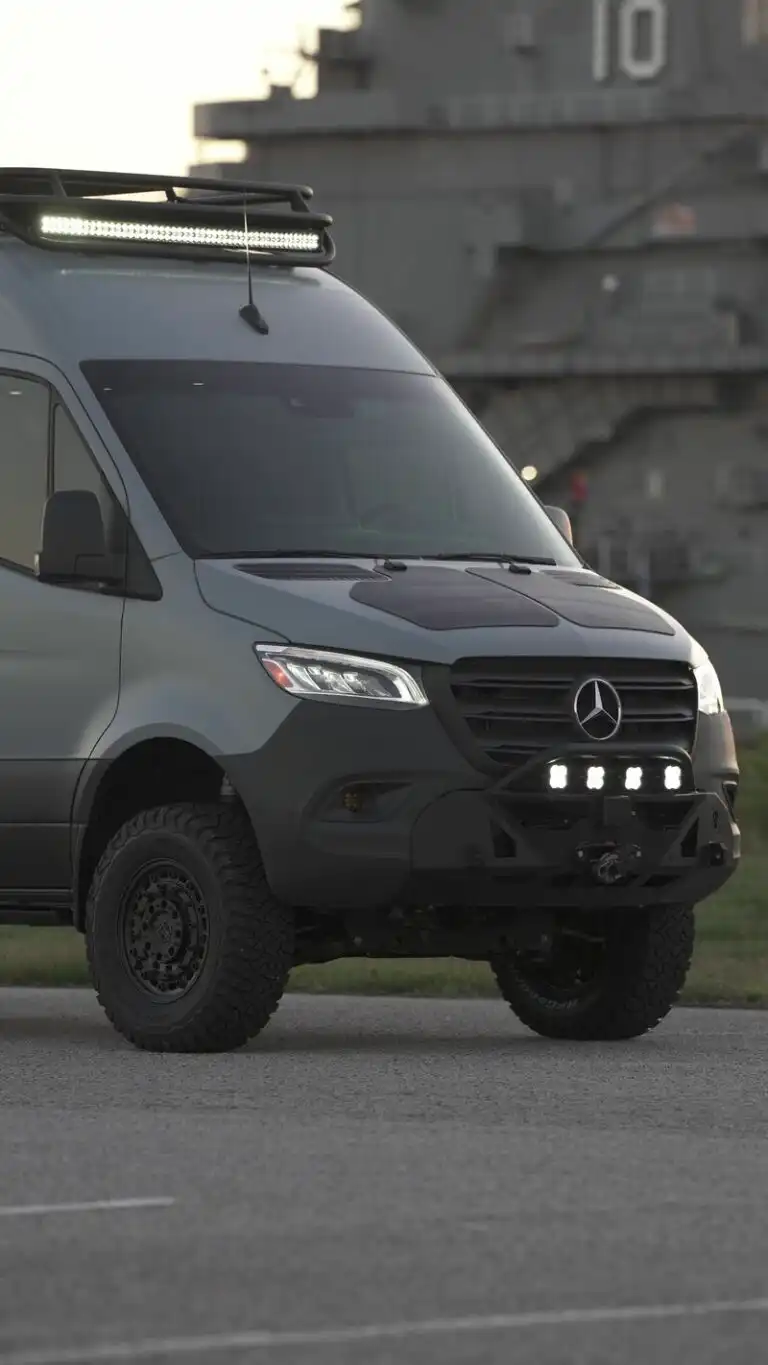
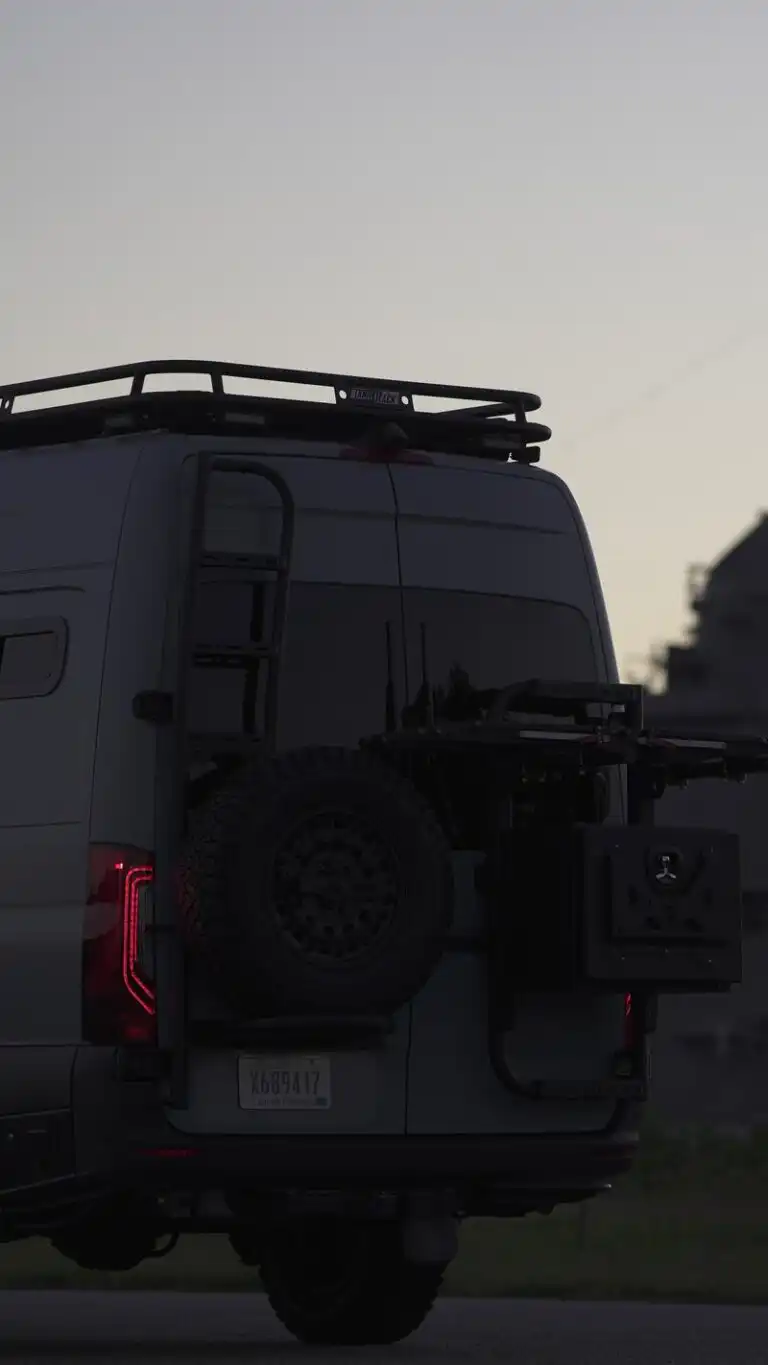
The family adventure van market has a credibility gap. Most of what gets marketed to families is either a converted RV designed for paved campground use, or an adventure van designed for one or two adults with kids treated as an afterthought. Neither is what an active family actually needs for travel that involves real roads, real conditions, and real kid logistics.
This guide is the brief for buyers who are trying to figure out what a family-capable adventure van actually looks like, what to prioritize in a build, and where the meaningful compromises sit between “the van the family needs today” and “the van the family will still want in five years.”
What active families actually need from a van
The honest answer is that family use is the most demanding use case for a configurable adventure van — more demanding than solo travel, more demanding than couple use, more demanding than even commercial use. Families need a vehicle that handles three or four jobs in the same week without rebuilding the interior between them.
Five capabilities matter more than anything else:
Certified passenger seating that adapts as kids grow. Two car seats in year one becomes one car seat plus one booster in year three becomes no car seats and three sets of teenage legs in year six. The seating layout has to absorb that progression without buying a new van.
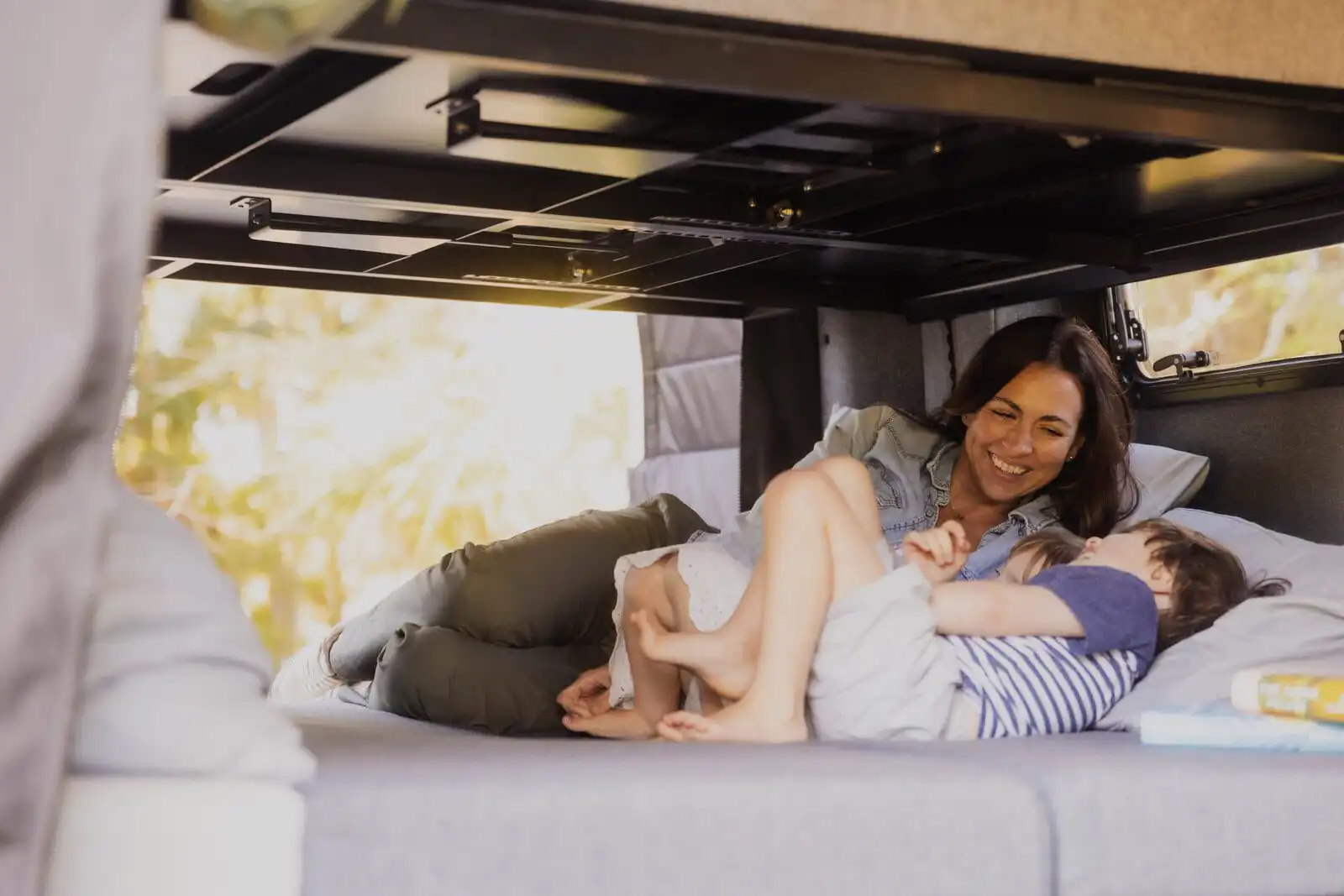
Sleep configurations that work for actual humans, not optimized photos. Two adults plus two kids requires either a real bed plus a real second sleeping surface (not a fold-out dinette), or a clear nightly transition that everyone in the family can actually do at 9 PM with the kids fed and tired.
Gear capacity sized to family travel, not couples travel. Strollers, bikes, sports gear, scooters, climbing gear, ski gear, board games for rainy days, four sets of clothes for four people across changing weather. Family gear scales faster than people-count suggests.
Bathroom and water systems that aren’t a battleground. A van you and your spouse can grin and bear is a van your seven-year-old won’t grin and bear. Water capacity, toilet logistics, and shower options need to be sized to the harder users in the family, not the easier ones.
Off-grid duration sized to family electronics. A laptop for one parent working remotely, devices for the kids, charging for two iPads’ worth of car-ride content. Family electrical draw runs higher than adult-only use, full stop.
Where most family vans go wrong
Two patterns show up in builds we see customers wanting to trade out of:
The bolted-in family dinette. A factory or custom built-in dinette with two bench seats and a fold-down table looks great in the photo and creates a usable family eating area. The problem is what happens when you need the floor space for two car seats plus a kid moving around. Or when the kids are older and one of them wants a quiet corner to read in. Or when you’re hauling a kid’s bike. Built-in dinettes commit the floor to one use case.
The “we’ll figure it out” sleeping layout. Many family vans hit delivery with a master bed for the adults and a vague plan for the kids (“the dinette converts,” “there’s a hammock above the cab,” “we can do bedrolls”). Two weeks into a real trip those plans turn out not to actually work, and the family discovers they’ve bought a van that sleeps two and a half people.
Both patterns trace back to the same root cause: the build was sold to a use case that didn’t account for the second and third things a family actually does in a van.
What Smartfloor enables for family builds
The Smartfloor system that anchors Patrol Vans builds was originally engineered for use cases that required rapid reconfiguration of certified passenger seating — emergency response vehicles, in the European original. That heritage maps unusually well to family use.
A certified Smartfloor seat with LATCH anchors meets FMVSS 225, the federal standard for child restraint systems. The certification follows the seat to any approved anchor location on the grid, which means you can configure the van for two car seats forward of the kitchen for the toddler years, then move the same seats to face inward for elementary-age kids who want to play card games on a long drive, then remove the seats entirely on the weekends the family is hauling gear instead of kids.
The same flexibility extends to sleeping. A removable rear bench becomes a sleeping platform with the right insert; remove the bench entirely for cargo nights; configure as a full second bedroom for teenagers wanting their own space.
Practically, this is the difference between a van that works for the family today and a van that works for the family across the changing years of their lives.
How to brief a builder on a family build
The single most useful thing a family buyer can do is be specific about the actual use cases the van needs to handle. Not aspirational use cases — actual ones.
A useful brief looks something like: “Two adults, two kids ages 6 and 9 today (so 11 and 14 in five years). Trips up to two weeks at a time, mostly Western U.S., mix of national parks and ski areas. One parent works remotely so needs a real workstation 2–3 days per trip. Sleep four. Haul two adult mountain bikes plus two kid bikes. Off-grid for up to a week between hookups. Dogs occasionally.”
That brief tells a builder what the van actually has to do. The corresponding spec — seating count, sleeping count, water capacity, electrical sizing, gear storage — falls out of the brief almost automatically. A builder who can’t ask follow-up questions about that level of specificity isn’t a builder optimized for family use.
Cost reality for family adventure vans
Family-capable builds tend to land toward the higher end of the Patrol Vans cost range, not the lower end. The reason is the certified seating, the larger water and electrical systems, the additional sleep capacity, and the gear storage all add cost. Our breakdown of real Sprinter conversion costs covers the line-item math.
The deciding factor for most family buyers isn’t whether the van can be built to the spec — it usually can — it’s whether the family’s actual usage pattern justifies the build cost over a less-capable alternative. Families who travel four-plus weeks per year find the math works. Families whose actual usage is two weekends per year often find the math doesn’t.
Models that fit family use
Of the three Patrol Vans model lines, the EchoVan is the most-ordered configuration for family buyers — the floor plan, seating capacity, and standard storage match family use patterns better than the lighter AlphaVan or the more expedition-focused OmegaVan. That’s a generalization with exceptions, but the pattern holds across most family builds.
Frequently asked questions
How many kids can a family adventure van actually sleep?
For a well-configured Sprinter on a long wheelbase, sleeping a family of four (two adults, two kids) is achievable without compromise. Sleeping five (two adults, three kids) is achievable with thoughtful design. Sleeping six is possible in specific configurations but starts to push against the chassis dimensions.
Are family adventure vans safe for car seats?
Yes, when built with certified seating. Smartfloor seat bases used in Patrol Vans builds meet FMVSS 225 (the federal LATCH/tether anchor standard), which means car seats and booster seats install at any approved anchor location on the grid the same way they would in a passenger car.
How do families actually handle bathrooms in a van?
Multiple approaches work. The most common: a dedicated water-flushing or composting toilet enclosed in a privacy area, paired with an outdoor shower setup or an indoor shower module. Older kids generally adapt to van bathroom routines faster than parents expect; the bigger logistical question is usually showers, not toilets.
Can a family van also serve as a work-from-home vehicle?
Yes, with the right electrical and connectivity spec. Many family Patrol Vans builds include a dedicated workstation area that converts to other uses when the parent isn’t working. The hardware that makes remote work viable (Starlink, sized battery bank, real desk surface) is the same hardware that supports the family’s electronic needs more broadly.
Do families regret the up-front cost of a real adventure van?
The most common feedback we hear two years in is that families regret not spec’ing it slightly higher than they originally planned — usually the electrical or the water capacity. The cost itself is rarely the regret. The regret is when something turned out to be the limiting factor on the trips they actually took.
Where to go from here
If you’re researching a family adventure van and trying to figure out what spec is actually right for your family, the most useful next step is a specific conversation about the use case. Talk with the Patrol Vans team about how your family actually travels, and we’ll size a build to it honestly — including telling you when a less-built van would serve you better. If you want to start by exploring the lineup, the Basecamp configurator walks through each model.
For child restraint regulatory background, the National Highway Traffic Safety Administration publishes the FMVSS 225 documentation at nhtsa.gov/car-seats.