

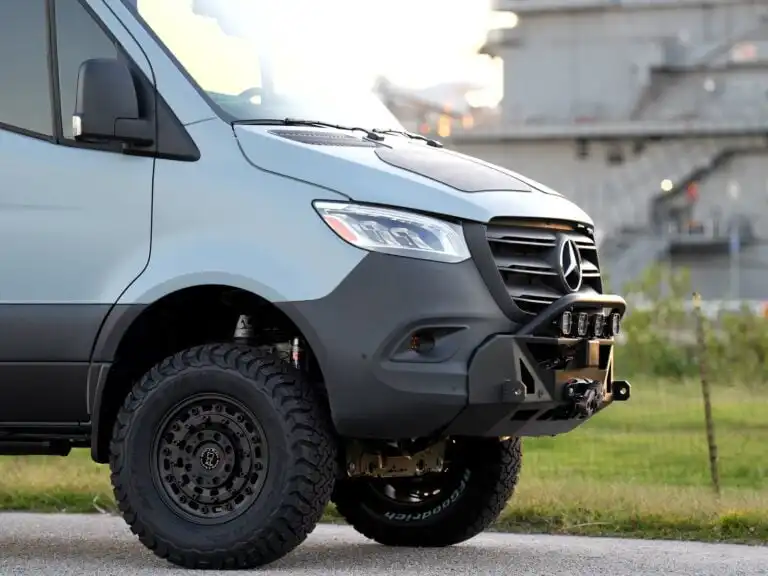
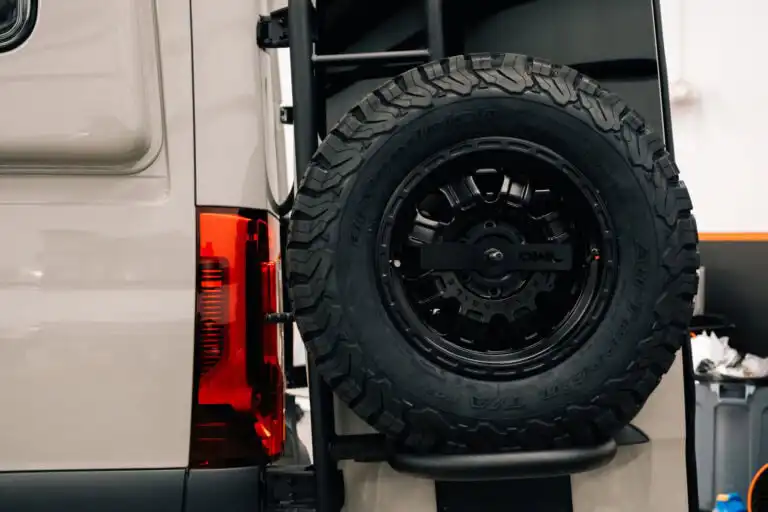
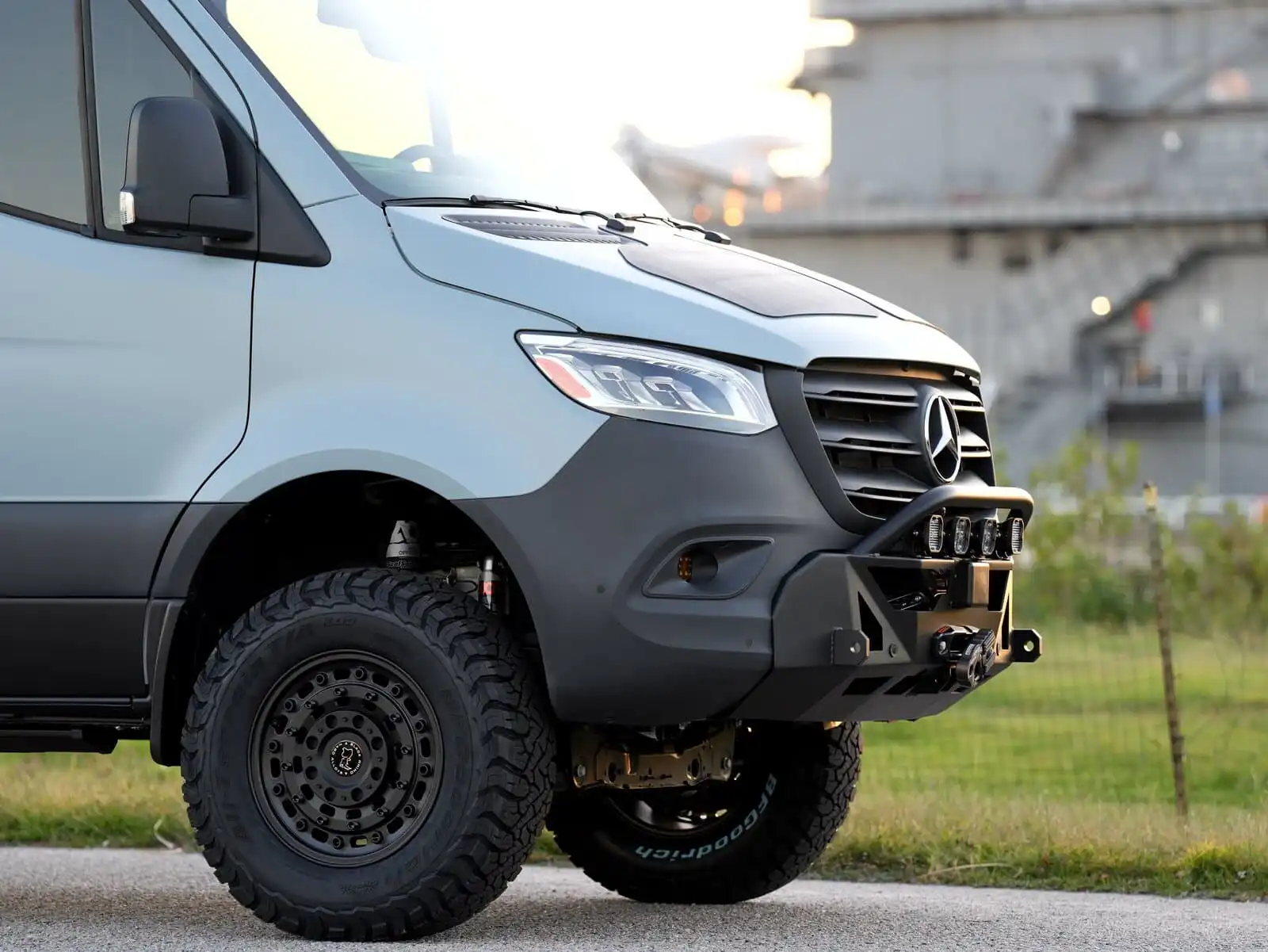
Most custom van coverage assumes the van is for recreation. A great deal of it is not. Trades and service businesses, outdoor-industry operators, mobile clinics and labs, survey and inspection teams, security and patrol fleets, and independent professionals all need vans that carry specialised equipment, power it reliably, and stay organised through a working week — vehicles judged on uptime and productivity rather than on how they photograph at a trailhead. Patrol van conversion and utility outfitting sit in that category, and the engineering demands are different from a recreational build in ways worth spelling out.
This article covers what changes when a van is a working asset, how modular systems apply to commercial use, and what to think through before commissioning a build that has to pay for itself.
What changes when the van is a tool
A recreational build is optimised for comfort over long stretches of use. A working van is optimised for speed of access, durability under daily cycles, and the ability to change roles without being rebuilt.
Access is usually the biggest difference. A technician who opens the same drawer forty times a day cares intensely about where it is and how it opens, in a way that a traveller opening a locker twice a day never does. Everything that gets used constantly should be reachable without moving something else.
Durability requirements change too. Commercial equipment is heavier and denser than camping gear, and it gets loaded and unloaded far more often. Surfaces, latches, drawer slides, and anchor points all see cycle counts that recreational hardware is not specified for. Weight distribution is a genuine engineering problem rather than a rounding error, particularly when dense equipment concentrates in one area.
And the vehicle is an operating cost. Downtime is lost revenue, so serviceability, sensible access to the systems that might need attention, and hardware that can be repaired rather than replaced all matter more than they do on a personal van.
Power is usually the real requirement
The most common underestimation in commercial builds is electrical. Working equipment — diagnostic tools, compressors, refrigeration, lighting, communications, laptops, chargers, test instrumentation — draws far more than a recreational build, in different patterns, and often needs to run while the van is stationary with the engine off for hours at a time.
That pushes the system design in specific directions: capacity sized to a working day rather than an overnight, charging that does not depend on solar alone because a van parked in an alley or a garage bay is not collecting much sun, and clean, well-protected AC power for sensitive equipment. It is the same architecture logic as any serious off-grid build, applied to a different duty cycle — the approach behind our OmegaVan utility electrical systems, which are designed around exactly this mix of work demands and off-grid capability.
The practical advice is simple and consistently ignored: inventory every piece of equipment that will run in the van, with its actual draw and how long it runs, before the system is specified. Retrofitting capacity into a finished commercial van is expensive and disruptive, and it takes the vehicle out of service to do it.
Modular systems suit working vans particularly well
Commercial requirements change more often than recreational ones. A business adds a service line, takes on a different contract, changes what it carries, or reassigns a van between roles. A fixed interior built precisely around one workflow becomes an obstacle the moment the work changes.
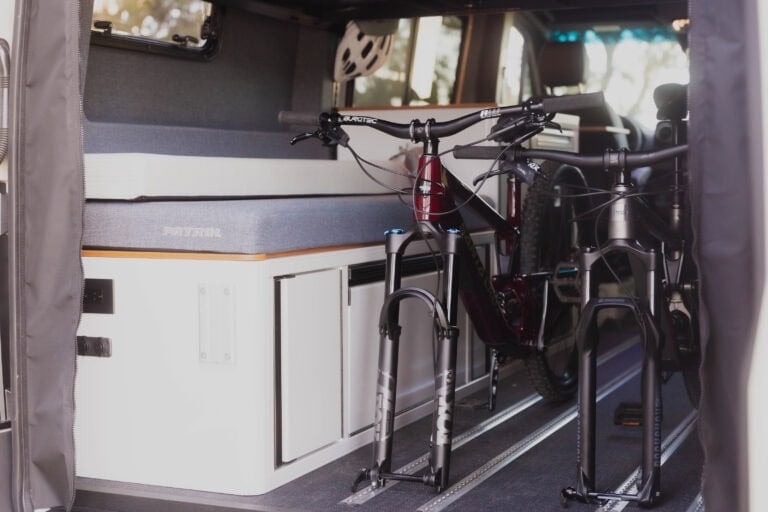
This is where modular anchoring earns its place. Track-based flooring and wall systems let seating, equipment mounts, shelving, and tie-down points be repositioned or removed without structural work, which means a van can be reconfigured in hours rather than rebuilt over weeks. A Smartfloor system makes removable seating genuinely practical — a van that carries a crew on Monday and equipment on Tuesday, without compromise in either mode.
For fleet operators there is a second benefit: standardising on a modular platform across vehicles means configurations can be replicated, adjusted, or swapped between vans, and equipment mounts are consistent for the people who use them. That consistency is worth real money in training time and in how quickly a replacement vehicle can be put into service. It is the same reasoning behind our approach to modular Sprinter interiors generally.
Patrol, security, and specialist configurations
Patrol and security applications add requirements that recreational builds rarely encounter: secure storage for equipment that must be locked, seating and communications positions that work for extended shifts, lighting and power for gear that runs continuously, and interiors that can be cleaned and maintained to a standard. Long stationary periods make the electrical system the central engineering question rather than a supporting one.
Specialist configurations — mobile workshops, inspection and survey vehicles, mobile clinics, media and production support — each bring their own version of the same problem: purpose-specific equipment that has to be mounted securely, powered adequately, accessed quickly, and reconfigured occasionally. The approach that works is the same in every case: understand the workflow first, then build the van around it, rather than fitting the workflow into a generic cargo layout.
Making the numbers work
A working van is a capital decision, and it is worth thinking about it as one. The questions that matter are how much time the build saves per job or per shift, what it costs when the vehicle is off the road, how long the outfit will remain useful as the business changes, and what the vehicle is worth at the end of its service life. A well-built modular interior tends to score better on the last two than a cheaper fixed fit-out, because it can be reconfigured for a new role rather than stripped out.
The same transparency we apply to recreational builds applies here — our breakdown of real costs, timelines, and trade-offs on a Sprinter conversion is the right starting point for setting expectations, and the ownership view in our piece on long-term Sprinter ownership covers what the vehicle asks of you over the years that follow. Choosing the right platform for the work matters too, which is what our comparison of AlphaVan, EchoVan, and OmegaVan is for.
It is also worth noting that a Mercedes-Benz Sprinter is a well-supported commercial platform with a national service network — which is a genuine consideration when the vehicle is generating revenue and needs to be back on the road quickly.
Frequently asked questions
What is a patrol van conversion?
A custom build configured for patrol, security, or professional field work rather than recreation. Typical requirements include secure equipment storage, seating and communications positions suited to extended shifts, electrical capacity for equipment running while stationary, durable and cleanable interiors, and layouts that prioritise fast access to frequently used gear.
How is a work van build different from a camper conversion?
The priorities shift from comfort over long stays to speed of access, durability under heavy daily cycles, and reconfigurability. Equipment is denser and heavier, drawer and latch hardware sees far higher cycle counts, weight distribution becomes an engineering problem, and electrical systems are sized for working-day loads rather than overnight ones.
Can a van be built for both work and travel?
Yes, and modular systems are what make it practical. Track-based flooring and wall anchoring allow the same van to carry equipment or crew during the week and be reconfigured for travel afterwards, without rebuilding. It works best when both roles are specified up front so the electrical system and layout accommodate the heavier of the two demands.
How much electrical capacity does a commercial van build need?
It depends entirely on the equipment, which is why the process starts with a full inventory of every device, its actual draw, and how long it runs each day. Working builds usually need substantially more capacity than recreational ones, plus charging that does not rely on solar alone since a working van is often parked out of the sun.
Do you build for fleets, or only single vehicles?
Both are legitimate cases for a custom approach, and fleets in particular benefit from standardising on a modular platform so configurations can be replicated across vehicles and adjusted as roles change. The right scope is worth discussing directly, since fleet requirements vary widely by industry.
The takeaway
A van that has to earn its keep is judged on different criteria from one built for weekends: how fast equipment can be reached, how well it holds up to daily cycles, whether it can be reconfigured when the work changes, and whether the electrical system supports a full working day with the engine off. Modular systems suit that reality particularly well, because commercial needs change and a fixed interior built around one workflow ages badly. Start from the work, specify the power honestly, and build the van around how it will actually be used.
If you are outfitting a vehicle for professional, patrol, or fleet use, talk with the Patrol Vans team about your workflow and equipment, or explore the OmegaVan platform to see how utility-focused builds come together.